

What’s a good recipe for lemon curd? Is it going to rain next Saturday? How long does lemon curd keep in the refrigerator?
Leah Tanis (Librarian, Siouxland Libraries Downtown Branch) begins her day at the phone desk, where she answers these questions and more. “Many of the callers don’t have internet access,” she told us. “Even if they do, they call the library because they don’t know where else to get reliable information. The library directs them towards accurate, neutral news sources to make sure they can come to their own conclusions on a particular issue with as little bias as possible.”
After an hour, Leah rotates to adult fiction and starts reshelving. There, she finds a group of regulars flicking through the magazines in a corner. She greets them warmly.
Many of the library’s regular patrons are experiencing homelessness.1 The building’s heating and air conditioning make it a natural place of refuge for many people during hot summer afternoons and bitter winter mornings.
More than that, though, the librarians are trained to help people to find and navigate the city’s welfare resources, helping with tasks that range from organizing documentation to booking medical appointments. Leah has helped a lot of people at their lowest. Some come back months later to tell her that they’ve found support, work, or a home. Some come back the next day, just to sit. And just as often there are people whom Leah never hears from again; and she never knows if that’s a good or a bad thing.
“We are really part of these people’s lives,” Leah told us. “Once, one of our library regulars was hit by a car. Other members of the community of people experiencing homelessness came to tell the librarians what had happened, and updated us on the patron’s condition as they recovered. There is mutual respect: they know that we respect them as people, and we care about how they’re doing. And they respect the library in return.”
Leah said that in the three years since she has worked at Siouxland Libraries, she has gotten to know so many of the city’s community experiencing homelessness by name, which has changed her perception of them. “I say hello to people every day who, a few years ago, I might have been scared of. Working at the library has helped to restore my sense of their humanity.”
Leah checks the clock – almost 1pm already. She opens her folder to make sure she has everything. Risk assessment? Check. Picture books? Check. Certificates? Check. Time to meet the “Mini Masters”.
The “Mini Masters of Library Science” program takes children behind the scenes at the library, teaching them how a library works and showing them what it takes to become a librarian. The unique program has been a hit – one mother emailed Leah afterwards to say that her daughter, then only in third grade, loved it so much that now she wants to be a librarian. Could she volunteer on the weekends?
Carmen and I attained our “Mini Masters degrees” when we visited Sioux Falls (and have the certificates to prove it). The event began with a VIP look at the Automated Materials Handling (AMH) system, where children (and Carmen) had the opportunity to feed the machine books and watch it magically distribute them to the correct pile.
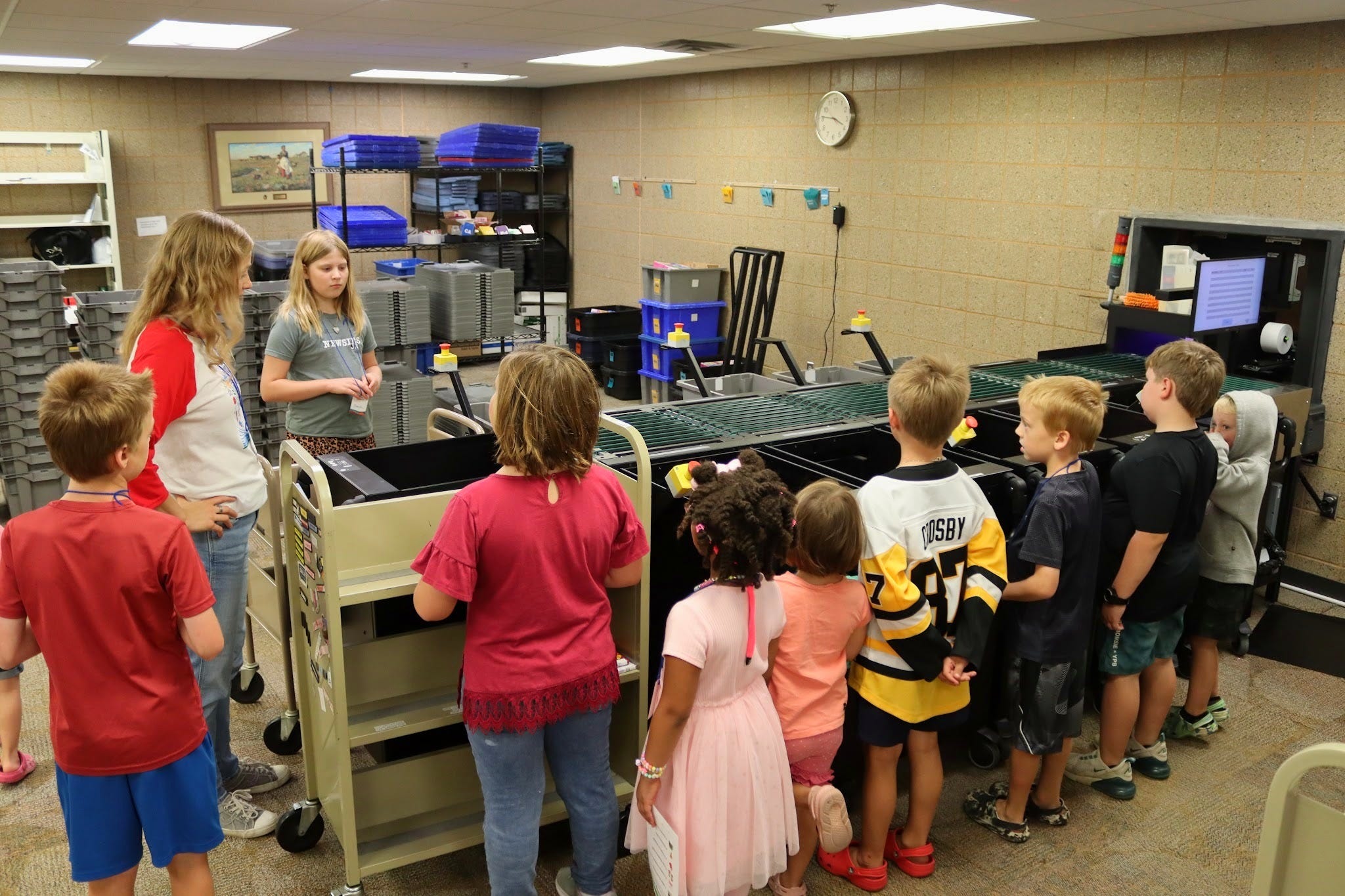
Then, a trip to the “Book Doctor,” where we learned what happens when books are damaged and how staff work to repair them. Back in the program room, the children led their own Storytime. Some were more confident than others: a few hands shot up immediately to volunteer, but with a little encouragement everybody took part.
I was struck by how much the children thrived when they were given a little responsibility. One boy sat in the reader’s chair, opened up a picture book, and assigned different parts to the other members of his group. That way, everyone had a chance to read and take part. He even asked the crowd if there were any questions at the end. Awestruck, I felt like I had just seen a considerate, compassionate leader, who could have done this a thousand times – not a seven-year-old child.
Leah treated every child with respect, and was respected in turn. She later told us that she had been a first grade teacher for three years before she decided to become a librarian. She told us that after the COVID-19 pandemic, she had felt that the school system’s emphasis on “catching up” forced teachers to “pump information” into their students for tests, rather than help them to nurture a lifelong love of learning. At the library, Leah organises the “Ready, Set, Pre K” program, which has allowed her to help children discover more about the world without so much of the emphasis on testing. The same is true of her Storytime, which regularly gets 60 to 80 attendees, and helps forge lasting bonds between children and between parents.
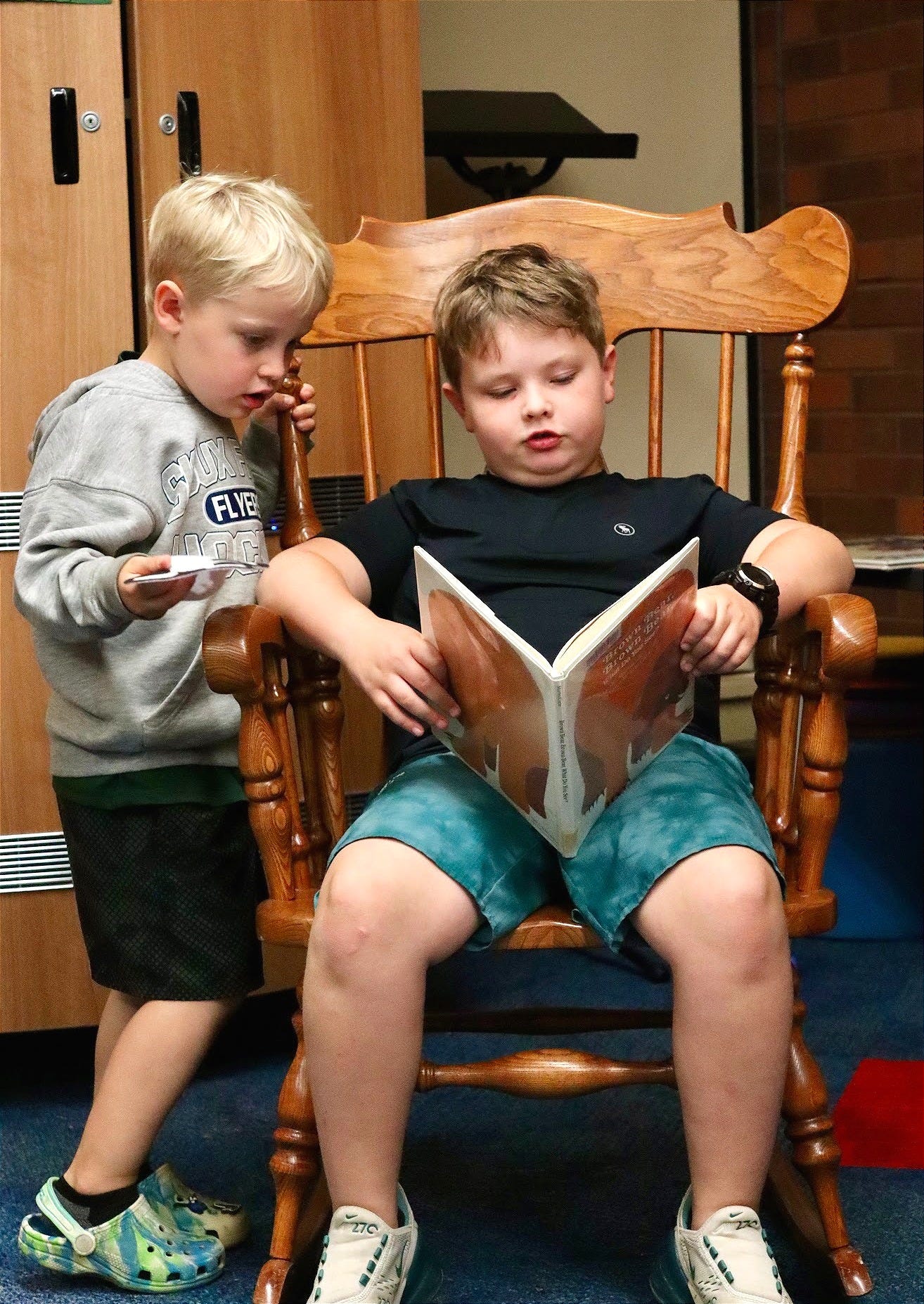
One of her biggest achievements as a librarian has been leading the “Book Nook” program. “Whether it’s at the doctor’s office, car repair shop, the salon, or somewhere else, there are a lot of places where we can be stuck waiting,” Siouxland Libraries write on their website. “There is an extra challenge if you have kids to entertain.” The program places children’s books in waiting rooms across the city to encourage literacy by creating more opportunities for children to read.
Like many libraries in America, Siouxland Libraries feels the threat of censorship even if it is yet to experience book challenges in any real force. “Parents used to say, ‘my child can read at this literacy level,’” Leah said. “Now they say, ‘my child can read this type of content.’”
Leah told us that at some point, the county had proposed to reduce the library’s hours, but the city council and the taxpayers voted firmly against it. The library is a place for everybody: it’s a source of information, a shelter, and a space for learning, and the people of Sioux Falls say it’s worth protecting.
~
Oliver Jakes
To read more stories from America’s public libraries, subscribe to our Substack below, visit our website, and follow us on social media.
According to the City of Sioux Falls’ most recent data, 605 of the people living in Sioux Falls, SD are experiencing homelessness. Though the number is significant, it marks the first decrease in homelessness in Sioux Falls in five years, which reflects the city’s increased efforts to support their most vulnerable. Minnehaha County Human Services, for example, aims to advocate for, empower, and support anybody who walks through their door; the Homeless Outreach programme seeks to provide healthcare for all; and Housing Programs help ensure decent, safe, and sanitary living conditions across the county. <https://www.siouxfalls.gov/government/mayor/homelessness> [accessed 20 Apr 2026].