
“A popular Government, without popular information, or the means of acquiring it, is but a Prologue to a Farce or a Tragedy; or, perhaps both.” – James Madison1
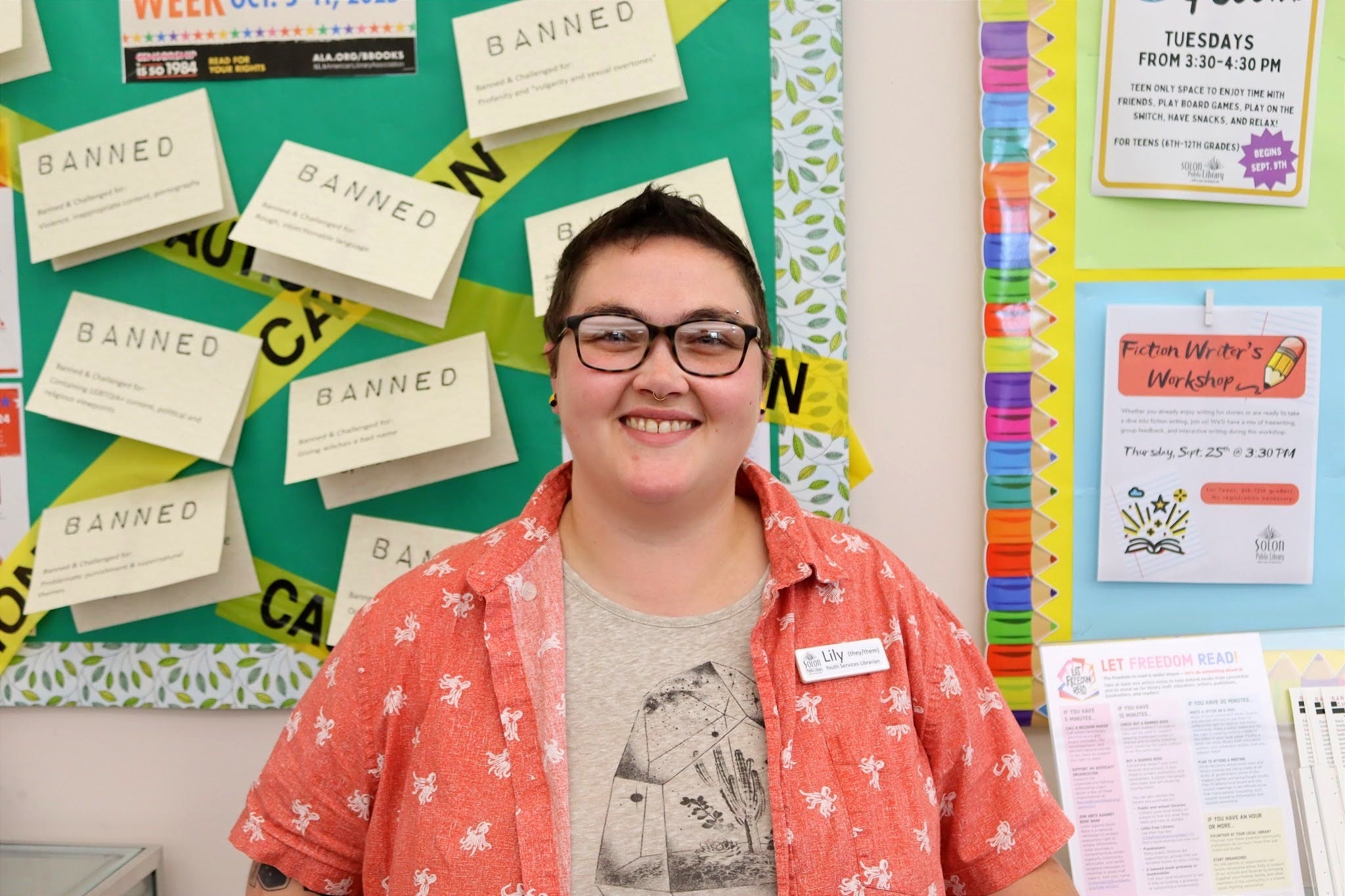
An older man peeks his head out from behind his newspaper and nods a hello when I pass by his reading chair on my way through the library. Next to him, a dozen local and national newspapers hang down the side of a book case. A number of patrons come to Iowa’s Solon Public Library everyday to read the paper, Lily, the youth librarian manning the circulation desk, tells me.
A few minutes later, I overhear a woman ask Lily what’s happening today in town. Lily cheerily gives a complete breakdown of the day’s events, which seem to be unusually busy: A memorial wall honoring veterans is passing through town and there will be a ceremony from the Iowa National Guard, followed by a beer festival in the Legion’s Beer Garden.
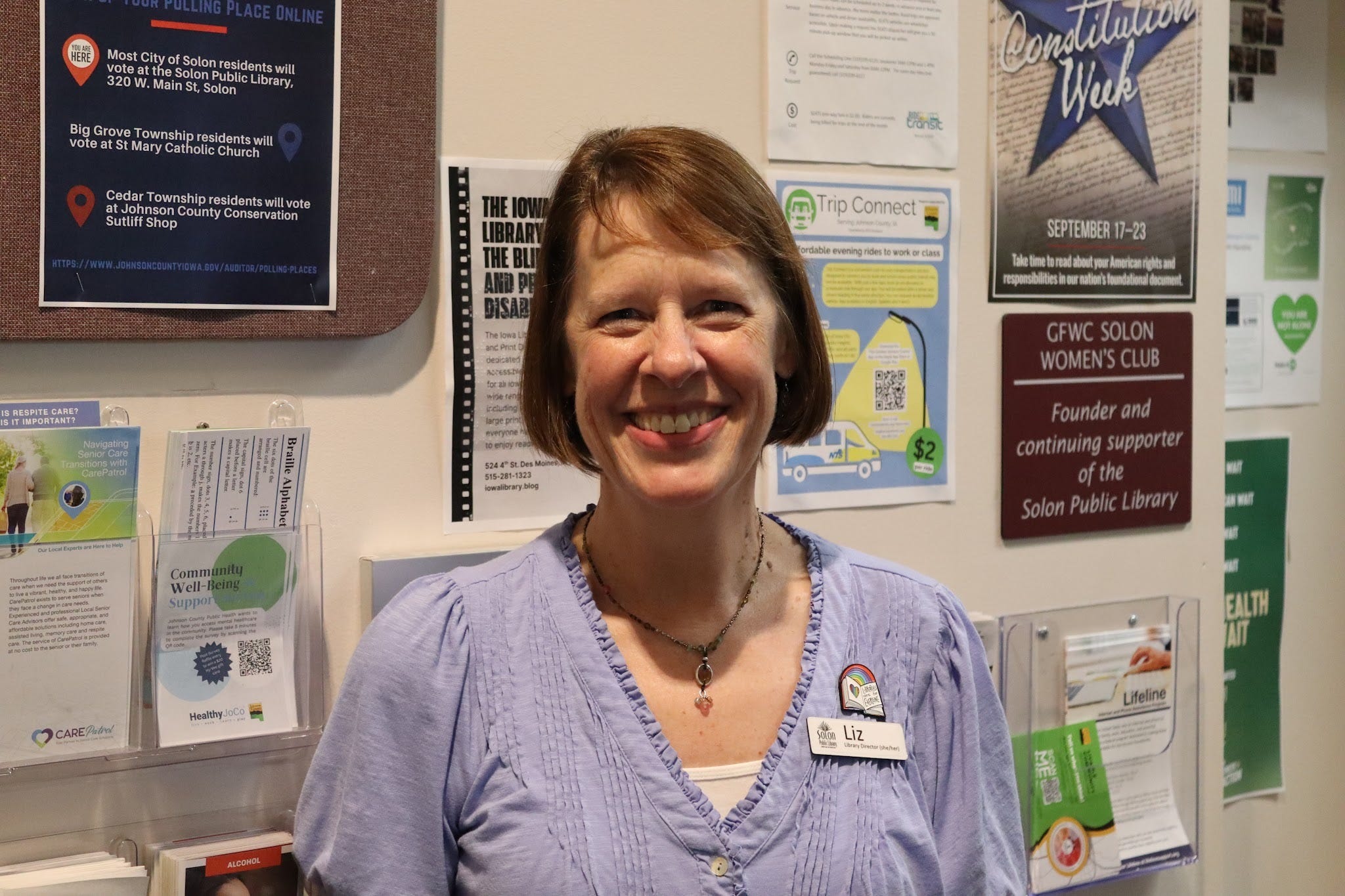
It’s no accident that the Solon Public Library is a hub for local news. Liz King, the Library Director, says that one of her library’s top priorities is to provide patrons with reliable information so that they “know their community and are informed citizens.”
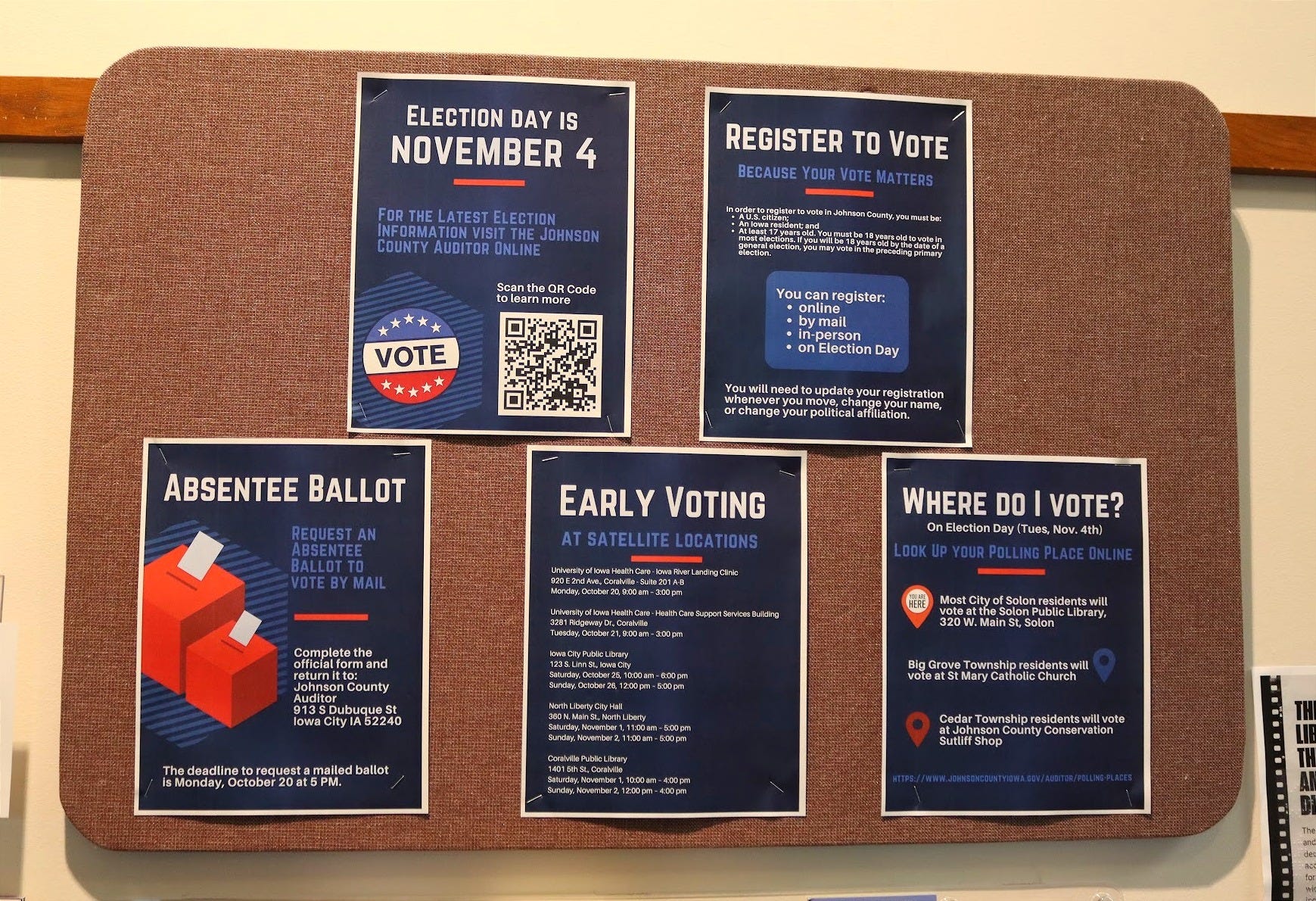
At their library, the people of Solon can vote, register to vote, and learn about the candidates and issues on the ballot. Before elections, voters can attend “Meet the Candidate” nights, where they can hear candidates for positions like the County Supervisor or the City Council present their platforms.
“One of our most important roles is to help facilitate the information exchange to provide the tools people need to make informed decisions as they vote,” Liz says. When buying books or choosing which books to put on display, Liz says she keeps in mind what the most important issues are for the community, which authors are most qualified, and whether the book puts forward a slanted perspective. Recently, Liz has stocked the library with books about Israel, the prevalence and history of wildfires, democracy, book banning, COVID, and climate change.
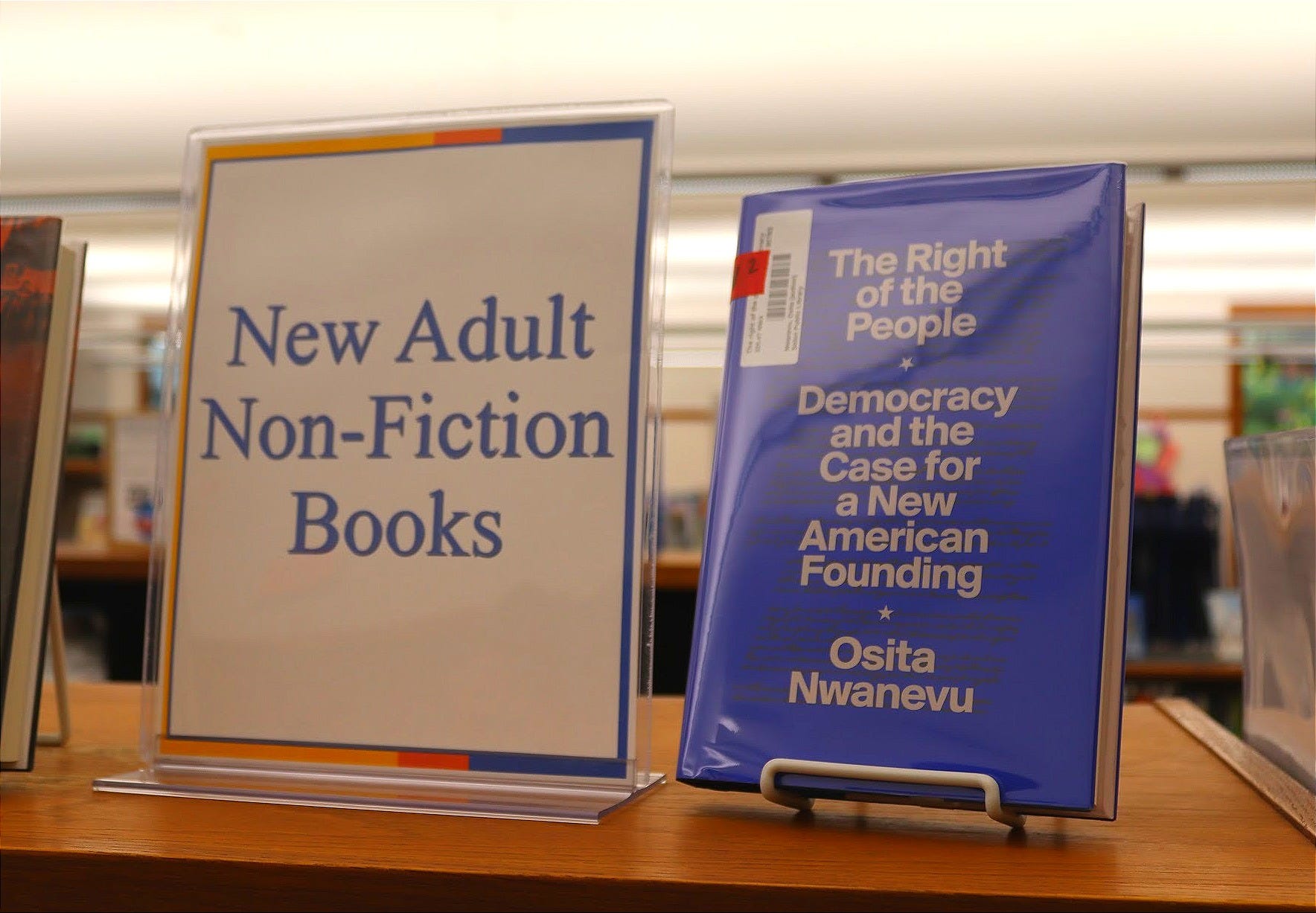
Liz also makes sure that patrons encounter a diversity of perspectives at the library. “Anyone who walks in the door should get mirrors and windows,” she tells us, explaining: “When people come into the library, they should be able to find people like them, to help them figure out, for example, how to overcome a challenge – that’s the mirror. But they should also find people who they’ve perhaps never met before, but whom they can get to know through a book and therefore be better equipped when they do meet someone new in person – that’s the window.”
The recent rise in library censorship poses a threat to Liz’s ability to stock her library with diverse perspectives. Some neighboring libraries have ceded control of what books they can circulate to their city councils, Liz tells us, but Solon is yet to face any serious book challenges.
Instead of keeping quiet to avoid attracting scrutiny—a response that Ollie and I witnessed at many other libraries during our tour—Liz takes the threat of censorship as an educational opportunity. When we visit Solon Public Library, Banned Books Week, a national campaign started by the American Library Association, is in full swing. At the front of the library, patrons are greeted by a large Banned Books display, where they are encouraged to flip over flaps that list the reason a given book was banned to find out what book was targeted. Discovering books like the Dictionary or the Bible beneath the flaps, Liz hopes that people are shocked. “I’m trying to show that any book can become someone’s problem. The key is that everyone gets the option of what they would like to read. And while you may choose that you do not want to read this item, you don’t get to make that choice for someone else or for their children,” she says.
The library’s book club is also promoting Banned Books Week by reading books like Fahrenheit 451 and Lula Dean’s Little Library of Banned Books. “Who are we to decide what book shouldn’t be there for someone else?” Liz says to a group of seniors as she promotes the book club and tells them about its theme of censorship this month.
It’s not just adults who learn about censorship at Solon Public Library: At StoryTime, Lily reads banned children’s books like Tango Makes Three (banned for portraying gay characters) and Where the Wild Things Are (banned for its “dark” themes) to groups of young children and their parents.
In Solon, the public library makes sure that the people have a means of acquiring what James Madison called “popular information”: information that is neutral, nuanced, and, perhaps most importantly, common to all. “A people who mean to be their own Governors,” Madison goes on to argue, “must arm themselves with the power which knowledge gives.” In Madison’s view, democracy requires shared, common information. In today’s polarized media environment, the public library may be one of the few institutions upholding that imperative.
~
Carmen Vintro
To read more stories from America’s public libraries, subscribe to our Substack below, visit our website, and follow us on social media.
James Madison to W.T. Barry in 1822, see: https://press-pubs.uchicago.edu/founders/documents/v1ch18s35.html.
Great piece ! We all need mirrors and windows !
Just as important for kids to know about the problems and issues around banned books (it’s not about protection if we appropriately explain issue.. we underestimate the capabilities of youth too often) not just adults.. great article and so important