
“Let’s share in this peace,” Julie concluded as she brought the meditation to a close. I sat upright, hips pushed to the back of my chair, spine pulled up into the ceiling by an invisible string.
I opened one eye and considered the room of people sharing in my peace. Cindy, who we had met earlier, sat in front of me. She had told us that her first time trying yoga had been here at the library, and that she’s been coming every week for the last six months. The library’s Chair Yoga mornings have also been crucial to Cindy’s recovery from back surgery; she said that the sessions make her feel so much better that her family never let her miss it. To her right was Linda, resting her hands on her knees, palms facing up. Linda’s deep, controlled breathing hinted at her mastery of the vinyasa flow, which I had just witnessed while I struggled in awe. Linda’s husband, who she later described as a “slow convert,” sat at the back of the group. I was grateful to see someone who, like me, seemed relieved to have returned to the “seated mountain” pose.
We arrived at Solon Public Library in Iowa early in the morning, stiff from another night of camping in a nearby forest. There, we met Library Director Liz King, who welcomed us to the library’s weekly Coffee & Conversations event, which preceded Chair Yoga. These activities, which are collaborations between the library and local nonprofit Solon Senior Support, aim to bring Solon’s growing population of seniors together around discussion, pastries, and stretching, to promote meaningful connection, movement, and stress reduction.
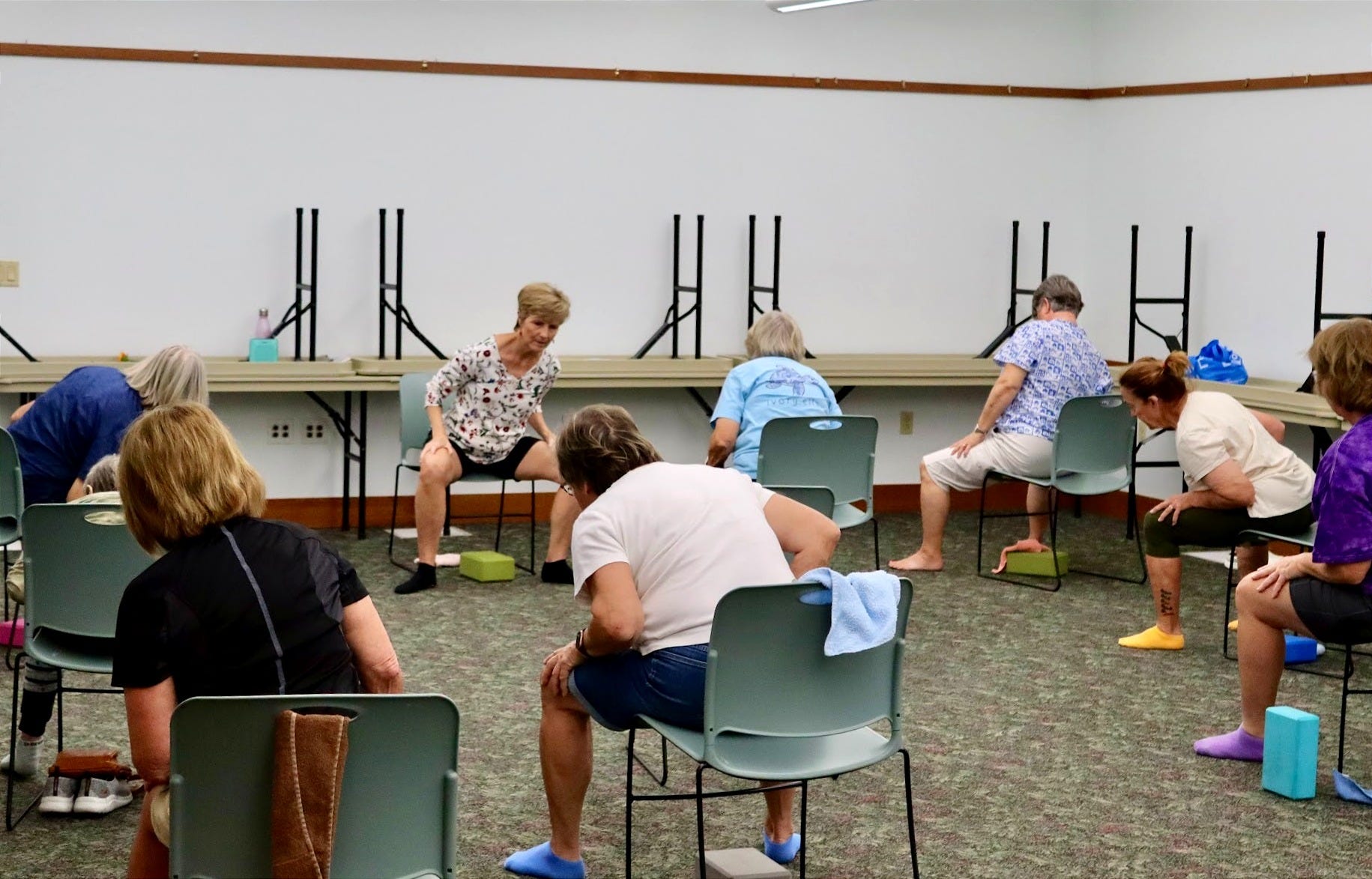
Solon has excellent schools, which means that it attracts young families looking to settle. As a result, many people move to the area as grandparents, so many of Solon’s seniors arrive without an existing network or community beyond their families. “Our coffee and yoga mornings are one of the first events that newcomers tend to check out,” Liz said. “Chair Yoga is particularly popular. We cap it at 25 people per session, and it is almost always full. Some people are territorial about their seats.”
Liz tries to make sure the library helps to integrate new seniors into existing community networks through a range of programs designed to help seniors to make new connections and feel more settled: Saturday cookbook club, puzzle competitions, and tech talks each bring people into the library, where they can learn how to become more involved in the community. One patron, Lois, told us that she’s particularly fond of the DIY classes, which have equipped her with a homemade birdhouse, a set of garden stones, and a formidable arsenal of bath bombs.
While Carmen and I had been enjoying yoga in the library’s function room, Liz and Lily, the youth librarian, had welcomed a large class of sixth graders into the main reading room. Every year, the local school brings students across the road to learn more about the library and register for library cards. The session introduces them to the many programs, clubs, and challenges. These include the 40-book challenge, where children are encouraged to read books recommended to one another by friends, experiment with new genres, and participate in discussions around reading; the drawing club; and the devoted Dungeons & Dragons group.
“It’s great to make sure these kids are familiar with the library and what we have to offer,” Lily told us. Later, we got to see Lily in action. Leaning against the display of “Banned Books” (which we discuss in this article), Lily is enclosed by a crescent-shaped group of cross-legged eleven-year-olds.
A hand shoots up. “I want to read, but I don’t know what to read…” the student says with a mixture of urgency and hesitation.
“OK. What movies do you like?” Lily asks. “Why do you like them?” They quickly create a list. “Come see me after and we will get those checked out!”
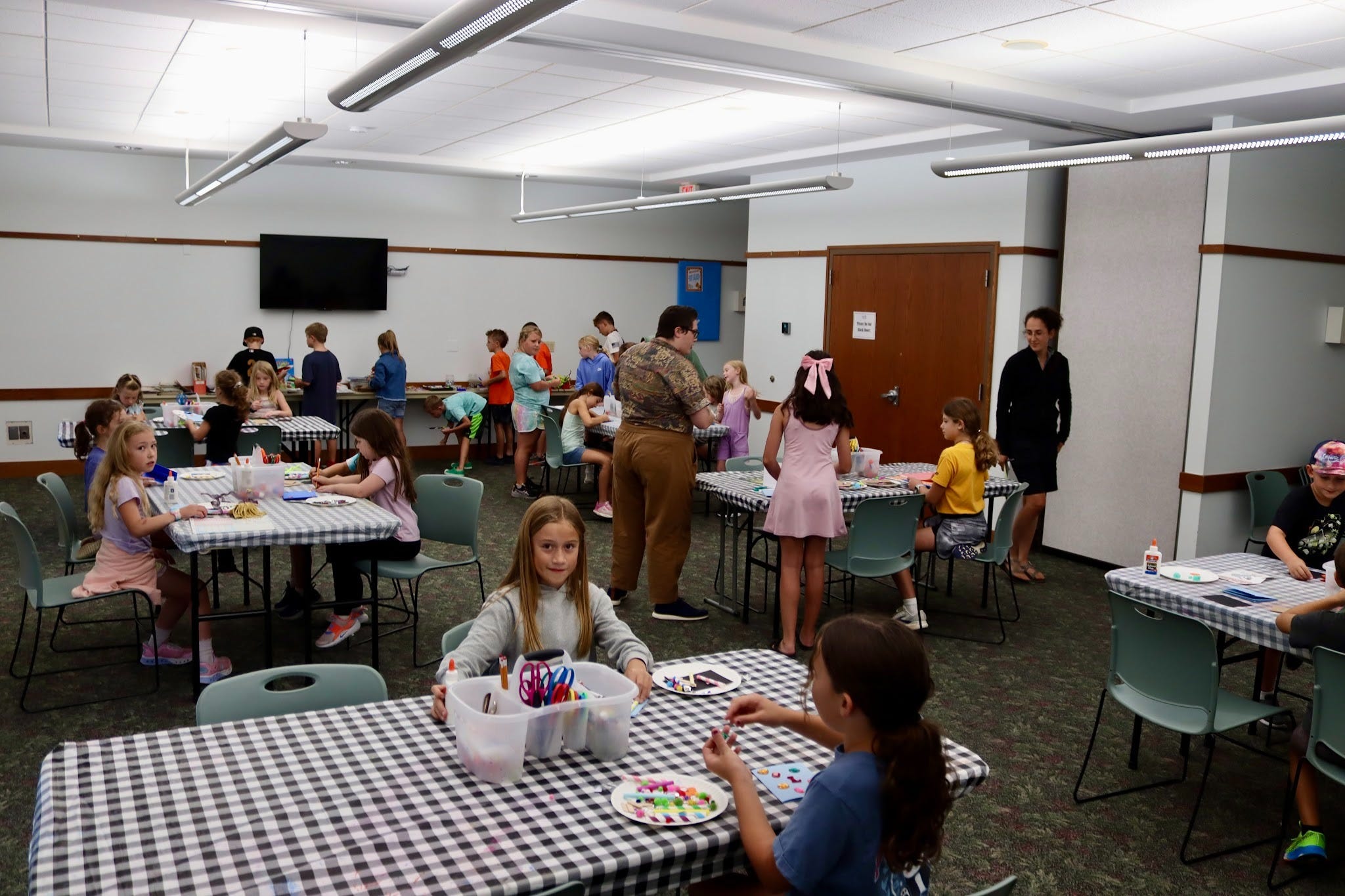
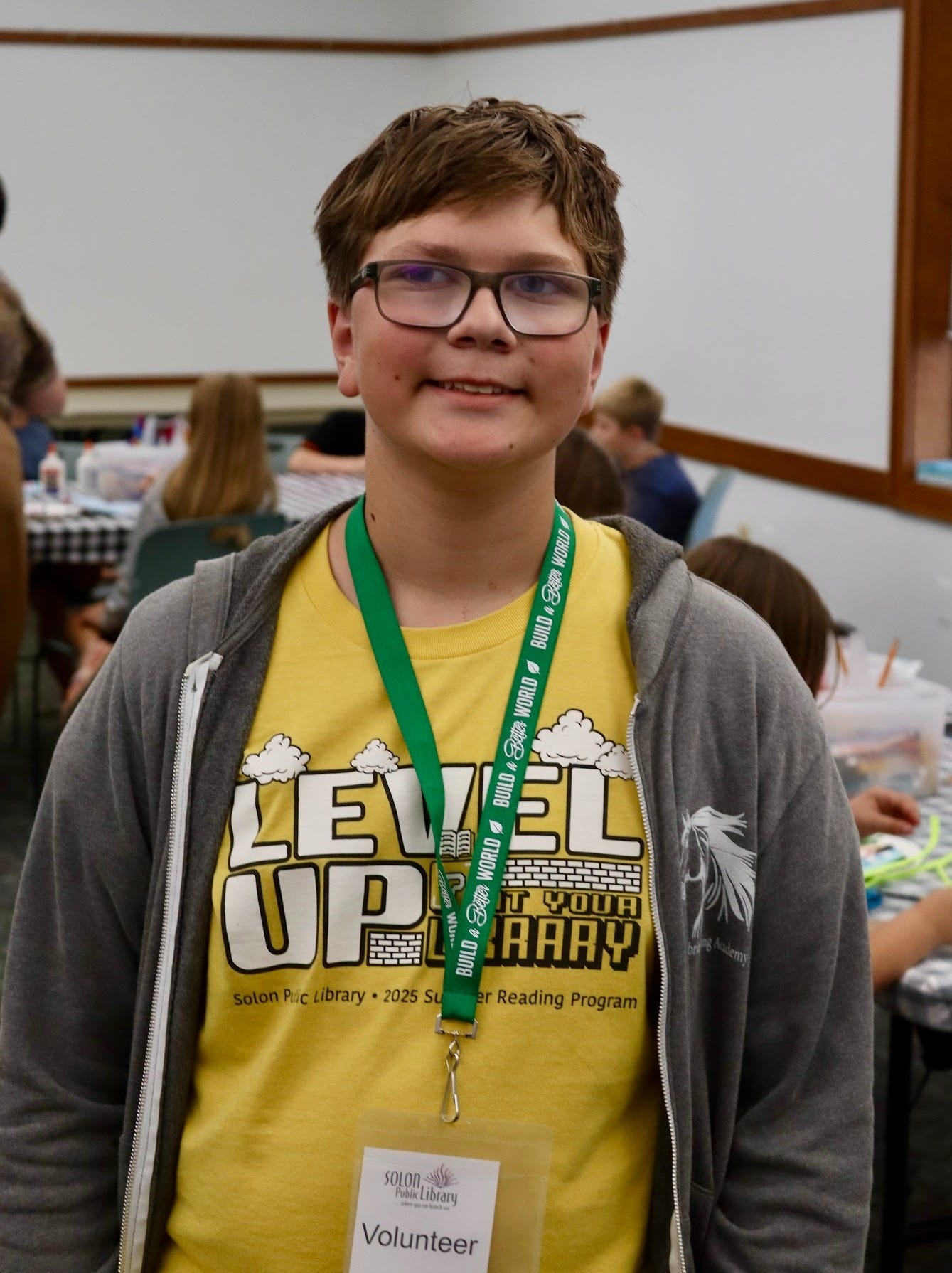
Every Thursday school ends early for weekly teacher training. Parents can’t always leave work to pick them up, so a lot of children come to the library’s “Early Out” program, where they take part in structured exercises that focus on nurturing creativity and developing a lifelong love of learning. “Early Out” is supervised by both librarians and teen volunteers. This means that younger kids can speak to people they might not get to interact with at school, and older kids can gain leadership experience as both friends and mentors.
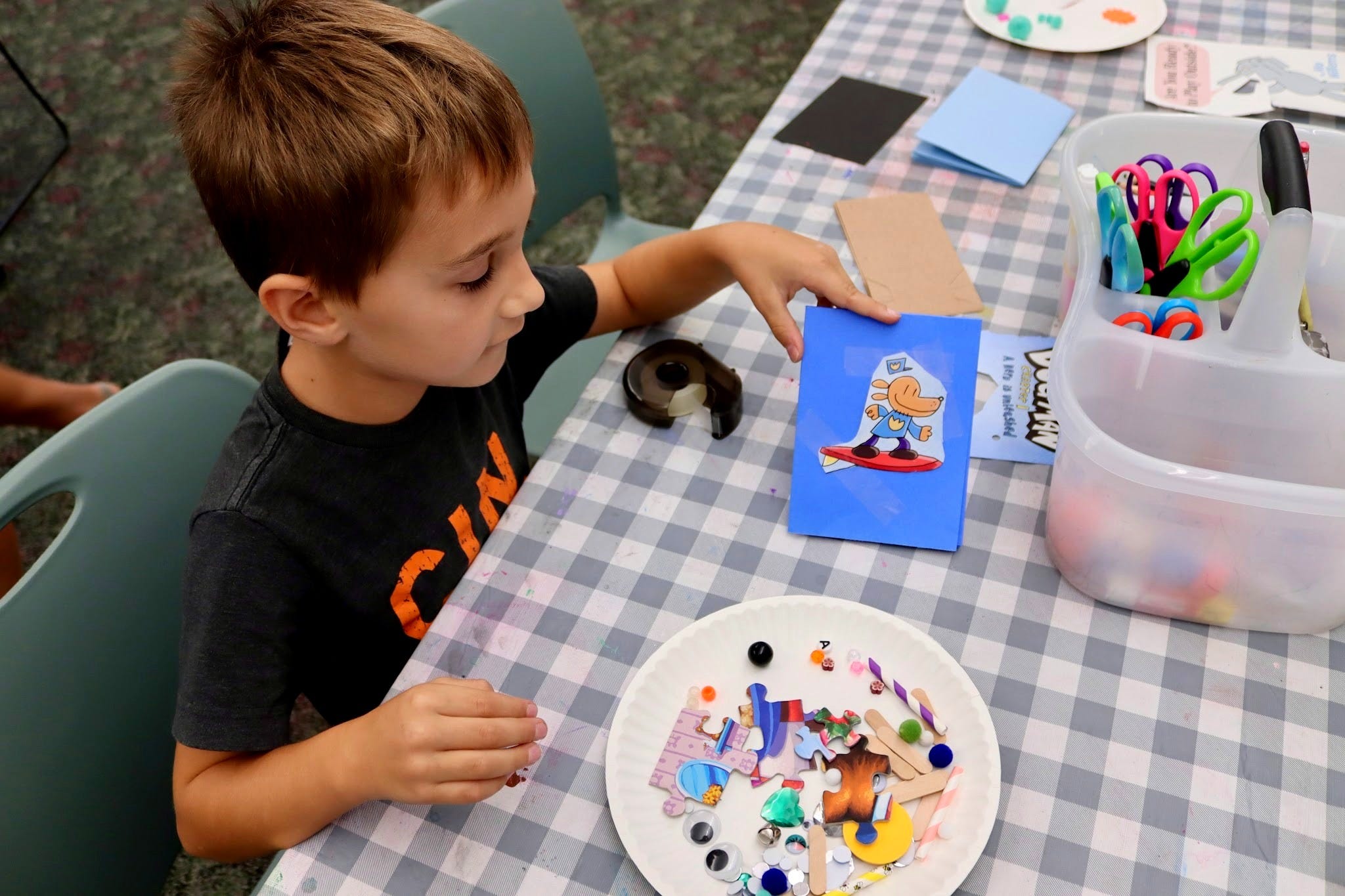
After the serenity of our morning, the flood of children into the library’s function room for Early Out was a change of pace. Sequin-smattered tables replaced chairs and yoga bricks; laughter filled the space that had held only controlled breath and quiet meditation. Today’s activity: design a comic book. Groups formed as some forty children began scribbling capes onto flying dogs and sticking googly eyes to their cover pages.
As I looked over little shoulders at sock heroes and feline villains, I reflected on the role of the library in helping people at different stages in their lives. Whether it’s a comic or a bath bomb, Liz and her team strive to help people create, connect, and learn. By embracing newcomers, supporting education, and creating space for intergenerational relationships, the Solon Public Library is serving its community through more than just books.
~
Oliver Jakes
To read more stories from America’s public libraries, subscribe to our Substack below, visit our website, and follow us on social media.
I want to be a kid again- or at least I need to check out all activities my library offers! So fun and great To learn