
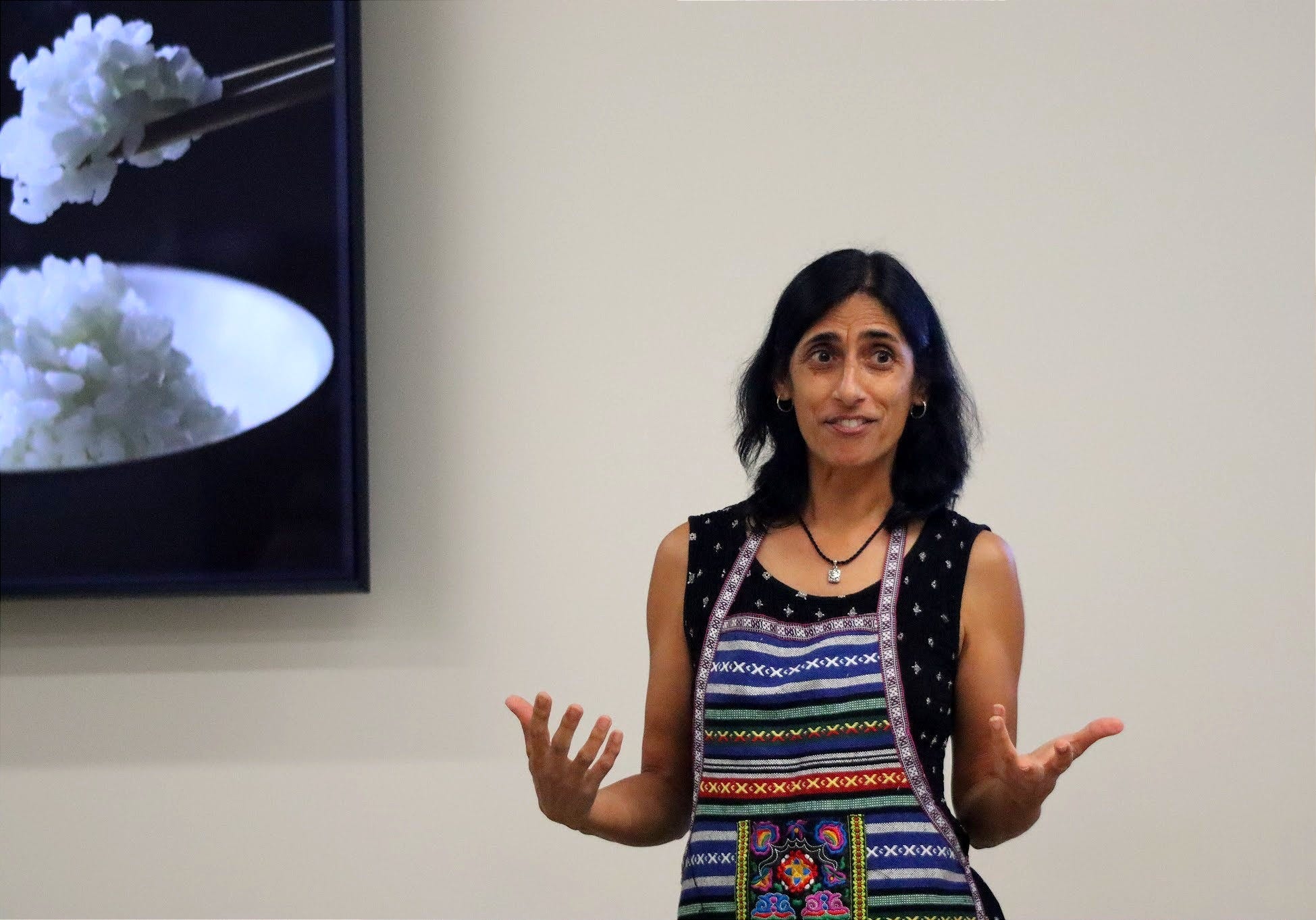
“Food, like music, is a universal language,” Mamta Israni the librarian-chef told us at the end of her rice-themed cooking class at the Grimes Public Library in Iowa. Over the last hour and a half, Mamta had turned an everyday staple into a source of wonder – did you know that Thomas Jefferson risked the death penalty to illegally smuggle Italian rice into America and considered it one of his “greatest services” to his country?1
Mamta started with the basics: What is rice? An edible starchy grain. Where and when did it originate? Asia, in 5,000 BC. Why is it important? For one, half of the world’s population relies on rice for survival. Rice also has cultural significance across the globe. For example, in ancient pagan tradition, rice was thrown at newly-weds to promote fertility, and in Cajun folklore, a true Cajun can be judged by their ability to estimate the number of rice grains in a field.
Expanding cross-cultural appreciation and understanding is critical for a town like Grimes, which is experiencing a large influx of immigrants. Over the past ten years, the arrival of Amazon data centers and other industries has meant that the population of Grimes ballooned and shifted from being almost entirely white to becoming increasingly multiracial.2 An older couple at the cooking class told us that only fifteen years ago, there was one residential street in Grimes and it was 100% caucasian. Now, there are five neighborhoods, the man said, adding, “It’s still not New York, but it’s pretty diverse.”
Mamta told us that she sees her job as an opportunity to intervene in the town’s changing community by expanding locals’ understanding of other cultures through food. During Asian American month, for example, she taught patrons how to make kimchi – a recipe that Karen, a woman in the cooking class, raved to us about.
Experimenting with rice is the perfect way to use a familiar ingredient to learn about a foreign culture. Putting to shame my Basmati-and-Jasmine-only repertoire, Mamta told us that there are more than 40,000 different varieties of rice cultivated around the world. Black rice has historically been reserved for royalty because it is rich in nutrients also found in blueberries and blackberries, and red rice has anti-inflammatory properties and is rich in protein.
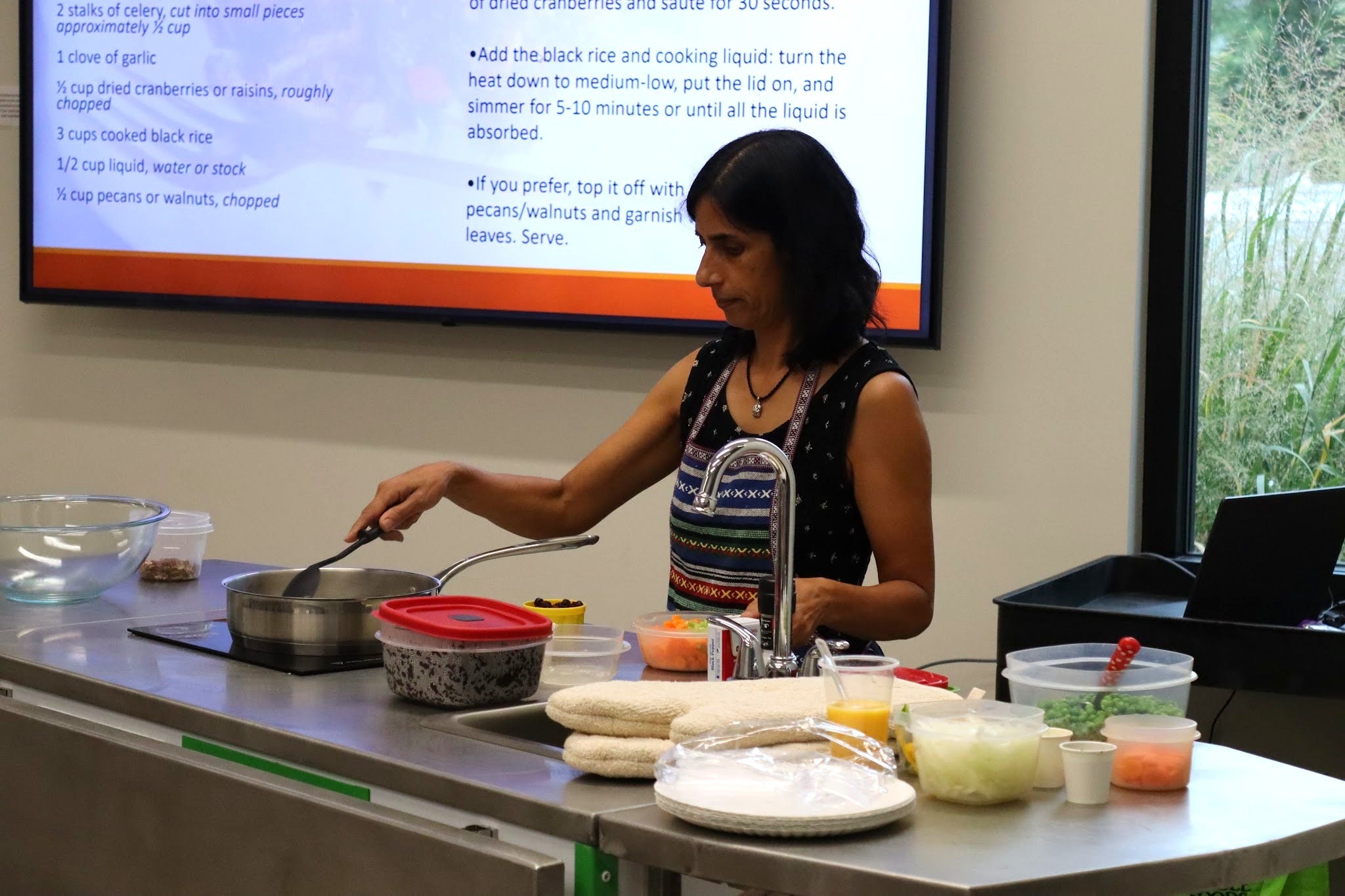
Mamta proceeded to tell us everything we needed to know about cooking rice: One cup of uncooked rice makes three cups cooked; You can batch cook and freeze rice, or leave it in the refrigerator for 2-3 days; You can cool your rice on a cooking sheet so it doesn’t get gummy; And, don’t forget to rinse your rice because it may contain arsenic from the soil!
There are many different ways to cook rice, Mamta told us, as she passed around several library cookbooks with rice recipes doggy-eared. But generally, there are three basic methods: (1) Boil it with a 2:1 water-to-rice ratio so that it soaks up all the water; (2) Cook it like pasta and drain it; or (3) Cook it in another liquid.
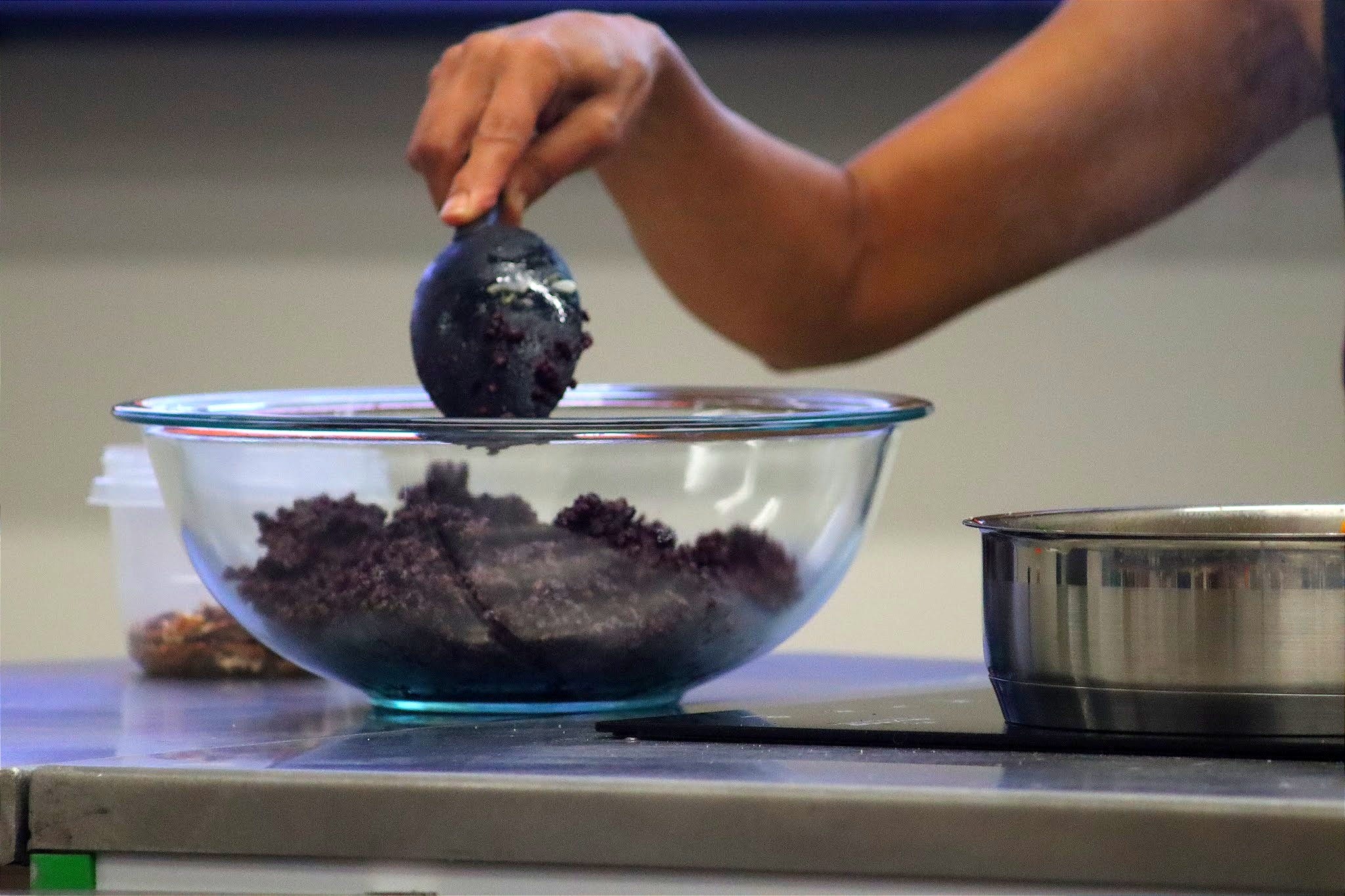
When we finished the informational overview, the class was ready to see some rice cooking in action. Mamta had pre-soaked the rice earlier in the day – a technique she advised reduces cooking time. Standing at the front of the room at her mobile stove, Mamta started with a Black Rice Pilaf (find the recipe at the end of the article!). “Once the oil starts to shimmer, add the onions. And then add the garlic – otherwise the garlic will burn!” Everyone was vigorously taking notes. At this point, I realized that I must have burned almost every piece of garlic I have ever cooked. Soon, Mamta was passing around a bowl of tasty pilaf and I was scarfing down my portion of nutty black rice seasoned with herbs. “You can eat this as a side dish, or add tofu, chicken, or chickpeas to make it a meal,” she told us.
Next, we turned to Thai Fried Red Rice. Mamta added a dash of chopped galangal (“like Chinese ginger”) and garlic to a pan of hot oil and a zesty refreshing smell permeated the room, almost making my eyes water. Narrating her movements, Mamta finished the dish with a squeeze of fresh lime juice and passed it around for all to try.
When the demonstration had finished and everyone was munching on their rice, a patron named Georgina struck up a conversation with the group: “Don’t forget that it’s Mexico’s Independence Day on the 16th!” she said. “Contrary to popular belief, we don’t serve beans with every meal!” she added with a chuckle. When we spoke with Mamta after the class, we learned that Georgina is a regular at Mamta’s library cooking classes who often sends photos of her garden to Mamta and brings pears from her peartree to share with the class.
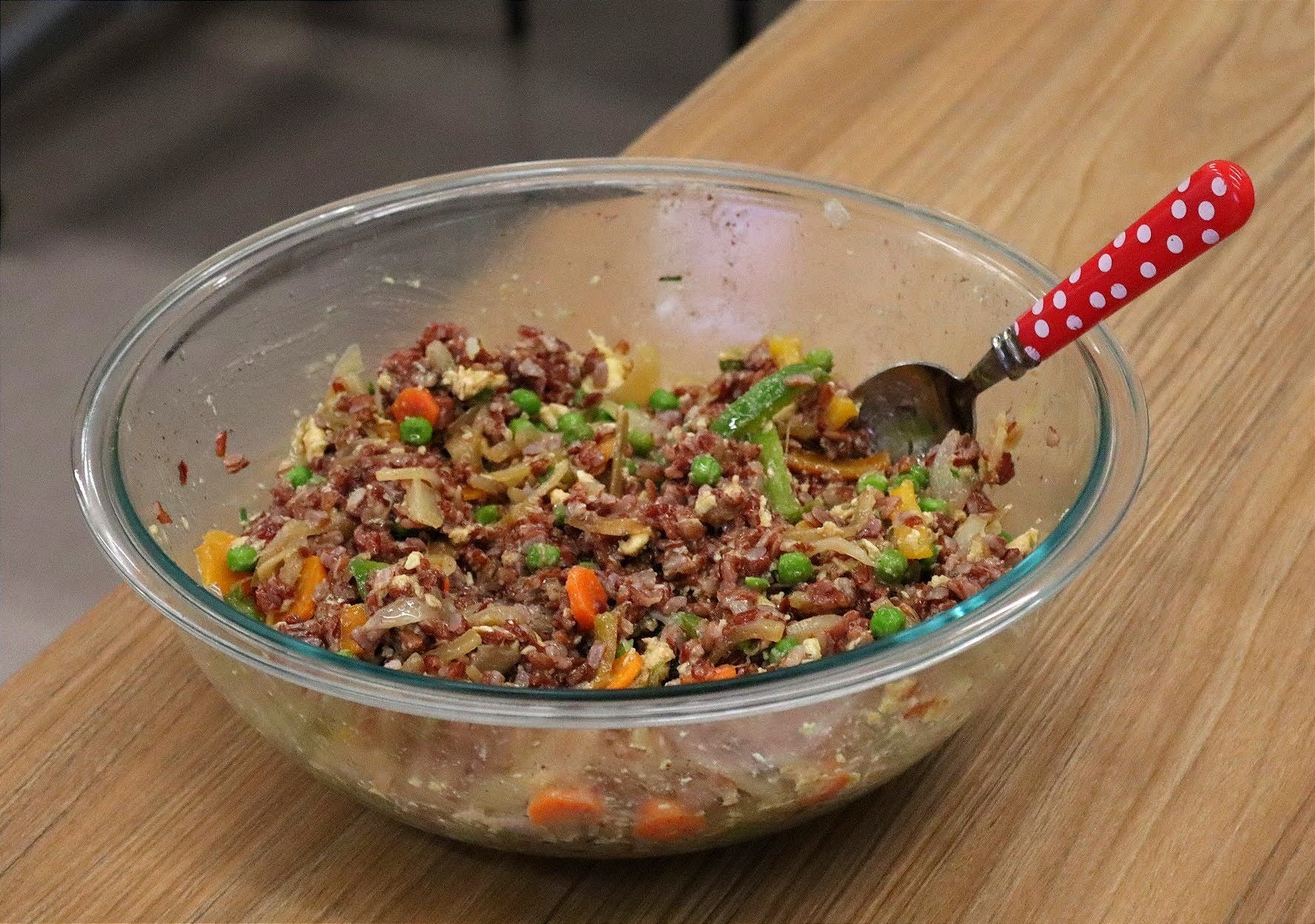
Other patrons piped up to share their favorite recipes they had learned from Mamta. Ali and Lucas said they make the carrots and marmalade dish at least once or twice a week. Lori loves her blueberry pancakes on the weekend. And Karen can’t stop making kimchi. The older couple have been making the pepper and goat cheese dish they learned last class nonstop.
Mamta told the group that next month’s class would focus on cooking with apples. After that, it would be pumpkins, snack mixes, pasta, beans, fermentation, and mushrooms. Ollie and I were very jealous — later that night, we would face yet another couscous and mackerel dinner cooked on our camping stove.
Mamta is not only a chef – she’s also a Master Gardner and leads another class at the library called Growing the Good Life, which includes lessons on composting and other home gardening techniques. Mamta’s personal garden, she told us after class, has over 25 varieties of heirloom tomatoes, peppers, squash, beans, and pretty much every other vegetable you can imagine. She deep freezes everything in the Fall so that she and her family are fed for the rest of the year.

On their way out, an older couple with their daughter stopped to say good-bye. They thanked us for what we were doing and said that the influx of new people in Grimes had meant a reduction in community – people don’t know each other like they used to in the small town. The library, they said, “is one of the only places creating a sense of community at a time when industry has been so prioritized.” At meet-ups like this, they have been able to meet and socialize with newcomers to their community.
~
Carmen Vintro
Black Rice Pilaf, courtesy of Mamta Israni
Ingredients:
2 tbs olive oil
1 small onion, chopped
2 small carrots, cut into small pieces approx. ½ cup
2 stalks of celery, cut into small pieces approx. ½ cup
1 clove of garlic
½ cup dried cranberries or raisins, roughly chopped
3 cup cooked black rice
½ cup liquid, water or stock
½ cup pecans or walnuts, chopped
Cook the vegetables: Heat vegetable oil in a medium saucepan with a lid over medium-high heat. Add in onion, carrots, celery and saute for 5 minutes or until softened. Add in garlic, a handful of dried cranberries, and saute for 30 seconds.
Add the black rice and cooking liquid. Turn the heat down to medium-low, put the lid on, and simmer for 5-10 minutes or until all the liquid is absorbed.
If you prefer, top it off with chopped pecans/walnuts and garnish with fresh thyme leaves. Serve.
Thai Red Rice, courtesy of Mamta Israni
Ingredients:
1 cup red rice
4 cups liquid, water or stock
½ cup bell peppers, thinly sliced
1 carrot, thinly sliced
½ cup green peas, steamed
2 onions, thinly sliced
2 tsp galangal or ginger, minced
1 tsp garlic, minced
3 Thai green chilies, finely chopped (optional for heat)
3 stalks lemongrass **
5 kaffir lime leaves **
1 ½ tbs sunflower oil/ peanut oil or any neutral oil with a high smoke point
2 tbs soy sauce, or more to taste
3 eggs (optional)
cilantro for garnish lime wedges to serve
**Substitute lime zest of one lime for lemongrass and/or lime leaves
Cook red rice: Add the lemongrass pieces and the kaffir lime leaves to water in a deep stock pot and bring it to a boil. Add the red rice and bring it to a boil again on high heat. Simmer for 20 to 25 minutes until cooked thoroughly but not mushy. Drain the rice in a colander. Remove the lemongrass stalks and the lime leaves.
Chill the rice (optional step): Spread the drained red rice on a large tray or plate and allow it to cool. Once cooled, keep the tray of rice in the refrigerator for 20 minutes or freezer for 10 minutes. This will help remove extra moisture from the rice to give you the best fried rice.
Stir-fry red rice and vegetables: Heat the oil in a large pan or wok on high flame, add the minced galangal and garlic and stir-fry lightly, but not browned. Add the onions and chili. Stir-fry until translucent. Stir in the grated carrots, cooked peas and soy sauce. Stir-fry for 5 minutes. Reduce heat to medium and fry for 5 more minutes. If you’re using eggs, beat them with a few dashes of salt and pepper. Make space in the middle of the pan by moving the vegetables to the sides. Add the eggs and scramble them until set. Mix in the rice when the eggs are done and stir well. Turn off the heat. Garnish with chopped cilantro or green onions and lime.
To read more stories from America’s public libraries, subscribe to our Substack below, visit our website, and follow us on social media.
To find out more about Thomas Jefferson’s fascination with rice, visit: https://www.monticello.org/encyclopedia/rice
In 2015, 97% of the population in Grimes were white, while in 2024, 80% were white, 6% African American, and 3% Asian. See: https://datausa.io/profile/geo/grimes-ia
please thank Mamta for something so simple and so fundamental such as a sound recipe for no less than rice !!!! Louis
Such a great way to share cultures. Love it.