
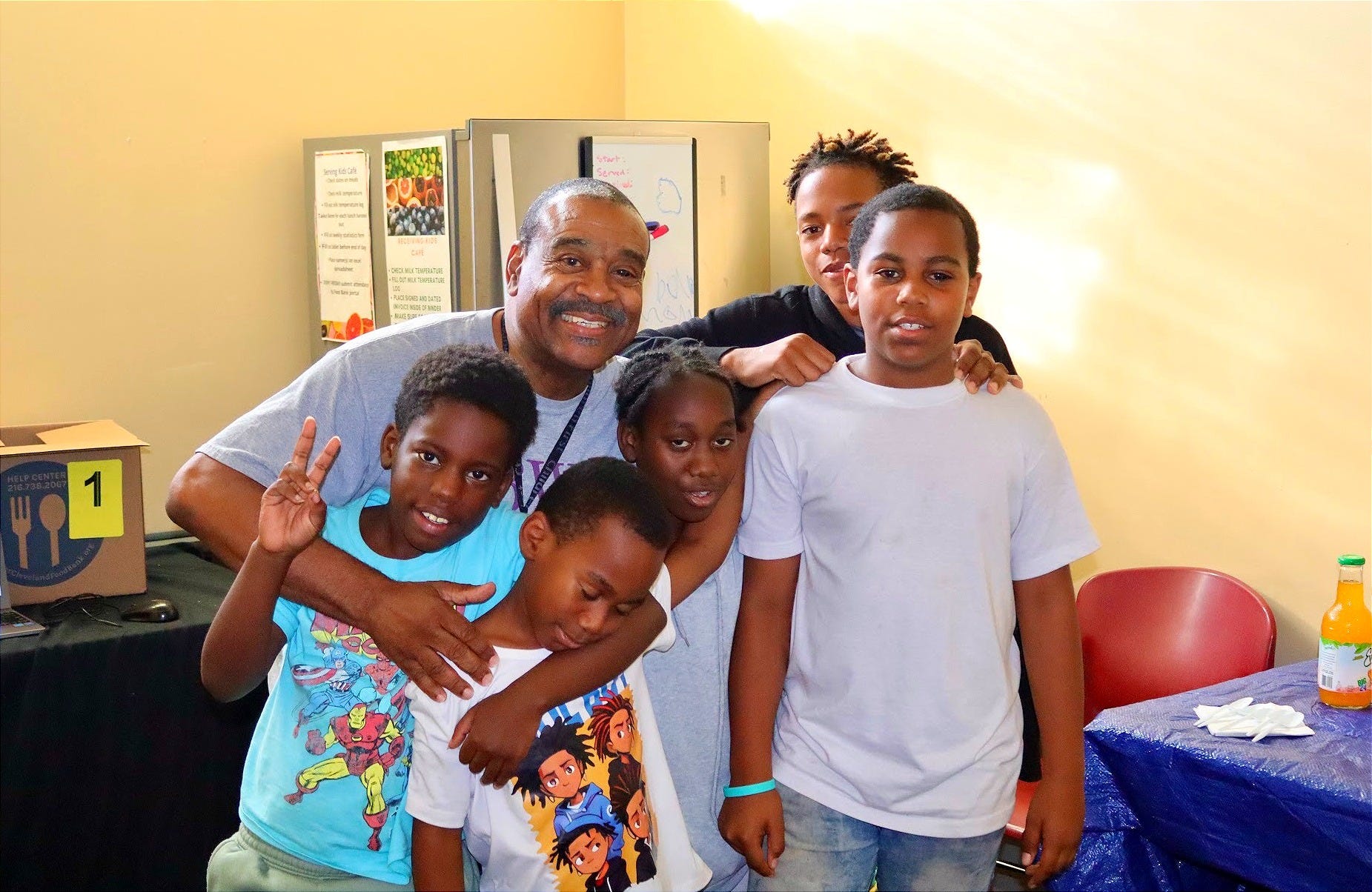
“Quick-quick, slow. Quick-quick, slow,” Leonard says as he snaps his fingers and moves his feet to the salsa music playing from the instructional Youtube video at the front of the room. Behind him, five young boys scramble to follow his footwork. For several minutes in Cleveland’s Garden Valley Branch, Leonard, the children’s librarian, has – at least momentarily – successfully corralled the boys’ boisterous horseplay into the salsa basic step. Looking back to make sure everyone is participating, he encourages: “Yes, you’re getting it guys! Now, let’s add the hips!”
Thanks to Leonard, when these boys were dropped off at the library after school, a fun, educational activity awaited them. “What’s special about the library is that it’s not a school classroom,” Leonard tells us after the event. “The kids get a different kind of learning experience here – it’s not stressful.”
When the salsa music ends, the boys take a seat. “Does anyone have friends at school who speak Spanish?” he asks. Several put up their hands.1 If those friends come from Spanish-speaking countries like Mexico or Guatemala, he explains, then they are Hispanic. And today is the beginning of Hispanic Heritage month, when we celebrate their culture – their food, their art, Leonard says. As he speaks, the boys’ eyes flicker toward the tantalizing bowl of golden chips and creamy queso on the back table – an end-of-lesson reward that Leonard has positioned in full view, knowing it will buy him a few more minutes of their attention.
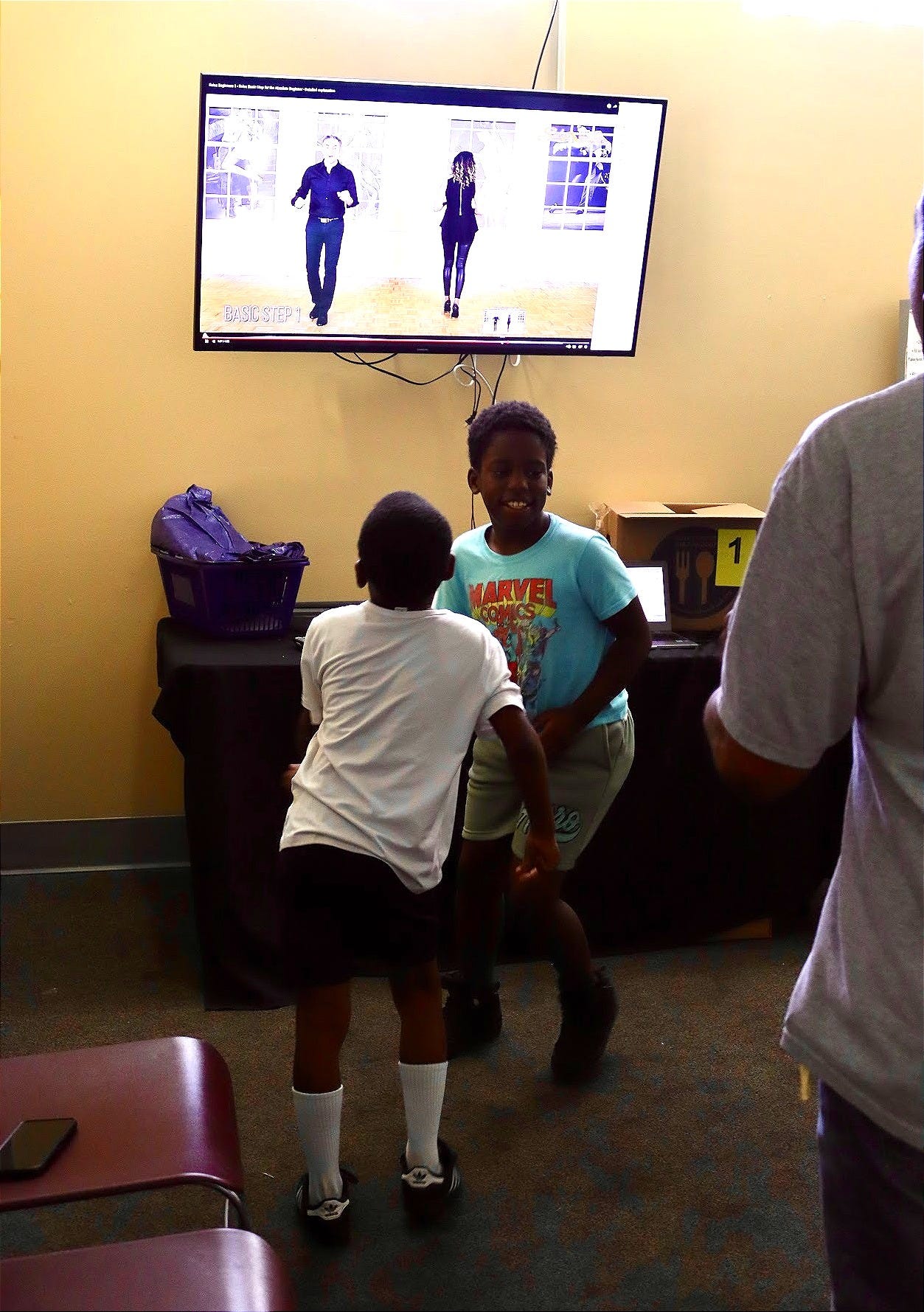
After listing several Hispanic countries and explaining that even though Brazil is a Latin American country, it doesn’t make the cut because it is not Spanish-speaking, Leonard teaches everyone a few Spanish phrases. “How do you say hello in Spanish?” he asks. A chorus erupts: “Hola!” the boys sing. Together, they run through the rest of a standard greeting – ¿Cómo estas? Estoy bien! Y tu? And when Leonard finally unleashes them onto the tortilla/queso bounty, the boys add mas por favor to their vocabularies.
“They become our children in a way,” Leonard reflects. “These kids come in with situations that aren’t their fault. Their parents drop them off – maybe they have too much to do or need a break from the stress. If we have nothing ready for the kids, they would feel alone and abandoned. Our responsibility is to set up programs that nurture them so they don’t feel that way.”
After 27 years of working at the library, Leonard has seen the intergenerational impact of his labor. “Kids who were served by the library at younger ages come back years later with their lives changed,” he tells us. “The library impacted them to the point where they want to come back years later and share it with their own children.”
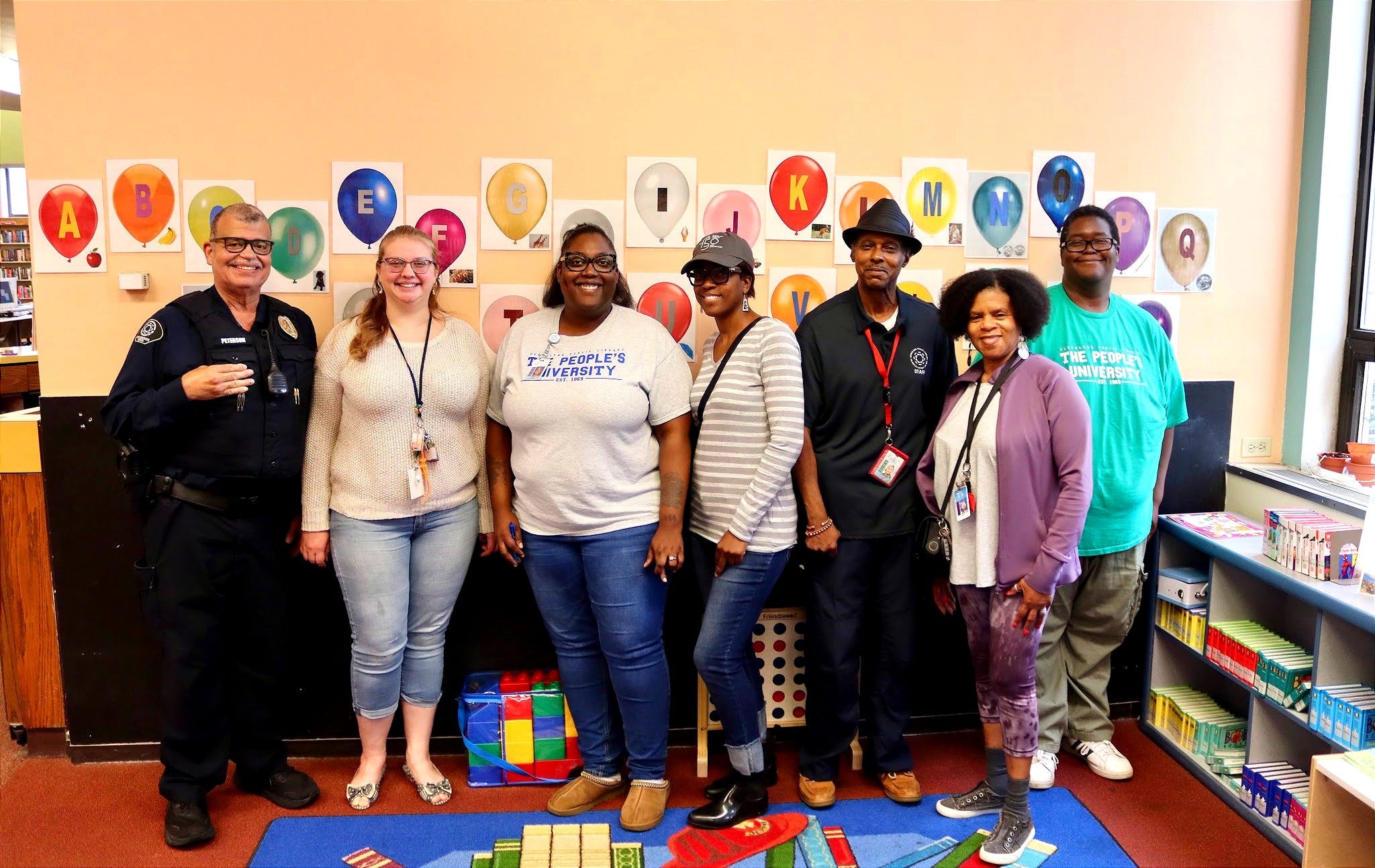
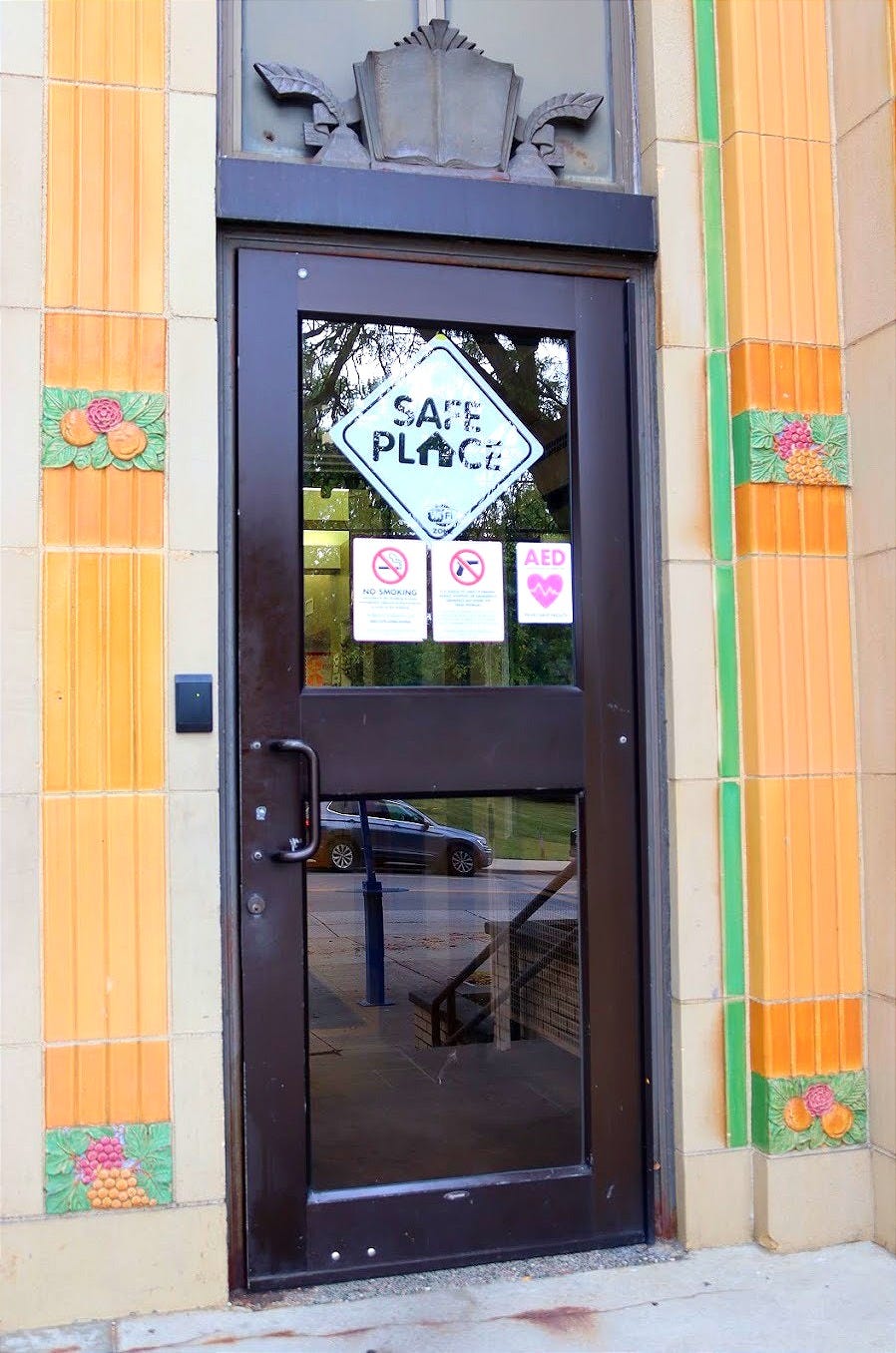
Later that afternoon, we visit the E 131st Branch (“East-one-three-one street” if you’re a local), a Cleveland Public Library that the librarians say is an “after school social club.” Felicia, one of the librarians, tells us that the library is a safe place where children who attend the troubled youth school across the street can hang out.
Like at the Garden Valley Branch, children who come to the E 131st Branch after school are met by librarians like Katie who are dedicated to nurturing their curiosity and education. Katie tells us about her experience with a young girl who was being homeschooled and worked in the library. The girl spoke with Katie about her career and confessed that she wanted to be a writer one day. What could she do to develop her writing skills? she had asked Katie. The two devised a plan: She would write a chapter of her book every time she came into the library and Katie would review it and provide feedback. Soon, a fantasy novel full of princesses and princes was taking shape. The work eventually became a five-chapter book, Katie tells us.
According to a 2026 MIT study, childcare is the single highest cost a family living in Cleveland incurs, unless a caregiver devotes themselves to the duty full-time.2 For many families who can’t afford the high cost of childcare or to live on a single income, their only option is to drop their kids off at the library after school. Unfortunately, recent tax cuts in Ohio have meant that Ohio’s public libraries are losing $25 million in funding this year, leaving librarians with even fewer resources to run this essential service.3 Nevertheless, whether it’s teaching children to salsa and appreciate the diversity of cultures in their community, or mentoring them as they write their first book and practice a new skill, librarians like Leonard and Katie are still finding ways to ensure that every child can grow up in a safe and nurturing environment.
~
Carmen Vintro
To read more stories from America’s public libraries, subscribe to our Substack below, visit our website, and follow us on social media.
After Black (46%) and white (36%), Hispanic or Latino people make up the third largest racial group in Cleveland (13%). See: https://www.census.gov/quickfacts/fact/table/clevelandcityohio/PST045225
“Ohio libraries are facing a perfect storm of funding challenges",” Cleveland.com, https://www.cleveland.com/open/2026/03/ohio-libraries-are-facing-a-perfect-storm-of-funding-challenges.html
With libraries wanting to play such a role, and who hire such caring and giving people, my heart swells knowing that a community - not only the immediate family- cares about the well-being of these children.
on top= memories of splendid Clevaland go back to 1959….along w/ my first FedTax 1040..!!!!!