
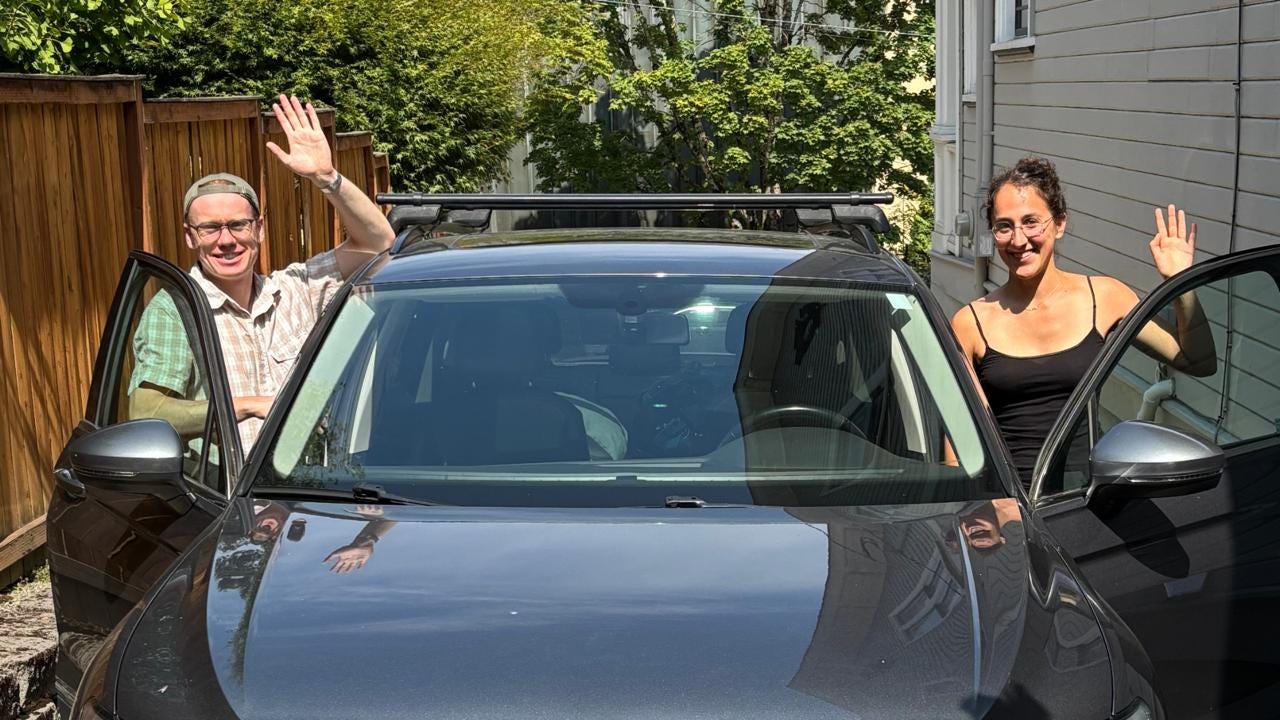
Cries, yips and growls alerted us to the coyotes outside the tent. Sleeping bags zipped to the top, we huddled together like two tasty burritos and wondered, how did we get here?
That morning we had arrived in Donnelly, a small town in rural Idaho. Donnelly Public Library recently became America’s first adult-only public library because of new state laws that restrict children’s access to books. We spent the day speaking with Library Director Sherry Scheline about censorship and what it means for education. When Sherry learned that we had yet to find a campsite, she kindly invited us to pitch our tent at her nearby ranch. There, we made our nightly transition from writers to campers, trading laptops for lanterns as we traveled across the country on a shoestring budget.
Our names are Carmen and Oliver. We met a year before the trip while studying for our master’s in English at the University of Cambridge in the UK. Books and poems like Woolf’s To the Lighthouse and Frost’s “The Road Not Taken” have enriched our lives, but dissecting literature in seminars sometimes felt like it sucked the soul out of reading. A burning question emerged: how do the books we love impact people’s lives beyond the seminar room? In search of an answer, we set out to drive from west to east across America, stopping library by library to visit the places where people meet books.
As we drove thousands of miles visiting public libraries large and small, we met incredible people devoted to serving their communities. It quickly became apparent that libraries are much more than repositories of books. They’re where kids hang out when there’s nowhere else to go, and where elders can stretch their bodies at chair yoga. They’re where voters can often register, learn about candidates, and sometimes even vote. They’re where hikers take survival courses and home cooks learn new recipes. They’re where immigrants perfect their English and people apply for jobs. All of this, of course, happens in spaces dedicated to books.
But these centers of learning and community are under threat. With federal support slashed and local budgets tightening, several of the libraries we visited may no longer exist by the time you read this.
If that wasn’t enough, libraries are facing attacks on their core principle – the freedom to read. From 2021 to 2024, book challenges (a process in which someone reports a book and asks the library to remove it from their collection) have surged tenfold compared to the previous two decades.1 On top of that, many states have passed heightened legislative restrictions on library material that target predominantly LGBTQ+ content and authors. Right now, many communities across America are deciding if they want to keep their libraries open. Our trip took on a new urgency: to document and share what we are at risk of losing.
Why do libraries matter today? How do they connect people with the world around them? What is the role of the modern American library in responding to the country’s most urgent social issues?
Over the next nine months, we’ll explore these questions and more in a series of stories about the libraries we visited and the extraordinary people we met, published every Wednesday on this Substack. Subscribe below, visit our website and follow us on social media to stay updated on our progress.
Carmen & Oliver
Between 2000 to 2020, an average of 273 average unique book titles was challenged per year. From 2021 to 2024, that number increased to an average of 2,780. See “Censorship by the Numbers”, American Library Association, https://www.ala.org/bbooks/censorship-numbers.