
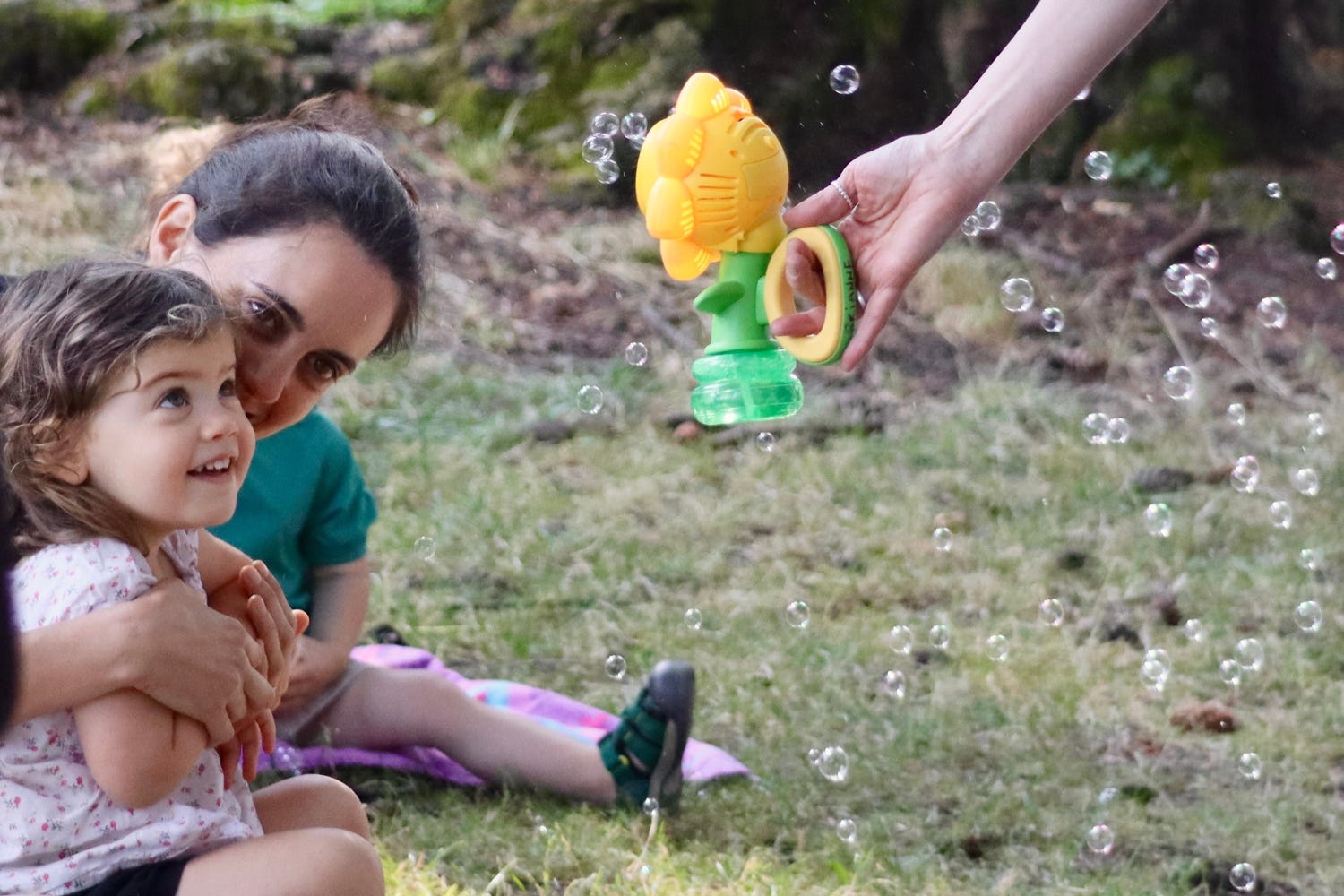
What do books and bubbles have in common? I thought as another toddler rushed past my knees. Ecstatic, unstable and determined, the little boy made a not-so-straight beeline for the green and gold sunflower-shaped bubble blower. Brianne – the machine operator/sorcerer responsible for his soapy glee – ran, weaving around picnic blankets and tree trunks as she went.
Brianne is one of the two Youth Librarians from Multnomah County Library whom Carmen and I met on a warm summer morning at Outdoor Storytime in Sellwood Park in Portland, Oregon. The other, Amy, brought her own magic-maker – a cedarwood ukulele with a white trim, slung over one shoulder as she welcomed patrons into a shady corner of the park.
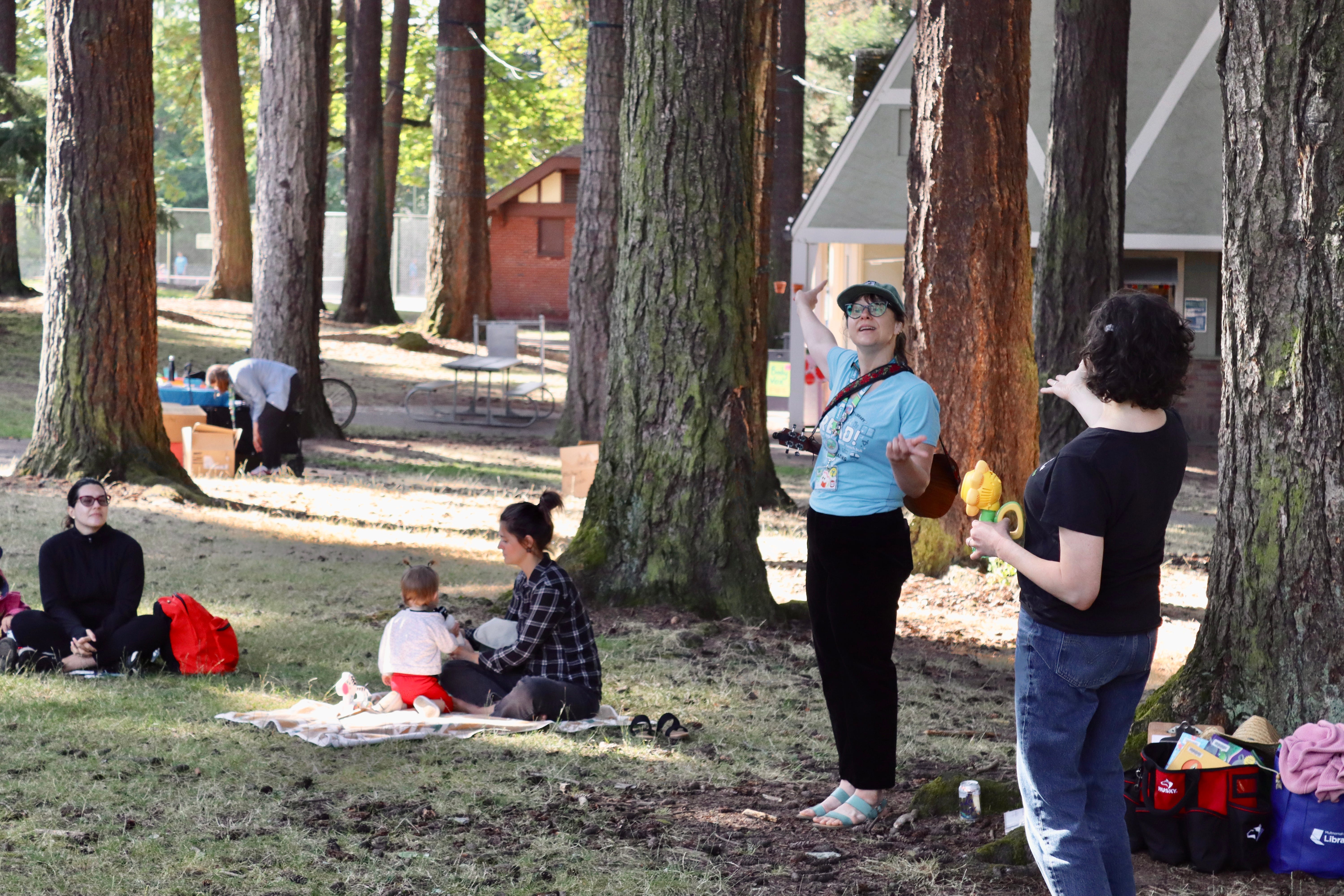
Storytime programs are organized by libraries across the U.S. These 30-minute-to-one-hour sessions create space for children to read, sing, listen and play.1 During the warmer months, Multnomah County Library hosts their program beneath the enchanting branches of Sellwood Park’s Douglas firs and giant sequoias.
Joined by nearly thirty child/guardian groups, Amy opened proceedings with ‘The Sleepy Bunny Song’, a tune that lodged itself firmly in a deep recess of my brain for weeks. Children and adults rose to their feet and bounced as they sang, “Hop little bunny, hop hop hop!” (Carmen jumped along, pencil in hand – the only adult to do so without a child companion).
With all that hopping the bunnies earned a snooze. Amy slowed the tempo to a lullaby, “Sleep little bunny, sleep, sleep, sleep…” she sang, softly. One by one they placed their heads on padded quilts and soft green grass. It felt like the final five minutes of yoga, when I often find myself wrestling with the urge to snore.
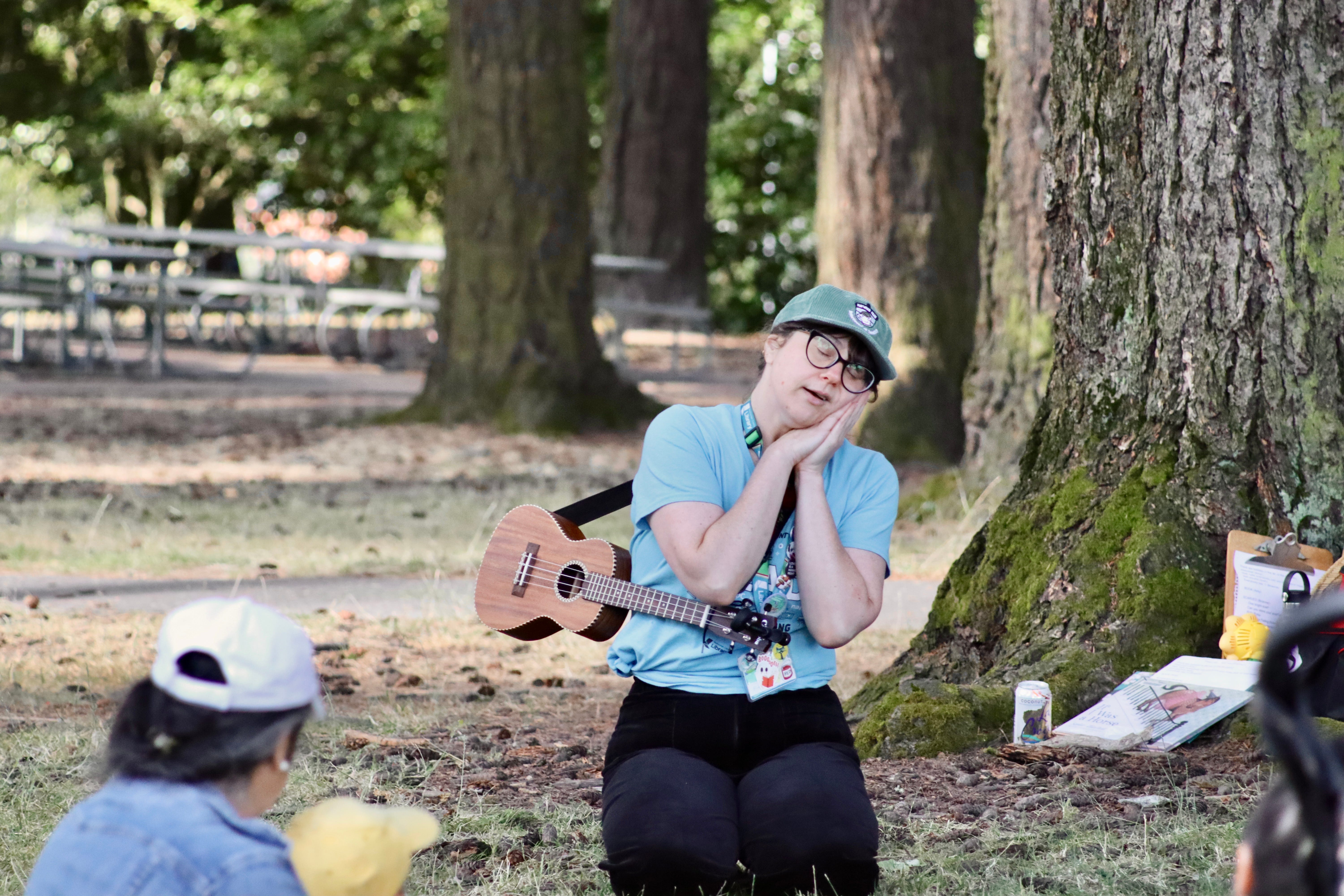
“Does anyone like to pretend to be another animal?” Amy asked the crowd, stirring the field of almost-nappers to peaceful attention.
“Elephante!” yelled a little girl in a sudden burst of excitement.
A warm round of chuckles responded, and Amy sang, “Drink elephante, drink drink drink!” as Brianne and the children imagined their arms transforming into trunks. The singing librarian used the opportunity to incorporate other Spanish words into the tune. “Can everybody say jirafa?” Amy asked us.
“Jirafa!” called the crowd.
“Stretch jirafa, stretch stretch stretch!” they sang as they stood on their tip-toes and reached skyward. The girl who had called out ‘Elephante’ danced, making a dizzying figure-of-eight around her mother.
The song was a perfect segue into the session’s first book: If I Was a Horse, by Sophie Blackwell.
“If I were to gallop, I’d gallop all day,” Amy read to the crowd.
“What does gallop mean?” interjected a curious voice to my left.
“To run really fast!” Amy replied as she turned a page, showing the book to the group so that the children could read the words for themselves. The illustrations were met with a mixture of shock and delight as Blackwell’s horse became more and more mischievous.
“The horse is going swimming!” one of the younger attendees shouted in disbelief, as the horse dove into a pool.
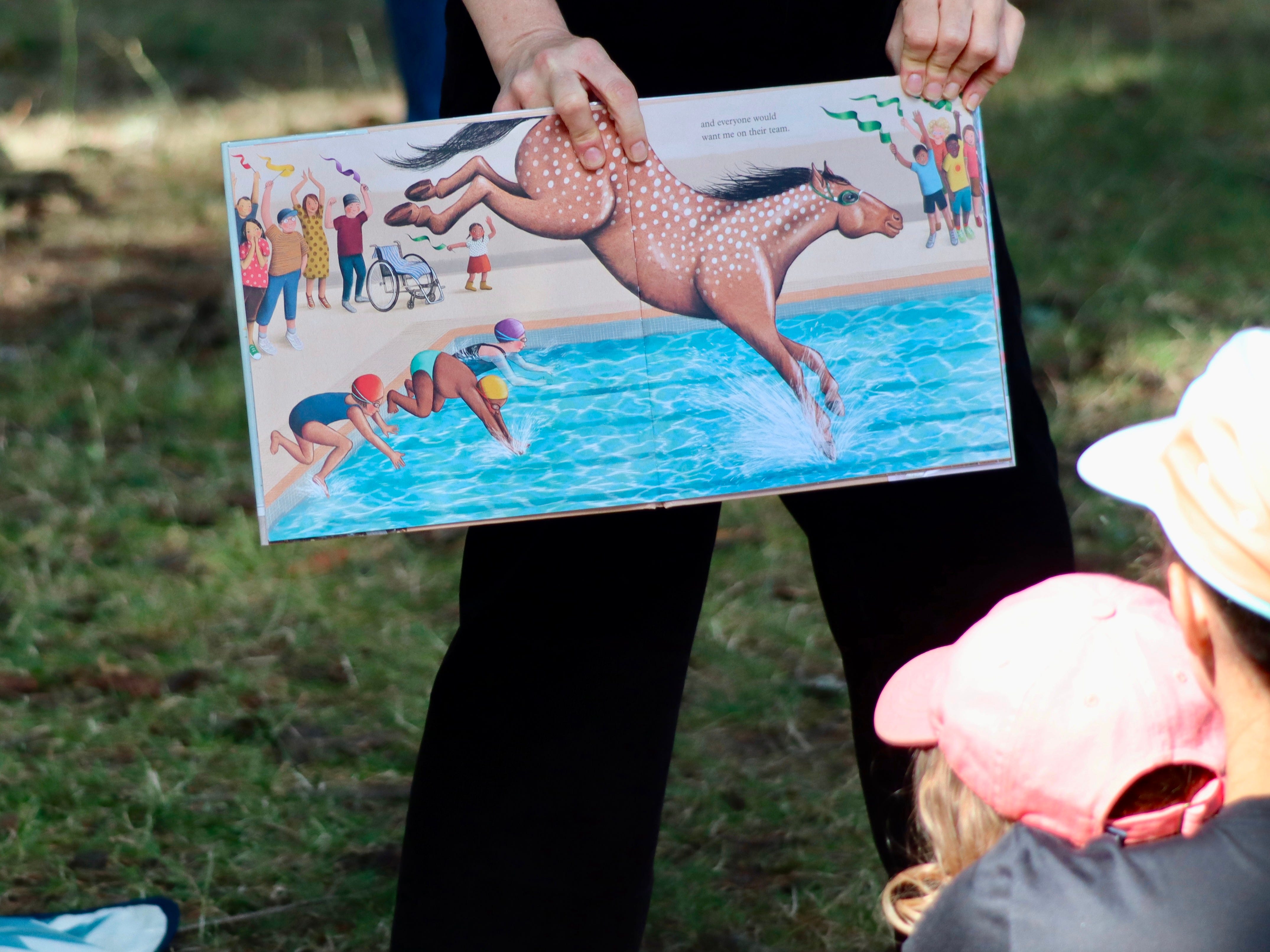
I was struck by how absorbed everyone was in the reading. Flicking through my camera afterward, I noticed the same wide eyes, giggles and gazes on almost every face: the look of many imaginations galloping (and swimming?) alongside the story’s steed. It was a reminder of how powerful books can be when read aloud.
Many recent reports record significant drops in the proportion of U.S. parents who read to their children. Scholastic’s most recent ‘Kids and Family Reading Report’, for instance, recorded a decline from 43% in 2018 to 37% in 2022.2 Research also shows that reading aloud to children – particularly up to the age of five – builds self-esteem and vocabulary, improves imagination and sleep, and results in overall more positive long-term mental health. The laughter and curious questions sparked by If I Was a Horse seemed to confirm this impact in real time, as the children discovered new words and felt confident enough to ask about them.
After the reading, Brianne switched the focus from literacy to movement with a short exercise that used colored scarves. Twizzling, shaking, wagging, and wiggling, reds, blues, greens and golds shone as they caught the sun poking through the trees. As children, we learn so much about the world through our bodies as we grip, crawl and chew our way through new discoveries. The scarves let the little patrons learn about the wind by trying to catch it and connect with each other through play and imitation.
Scarves in hands (and sometimes wrapped around faces), everybody returned to their picnic blankets for the second reading: Who Am I? An Animal Guessing Game’ by Robin Page and Steve Jenkins.
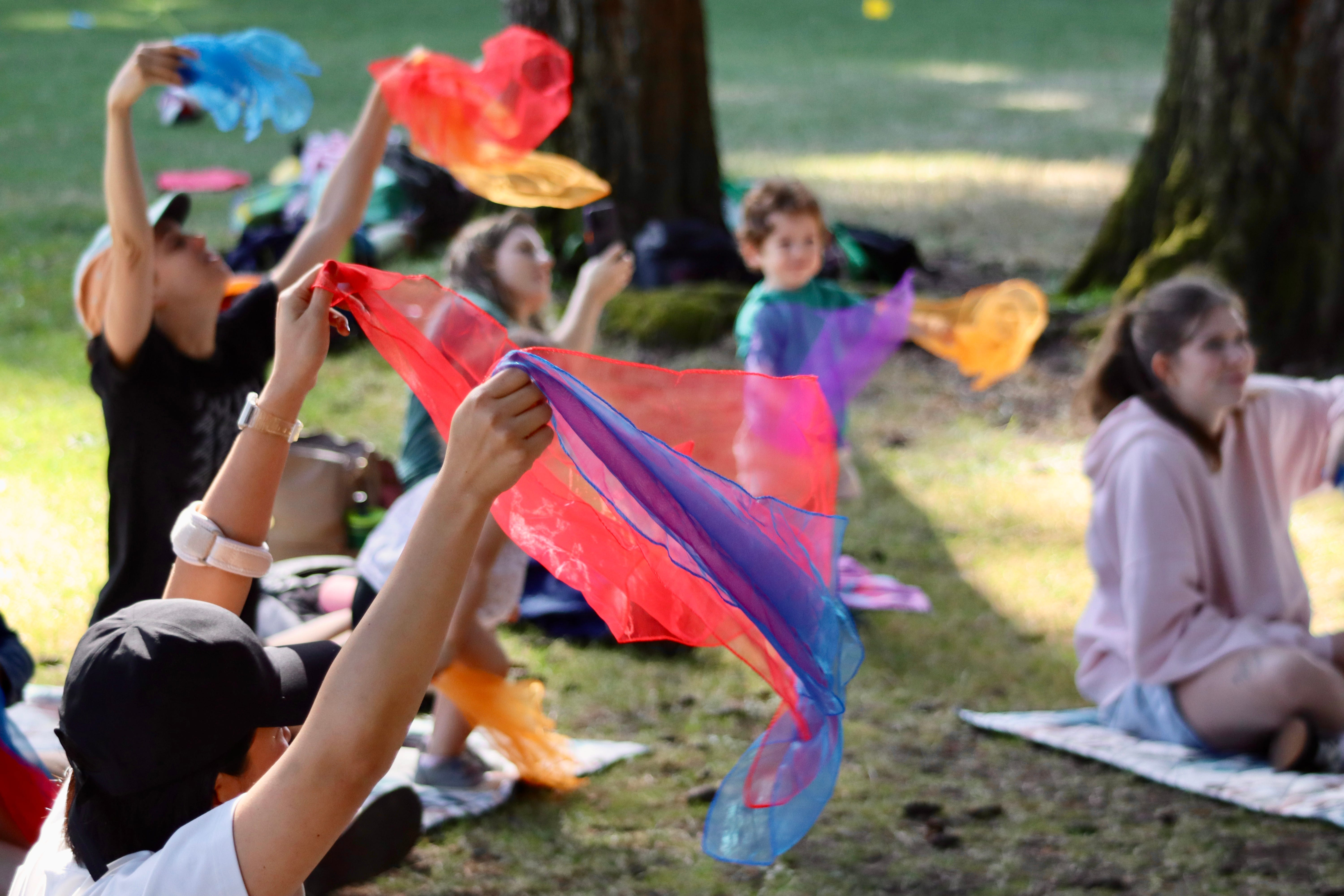
The premise of the book was simple, but the effect was brilliantly calamitous. Brianne read out a series of clues and the children guessed the animal, using the words and images on the page as guides.
“I am green. I hop.” announced the librarian.
“Bunny!” shouted one voice.
“Kangaroo!” yelled another.
“I stick my tongue out. I eat flies…” Brianne continued.
“Lizard!” came a shout from the back.
“Frog!” called another.
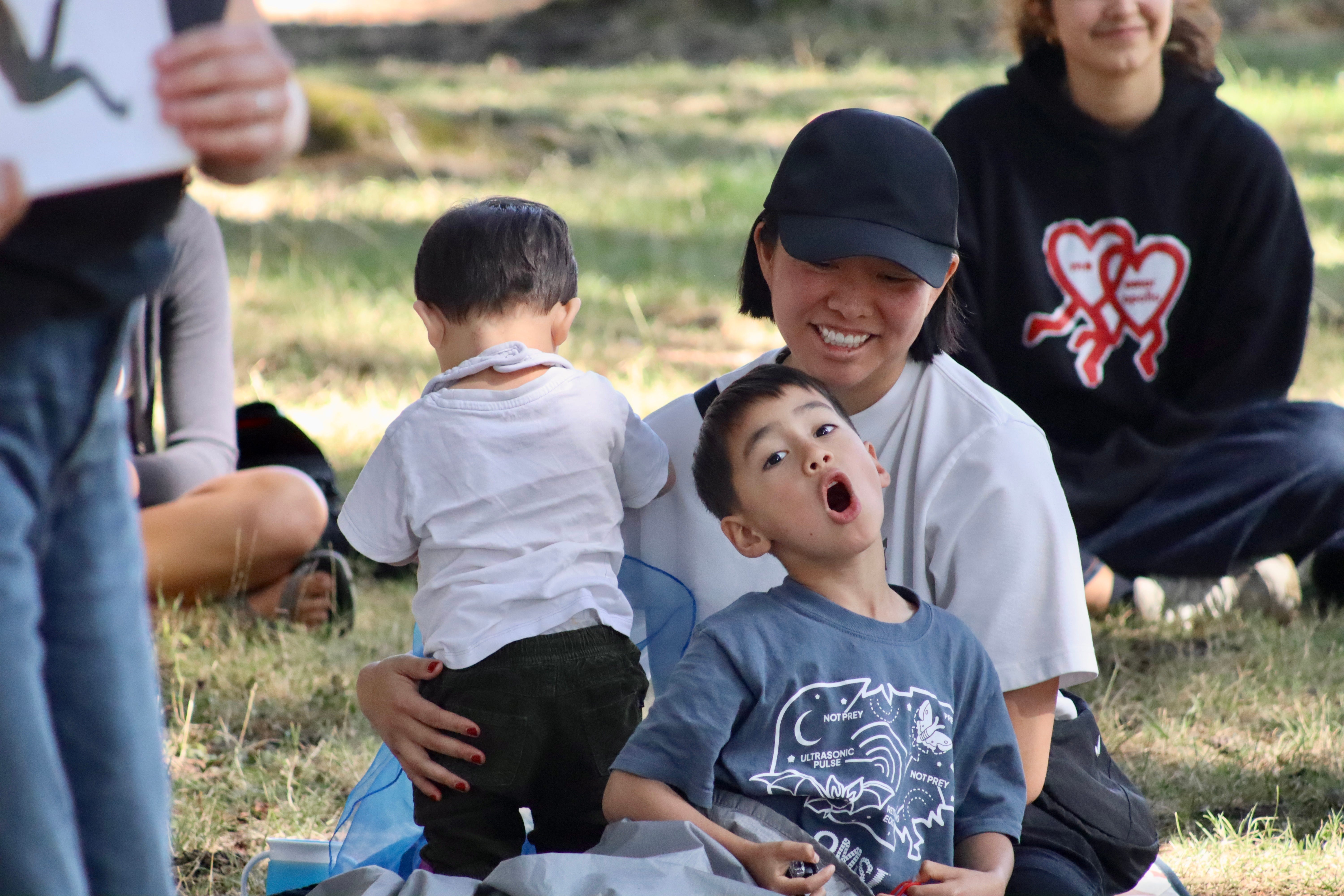
Later, when we spoke with Amy, she told us that she often uses books about animals because they help to engage younger kids in a physical way. Stories about galloping horses, stretching giraffes and roaring lions all help to connect readers to their bodies. The rustling leaves and twittering birds of the park let children move, listen, and imagine among the same trees, grass and creatures on the page.
After a few more games and exercises, Storytime reached its happily ever after (or rather its ‘until next week’), and the parents and guardians had the chance to catch up while their children played. I was reminded of my two best friends, Kerry and Jake, whom I met at my village’s version of Storytime (‘Playtime’) in rural England. As we played, our parents got closer, until soon we were going to each other’s houses after school and planning group camping trips. Now, 25 years later, our parents are still best friends, and I’ve grown up with an extra set of aunties and uncles. Watching these parents chit chat while their kids played together in the grass, I imagined how they might one day reminisce about the first time they said ‘hello’ after Storytime. It became clear that the library is as much about connection as it is about books.
As she folded a red blanket, Andrea – one of the mothers in attendance – told us that as a stay-at-home mom, she wanted to find things outside of the home to do with her young daughter, Izzy. “It can get expensive to put your kid in a lot of different activities,” Andrea said. “And the library is one of the only places where you can get this kind of activity for free.” She laughed as she told us about Izzy’s habit of pulling books off of the shelves in a flurry whenever they visit the library, which has become much easier to access since the branches near their home in northeast Portland have reopened after renovation.
We also chatted to a father, Michael, and his daughter, Marlowe, who were visiting Portland from Michigan. Because Storytime takes place across the country, Michael knew that they could swing by to play, learn, and be together away from home. “We go all the time in Michigan,” Michael said, “Marlowe loves it. This gives her some consistency, and it’s a really fun thing to do together while we are in Portland.”
As the crowd began to thin, we turned to the morning’s star performers. Brianne told us that she became a librarian because libraries meet people at their point of need. The library is one of the last free community spaces where people can find help, seek shelter, and connect. This would become a defining framework through which Carmen and I came to understand libraries throughout our trip: as services and spaces that meet different communities at their unique points of need.
So, what do books and bubbles have in common? Both challenge our perspectives: the world takes on new colors and shapes when seen through a bubble, or imagined in a voice other than our own. Bubbles and books beckon touch – one to be popped, the other to be held and, in this case, discovered through stretching, roaring and dancing. But as I joined this gathering of bursters and readers for the morning, I realized that above all, books and bubbles can inspire wonder, presence and togetherness. We just need people like Brianne and Amy to show us how.
Oliver Jakes
To read more stories from America’s public libraries, subscribe to our Substack below, visit our website and follow us on social media.
See The American Library Association, ‘History of Preschool Storytimes’, <https://www.ala.org/tools/history-preschool-storytimes>. The program was first introduced by educator, writer and library advocate Anne Carroll Moore at the Pratt Institute in New York City as early as 1896, then taken up by the Carnegie Library of Pittsburgh in 1900 under the leadership of Francis Jenkins Olcott (the first Head Librarian in the library’s children’s department).