
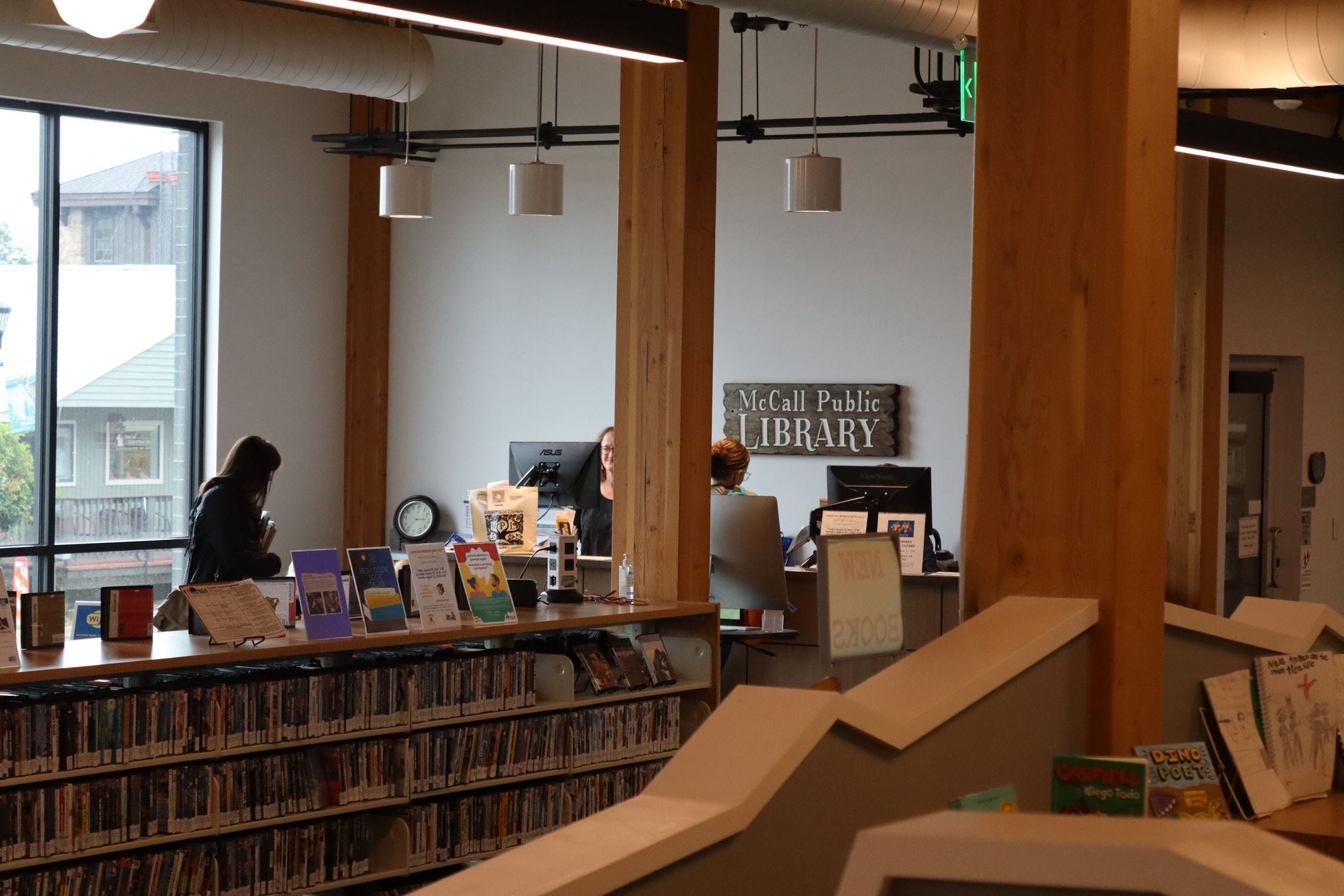
After hearing about our plans to drive 20 miles down unpaved roads to a remote campsite in a nearby forest without one of those tank-like Ford F-150s that everyone else in the area seemed to own, the Baker County librarians intervened for fear of our safety. Hadn’t we looked at the weather forecast? Didn’t we see the major storm approaching tonight? Those dirt Forest Service roads would be rivers tomorrow morning.
The librarians pooled their knowledge and found us a campsite down 50 miles of straight main roads on the bank of the impressively wide Snake River. We pulled into Farewell Bend State Recreation Park, chose a pitch, and began setting up our home for the night. By this point in the trip, we had settled into predictable rhythms: I set up the gas stove on the picnic table, chopped the onions, and boiled our pasta water; Ollie laid out the groundsheet, hammered in the stakes, and hoisted up the tent.
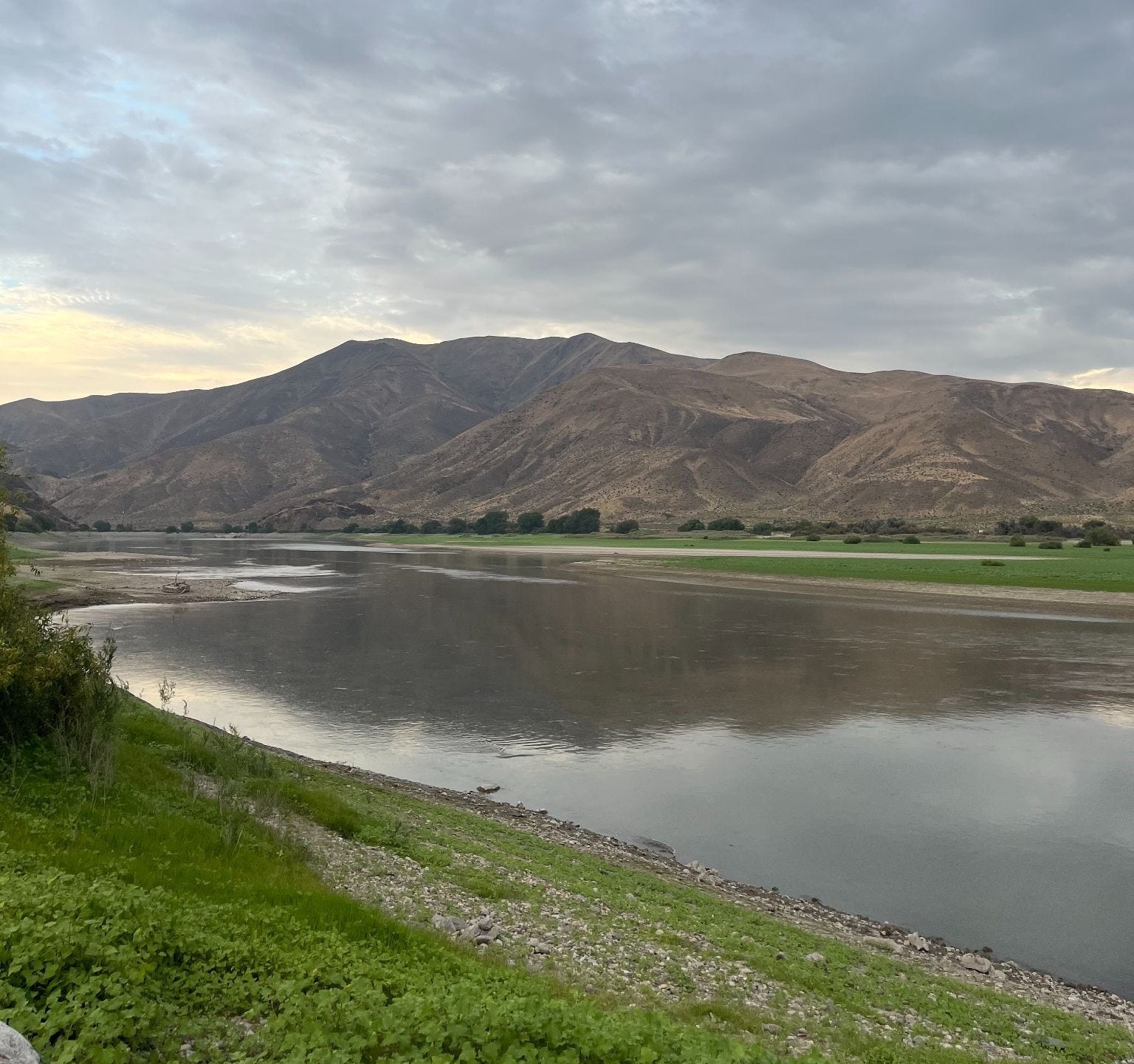
Mid-onion-chop, I looked up to see the darkened rolling hills on the horizon. A brilliant flash lit up the mass of clouds couched in the cradle of the Snake River valley. I pulled out my phone and walked over to the one area in the site with wifi and looked up the weather forecast. Flash-flood alert. A strong gust of chilled air from the approaching storm smacked me in the face as I rushed back to the tent.
Facing deluge from the river and sky, I ran over to one of the only other people on the site: a park ranger who had inexplicably decided to start mowing grass in the dark of night. He kindly stopped his whirring engine when I waved him down and gesticulated toward the approaching storm. “Should we be worried? Are we camping in a floodplain?” I asked, trying to hide my novice panic. The terrible tragedy of the Texan Guadalupe River flood only a month prior was on my mind. “You’ll be totally fine,” he reassured me, “the storms always peter out by the time they hit this basin. The rain should last 10-15 minutes at most.”
That night, it rained so hard that we had to yell our good-nights. The sound of the entire water-logged sky pummeling down onto our tiny two-man hiking tent was deafening. The storm didn’t peter out—it only intensified through the night. By 3am we were worried. “SHOULD WE LEAVE?” Ollie shouted to me from one pillow over. He stuck his hand out of the tent to touch the earth. It was damp, but not saturated. “WHERE WOULD WE GO?” I shouted back. The thought of going out into the rain and the fatigue of early morning delirium kept us in the tent. When we woke up later that morning, we were still squeezing each other even though the rain had calmed to a pitter patter.
We loaded the car in a tired silence, and set off toward our next library in McCall, Idaho. Tall, tightly packed evergreen trees spilled over on either side of the road. An hour of hot air and sing-along 80s hits warmed our sodden spirits. We emerged from Payette National Forest onto the bank of a large, dazzlingly blue lake and soon found ourselves driving down McCall’s waterfront. A haze of smoke from a nearby forest fire had settled over the lake—a phenomenon that has become more common in recent years due to climate change.1
Surrounded by 2.3 million acres of national forest, the town of McCall is entirely oriented toward the outdoors. The forest around McCall reaches down into the depths of Hells Canyon and up to peaks of 9,500 feet. It is teeming with 300 species of wildlife. In the winter, heavy snowfall supports two ski resorts and a host of other snow sports. In the summer, kids and adults can swim, kayak, and raft in Payette Lake, and hike, bike, and camp in the Payette National Forest. The McCall Public Library, we would discover, plays a critical role in educating the local people about this spectacular natural surrounding.
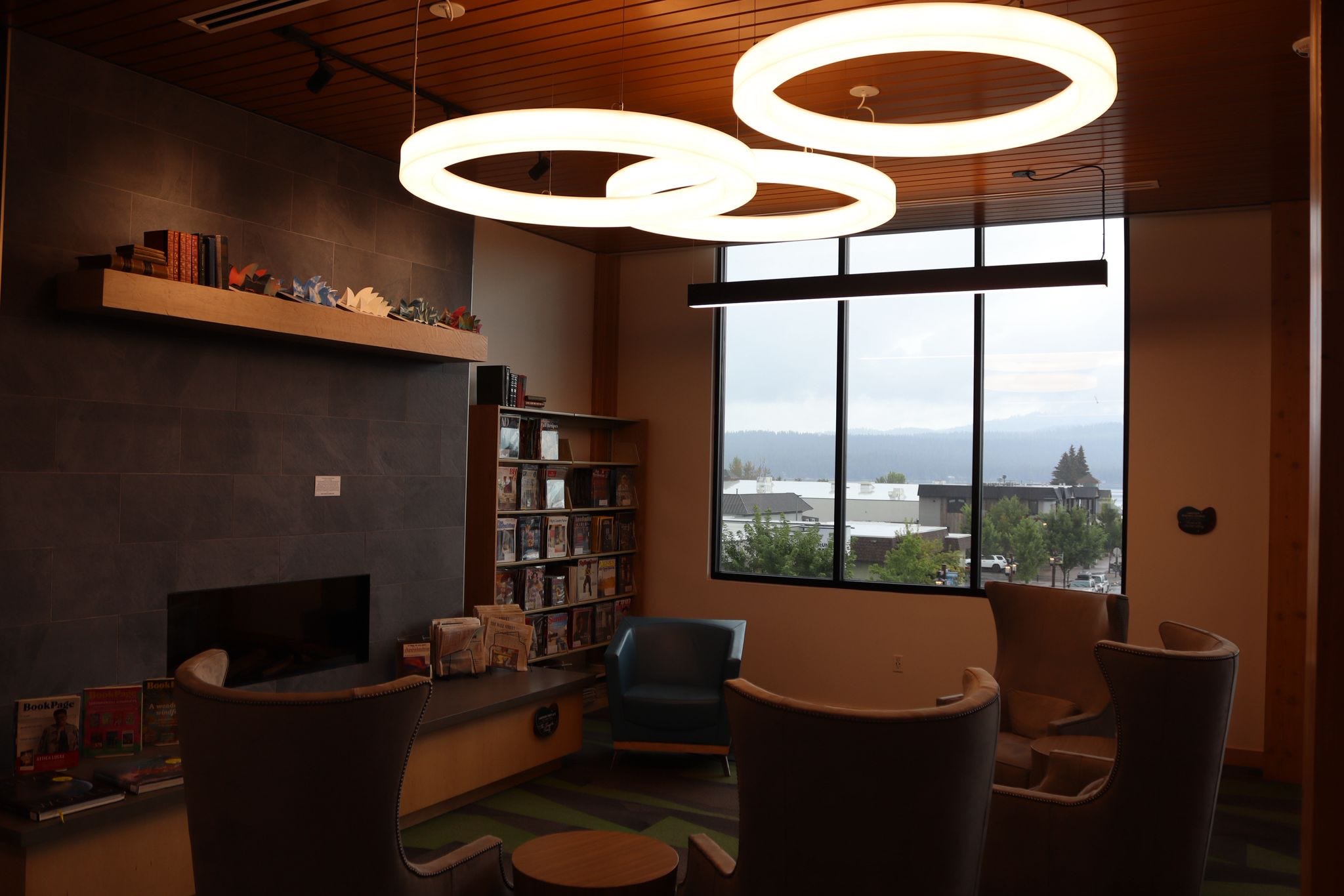
We turned right off the high street into the library’s parking lot and stared in awe at the newly renovated multi-story building fitted with large glittering glass windows that direct library patrons’ gazes out across the vast lake. At the reception desk, we met Casey Bruck, a Chako-sporting programming librarian whose warmth was palpable from the moment we exchanged hellos. We didn’t know it then, but Casey had just been nationally recognized by the Association of Small and Rural Libraries for his innovative, inclusive programming.2
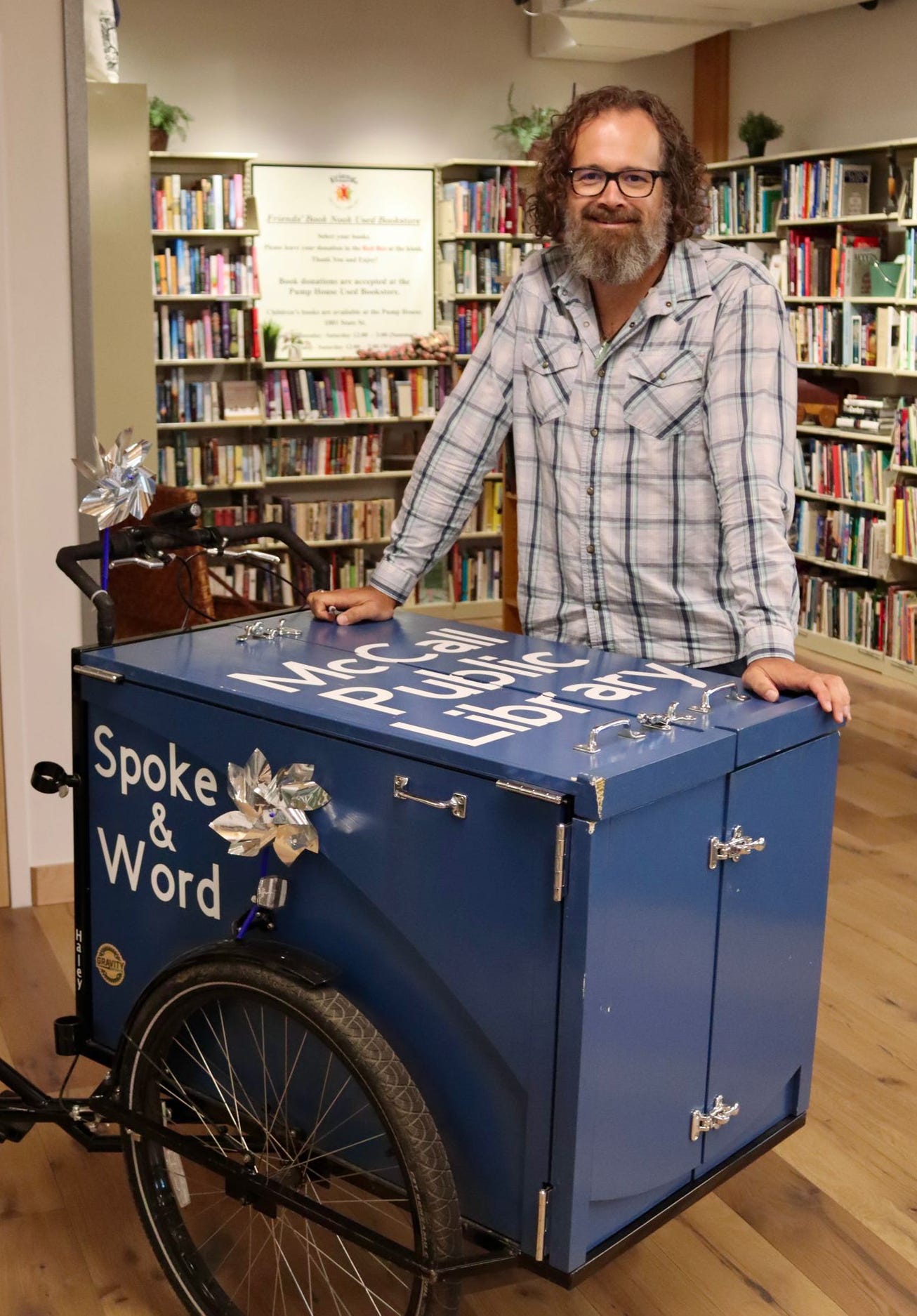
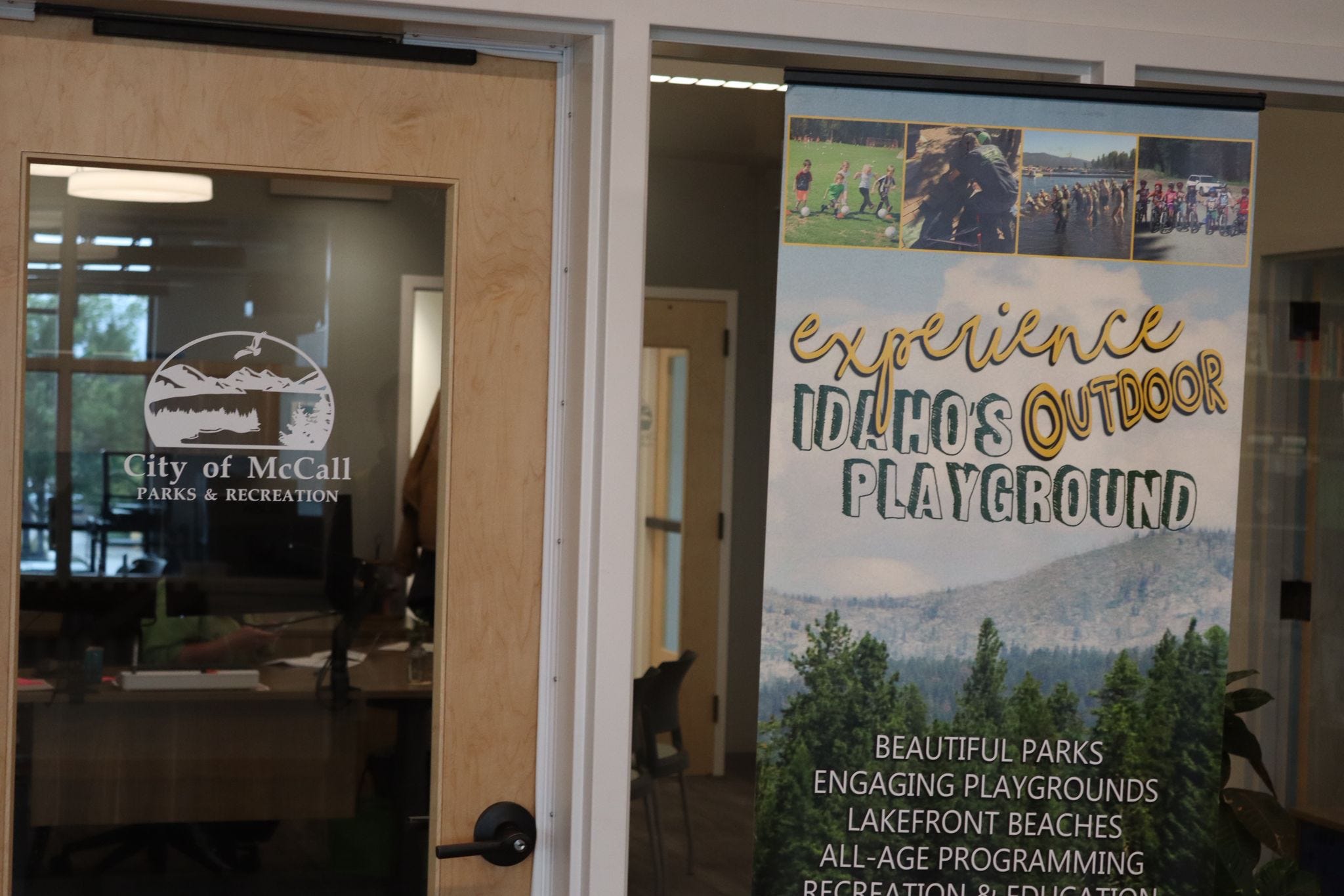
After briefly explaining our project, Casey immediately offered to show us around the library. First, he took us through the ground floor, which houses the city’s Parks and Recreation Department. The library and the Parks Department often collaborate, Casey told us. For example, library patrons can check out kits to take on their outdoor adventures like hiking backpacks, Let’s Go Birding (binoculars and a bird identification guide), and What’s in Bloom? (a hand lens and plant identification guide). The Parks Department also puts on a Bike to School Day, during which students can learn bike safety and get their bikes tuned up for free.
Casey proudly stopped in front of the library’s bicycle bookmobile, which was parked near the library’s front entrance. The bookmobile brings the library outside, often to the local farmer’s market, where Casey sometimes holds an outdoor Story Time for children.
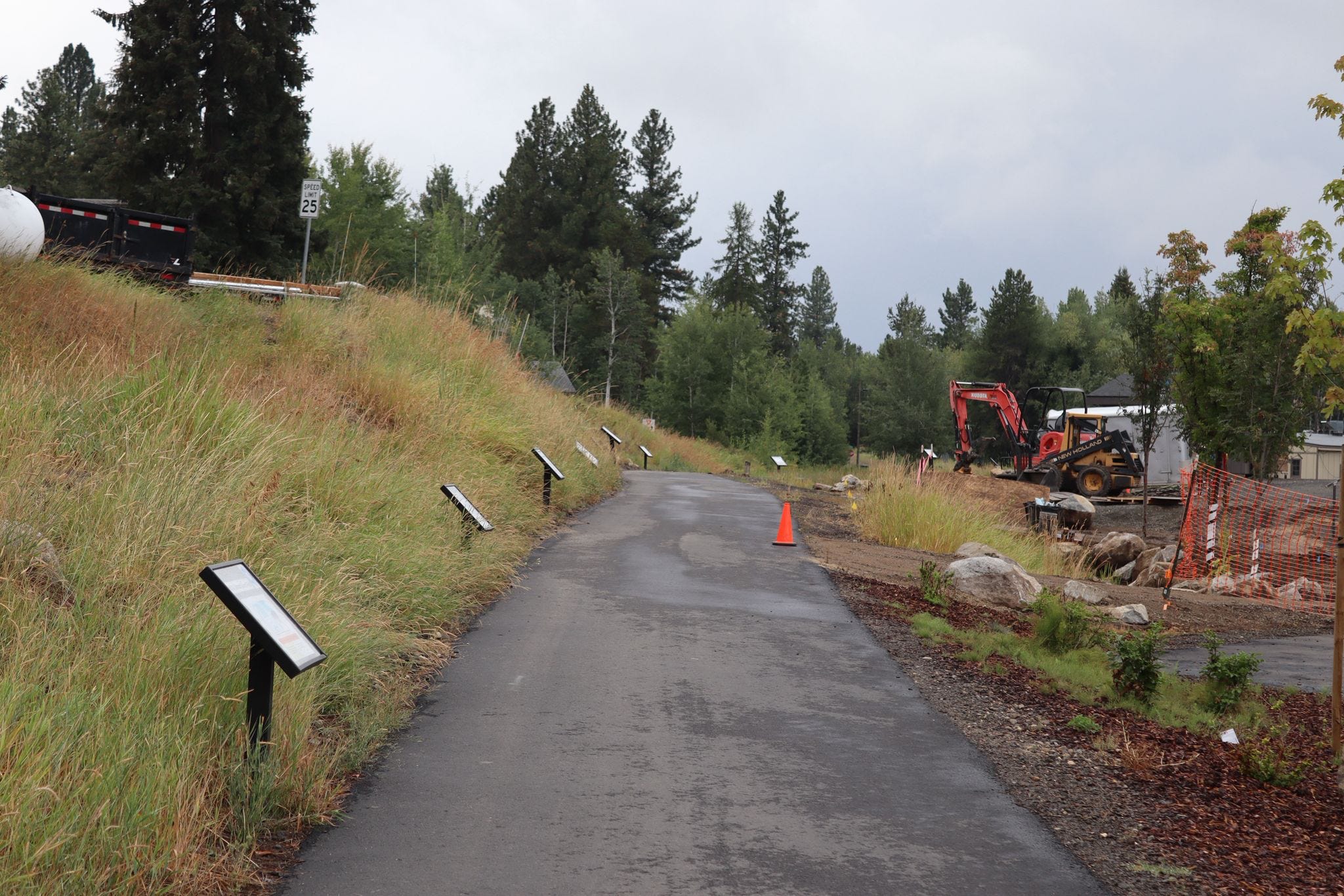
Another initiative that gets kids outdoors is the StoryWalk that Casey recently had installed in the small garden behind the library. On the StoryWalk, an international library program that aims to combine literacy and nature, children walk down a path to read a story that unfolds over a series of page-like plaques.3 On a short path leading to a woodland behind the library, children in McCall can read about a polar bear whose family moves to the jungle.
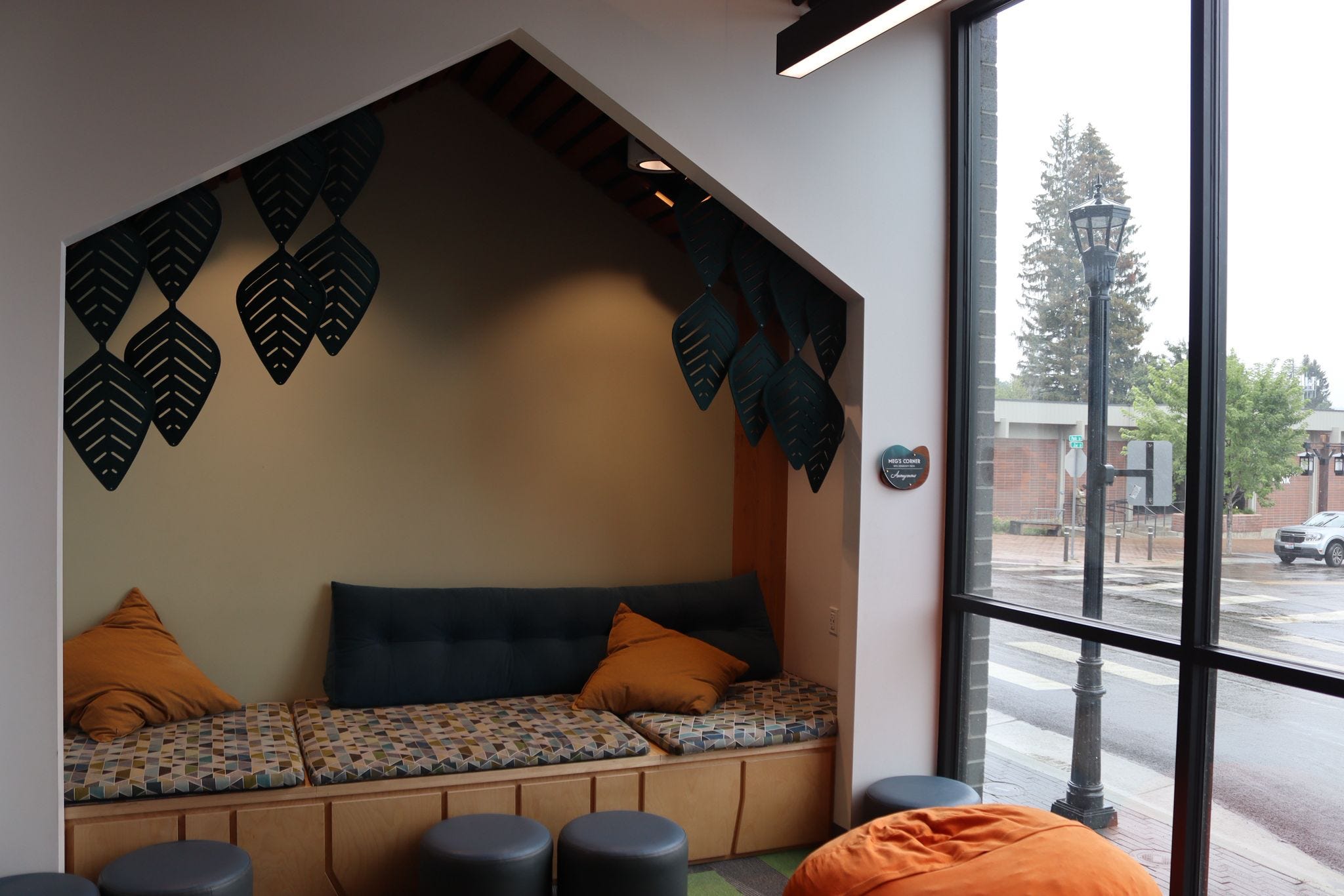
Inside, we followed Casey up the stairs to the second floor, pausing on each step to admire the small wooden sculptures of trout, heron, trillium flowers, and Douglas Firs that lined the stairway. When we summited, we were met with a beautiful view of Payette lake that made the second floor feel more like an open-air balcony than a building.
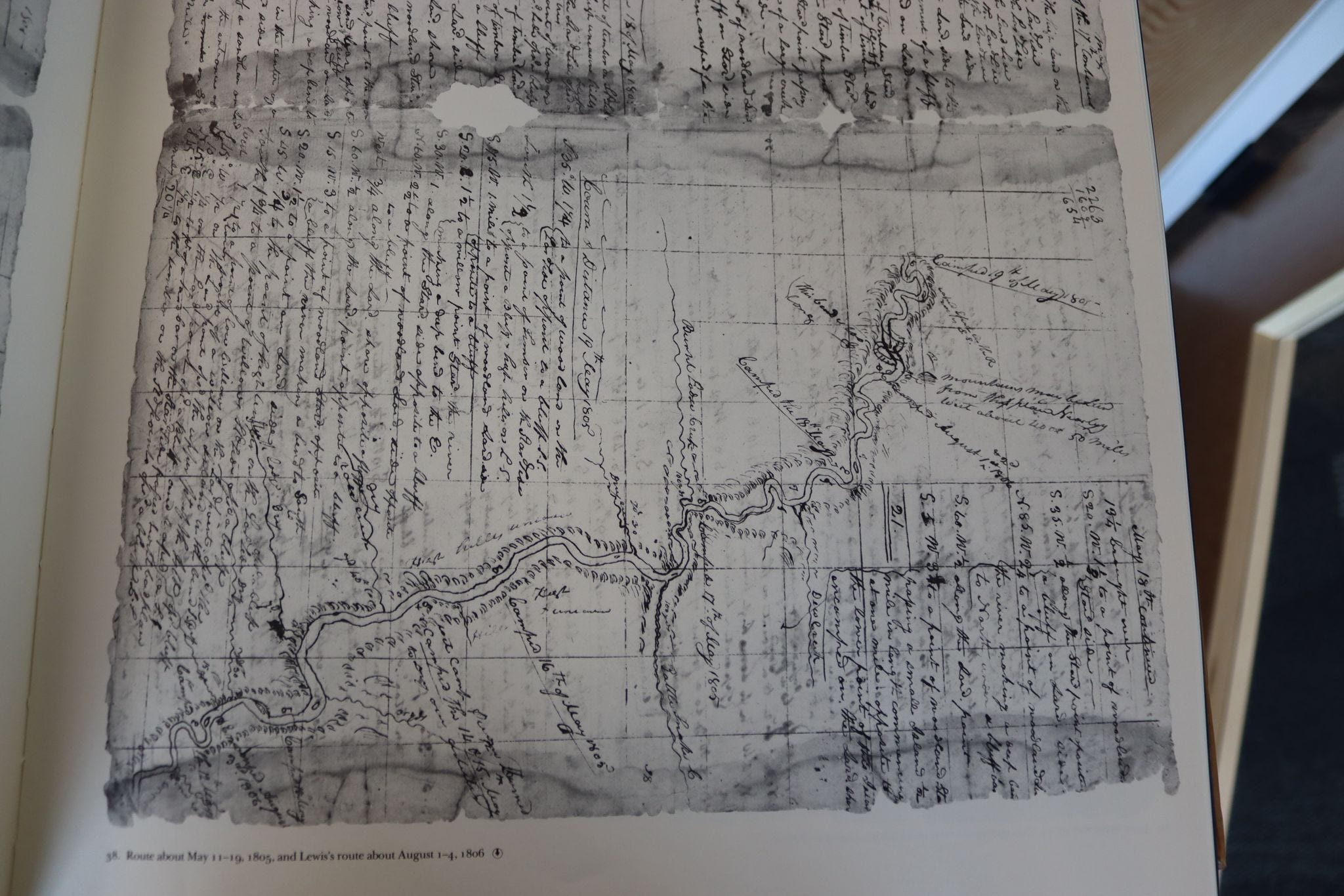
Casey took us into the Idaho Room, which holds books about the local environment, as well as the town’s historical archives—oral history transcriptions, newspapers dating back to the early 1900s, and family records. As we perused the archives, we immediately recognized our winding, writhing neighbor from the night before: the Snake River rendered in a sketch from Lewis and Clark’s expedition. The swooping, calm curves of its outline felt completely at odds with the ferocious seething we had seen from the banks.
Through the library, McCall residents not only have access to Casey’s creative programming, but they can attend a host of other events organized by external environmental groups. For example, the local hiking club meets in the Idaho Room, the McCall Outdoor Science School uses the conference room to host K12 environmental education programs, and Roots Forest School holds events for their preschool program that emphasizes connection with nature.
After the tour, Casey asked one of the library’s most loyal patrons if he had a moment to chat with us. 16-year-old Gabriel Schafer nodded with a smile as he sat down to talk with us about one of his favorite hang-out spots. Donning a cap with a pair of sports sunglasses perched on its bill, Gabriel told us that he’s been coming to the library “ever since [he] started to read.”
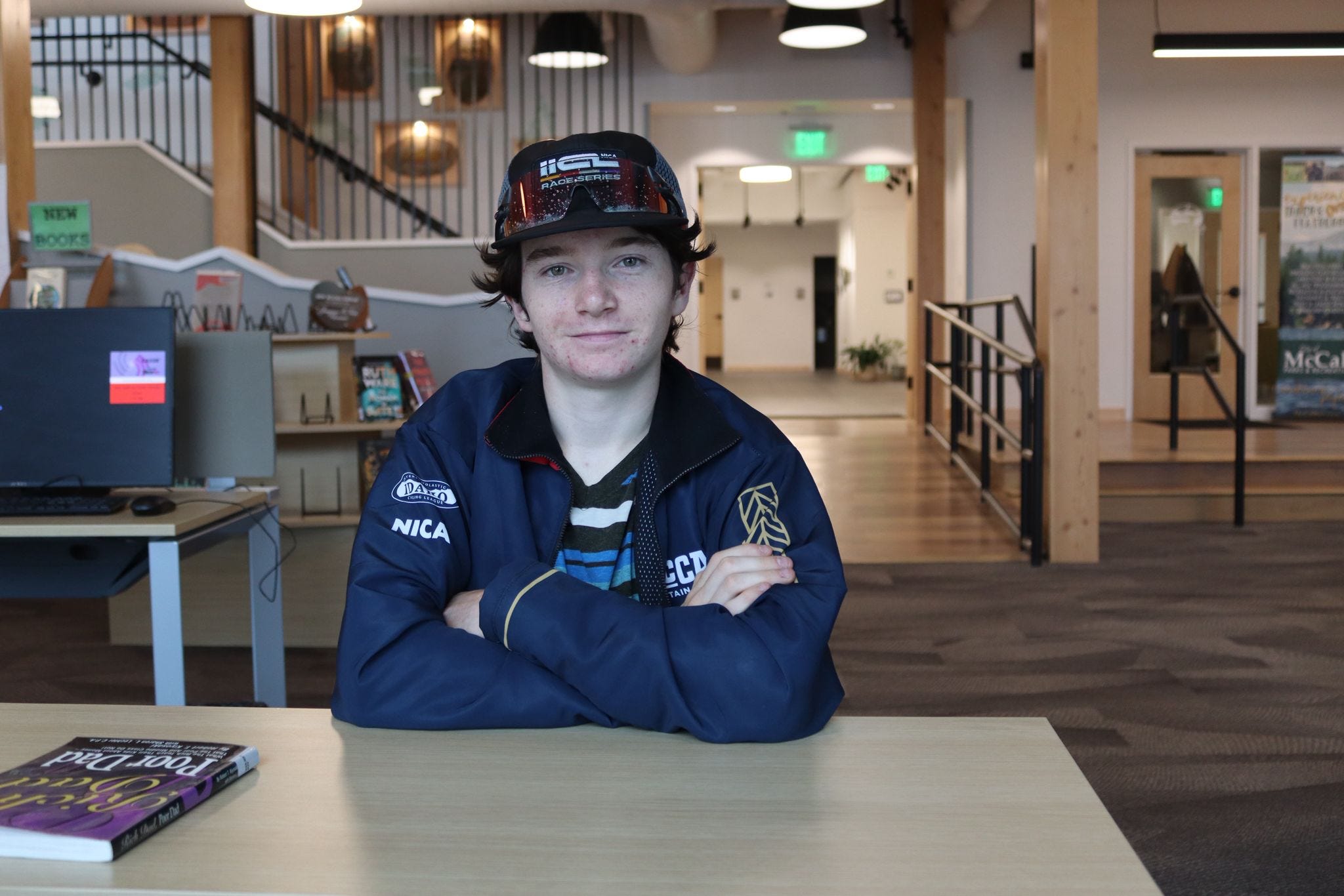
But a few years ago, his family moved south and the library was no longer just around the corner. Nevertheless, he still makes the 30-45 minute bike ride daily to visit the library. “It gets me outside everyday,” Gabriel said, as he described his evening rides to and from the library. Gabriel told us that he always has a few books checked out. Right now, he is reading Renegades, a series by Marissa Meyer about a group of people with supernatural abilities.
Gabriel likes to go to library programs like Tech Tuesdays, where he plays board games with friends he made at the library. “I’ve met a lot of friends who I’ve gotten close with,” he told us. He’s also learned a lot about the local wildlife from the library’s educational events, he said. Two particularly memorable talks were about local owls and a nearby nature sanctuary. Gabriel added that he enjoyed a program where Casey takes kids on a walk in the Payette Forest with a book to read outside. “This is an important place. I really like the library,” he told us.
Nestled in a forested expanse, where people are always adventuring into the great outdoors—and sometimes face fear-inducing storms—McCall’s public library gives the community the resources, programs, and space to live harmoniously and knowledgeably in the beautiful natural world around them.
Carmen Vintro
To read more stories from America’s public libraries, subscribe to our Substack below, visit our website and follow us on social media.
“U of I tackles wildfires in a changing climate”, University of Idaho, <https://www.uidaho.edu/newsroom/wildfire-in-the-west>.
See: <https://www.arsl.org/index.php?option=com_dailyplanetblog&view=entry&year=2025&month=07&day=24&id=38%3Aarsl-spotlight-casey-bruck&fbclid=IwY2xjawOVHadleHRuA2FlbQIxMABicmlkETFzQzlYbnZpWTFQdlJVSUxJc3J0YwZhcHBfaWQQMjIyMDM5MTc4ODIwMDg5MgABHtngiYGOtt2UvF15UG5zUTmGtfxlw_nx_jrCGOWGNpFzfqu268ycCDwPKdQi_aem_m_HkvvsGQBSI-Aib-i1ttA>.
For more information on StoryWalk, see: <https://kellogghubbard.org/programs-events/storywalk/>.