
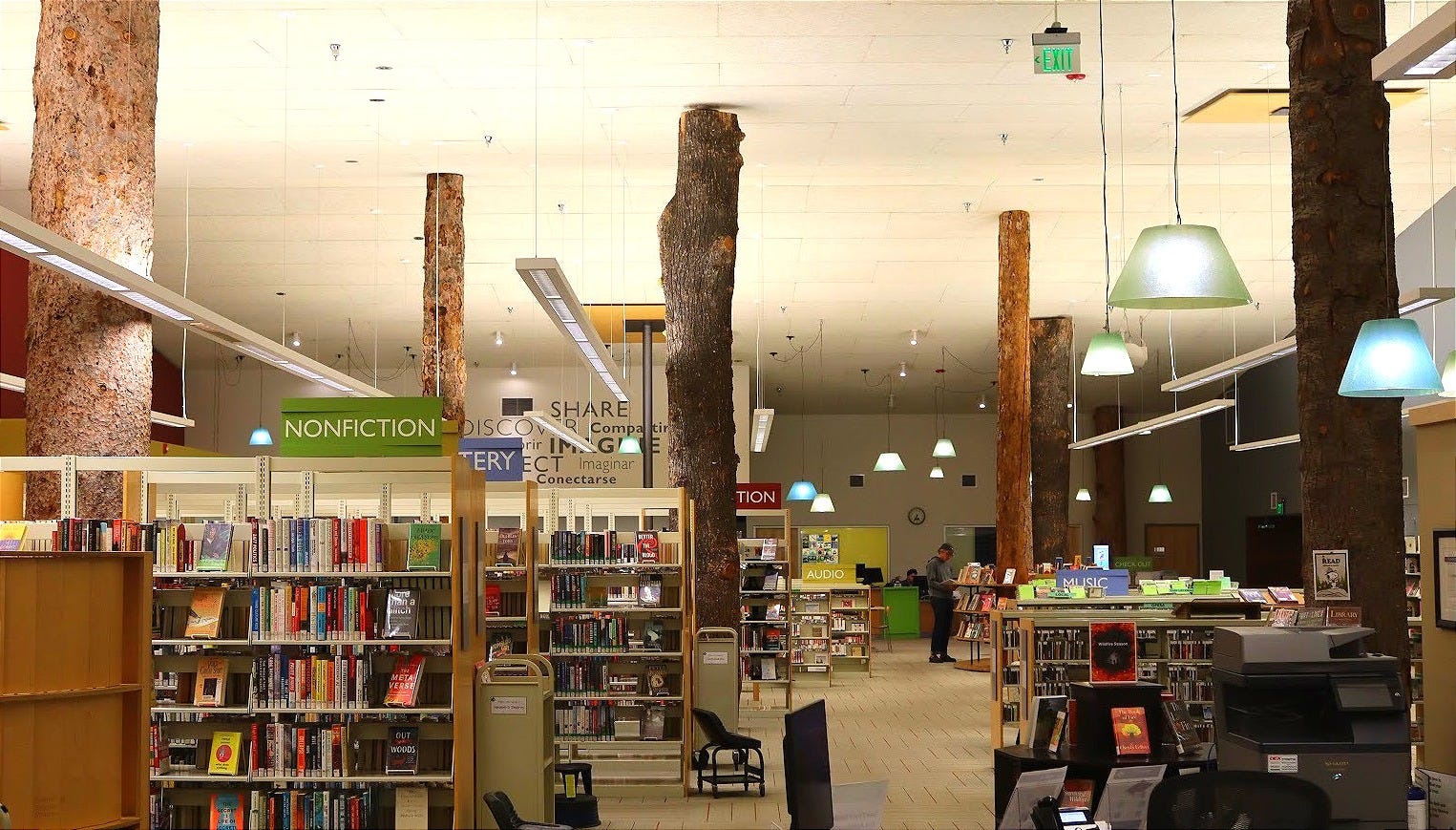
Even when you’re inside the Teton County Library, you feel like you’re in the forest. Thick logs swathed in their natural bark bring the surrounding 3.8 million acres of national forest into the large, open central library space, where they double as support beams. The wonders of the natural world are front and center in Jackson Hole, Wyoming, a town that borders two national parks—Yellowstone and Grand Teton.
After weaving our way through the library’s groves of books and trees, we filtered into the conference room, where a local avian ecologist was giving a talk on raptor conservation efforts in Wyoming. The Jackson Hole Bird and Nature Club was putting on the event, which recurs every second Tuesday of the month with a new speaker and consistently draws over a hundred people in person and online.
Once everyone had taken their seats, Club Director Bernie McCue opened the meeting with a question that I got the sense began all of their meetings: “Any sightings this month?” Eager to share stories from their adventuring, the crowd erupted with responses.
“Four hundred and thirteen bison on Elk Ridge Flat last week!” shouted an older man in the front row.
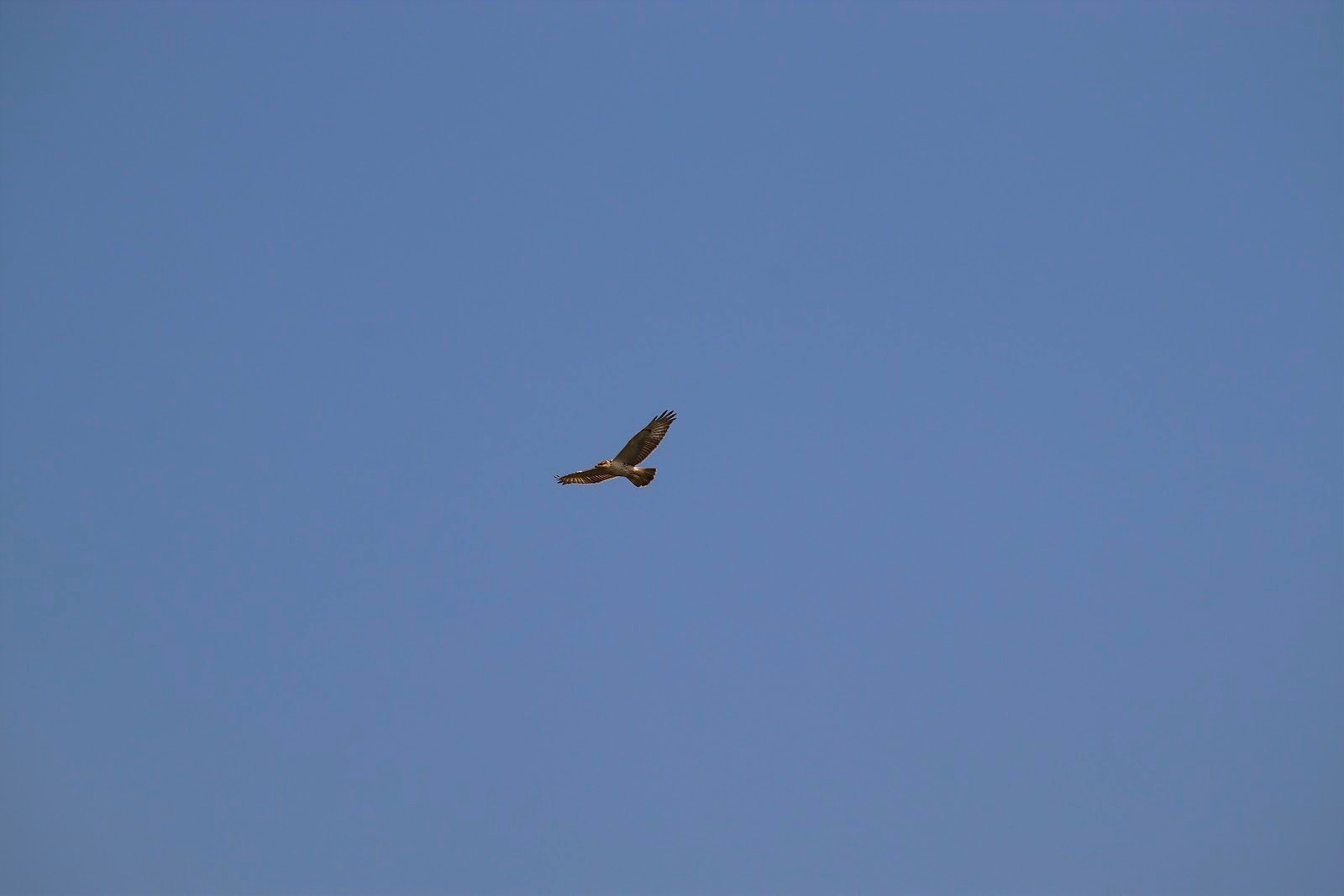
“I saw two Pine Martens grooming together yesterday. I’ve never seen two at the same time before. And has anyone figured out whether we have American or Pacific Pine Martens around here?” asked a woman sitting next to us near the back of the room. Unfortunately, no one had an answer for her, but the crowd continued to call out responses: a flock of Cedar Waxwings and several Ferruginous Hawks were claimed.
When the audience quieted, Bryan Bedrosian, the avian ecologist, began his talk. Someone in the audience tonight, he started, had asked him a question not long ago that had completely changed the trajectory of his career: “Are you doing science to witness change? Or affect change?” she had inquired. Previously, he had studied raptors just to learn more about them. But now, he said, he uses his research to help protect them.
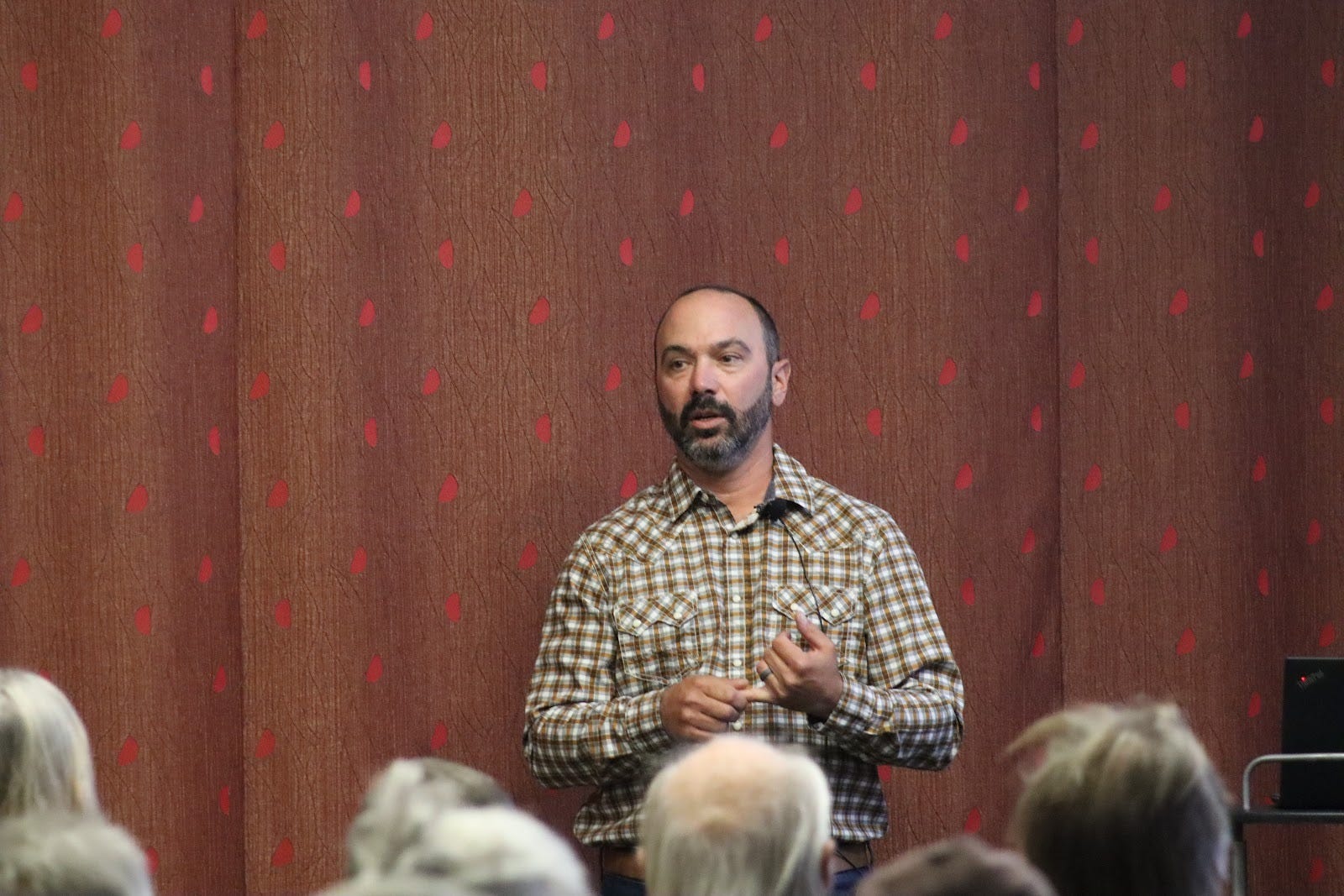
There are 5,300 Golden Eagles in Wyoming, but over the past 20 years, the population has declined by 28%, he said, flicking to the next slide. A significant proportion of that decline was caused by lead poisoning from ammunition in gut piles left by hunters and scavenged by the Eagles. To put his science into action, Bryan explained his effort to encourage local hunters to use copper, instead of lead ammunition.
Bringing the audience into the fascinating world of raptor tracking (“How do you track an animal that is so good at hiding?”), Bryan spoke about the various tools he and his lab use to conduct research on this elusive population of birds. One of the most basic techniques involves attaching a small band around one of the bird’s legs so that if it is ever found, his lab can be contacted.
The Teton County Library, Bryan told us later, has been more involved in supporting his conservation work than you might guess. Bryan has made over 300 tracking bands in the library’s makerspace, which he uses to track raptors in the region. The library’s makerspace, which is named the “WonderLab”, has the laser cutter that he needed to cut the bands.
In addition to tracking bands, Bryan explained to the audience that genetic testing, solar-powered GPS tracking, and even bioacoustic identification have all helped to advance the study, and therefore conservation, of the local raptor population. In one example, research about flight paths helped inform where not to build wind turbines.
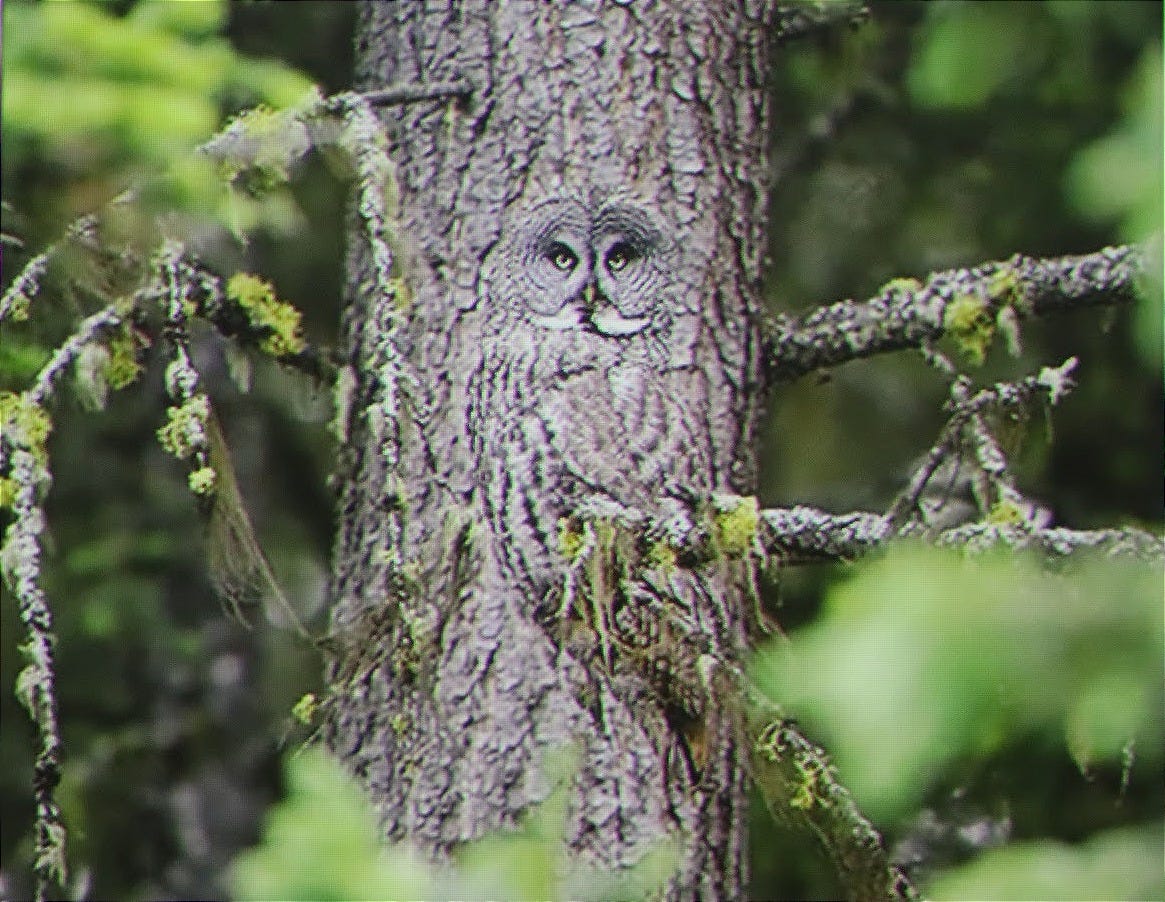
Community-based environmental education is a major part of Teton County Library’s involvement in Jackson Hole. Beyond the Bird and Nature Club, the library also hosts educational events from the Geologists of Jackson and the Teton Plants Club that teach locals about their vibrant natural setting.
For Bryan, who has been using the Teton County Library for more than 20 years, the library has been critical to his conservation work: it gives him access to journal articles he needs for research, a space to create tools for field work, and a platform through which to share the important work he is doing with the community.
The Teton County Library is a testament to the fact that just as much as public libraries might encourage cozying up with a book at home, they can also inspire and facilitate learning about the great outdoors.
~
Carmen Vintro
To read more stories from America’s public libraries, subscribe to our Substack below, visit our website, and follow us on social media.