
Flashing ambulance lights and patrolling police officers put me on edge as Ollie and I walked up the steps to Multnomah County Library’s downtown branch in Portland, Oregon. Above the doorway, a quote from Jorge Luis Borges was spelled out with gold paint: “I have always imagined that paradise will be a kind of library.” Against the backdrop of roving security teams and first-aid responders, his words seemed wishful.
As a kid, I would bolt up these stairs and race to the children’s section, where I would proudly declare the number of books I had read for the Summer Reading program and collect my bounty of candies and small toys. The library was, to me, a magical world filled with portals to endless adventures. So I was shocked and saddened when my family told me that they no longer visit the library because unhoused patrons using the library as a shelter made them feel unsafe.
I was skeptical. The library’s most precious quality is its openness to all. Public spaces are, almost by definition, meant to be shared by people from different backgrounds. Diversity shouldn’t scare us.
But stories of violence and illicit drug use in and around the library gave me pause. Just weeks earlier, one library patron shot another to death in front of the library.1 Both had been armed inside the library. Over the past year, more than a third of the librarians reported second-hand exposure to illicit drugs like fentanyl smoke.2 And I wouldn’t know it then, but just a few days after our visit, someone would be stabbed outside of the library.3
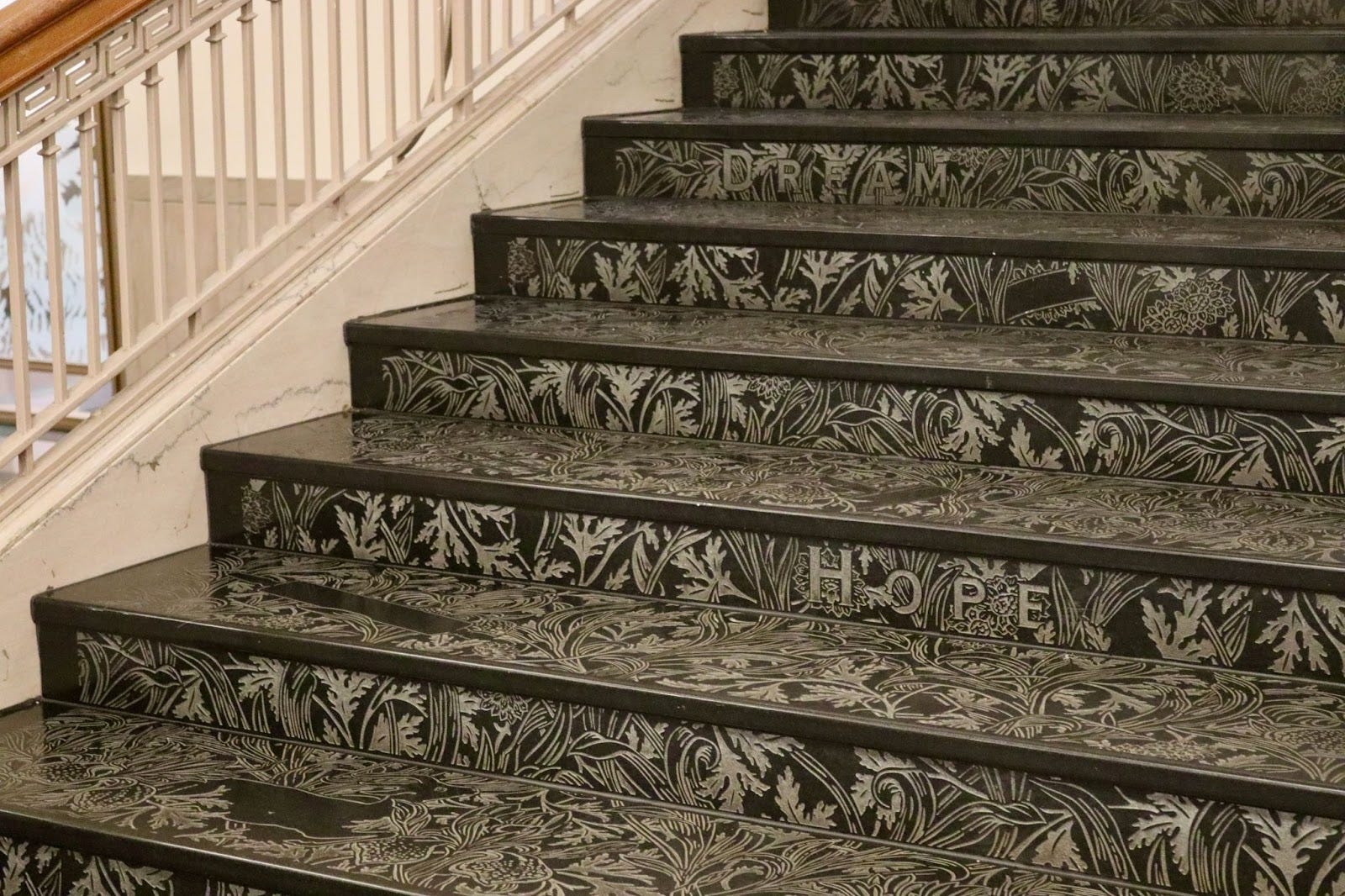
Behind the library’s heavy wooden front doors, hushed voices, cool musty air and marble floors introduced a calmer atmosphere and whispered of a more complicated story. Ollie and I shuffled past several men in navy blue security uniforms to join a tour of the library’s 19th century, nationally-registered building. Megan Monroe, our librarian tour guide, led our small group up the central emerald green staircase, which was filled with a dense lace of William Morris-styled engravings of vines and leaves.
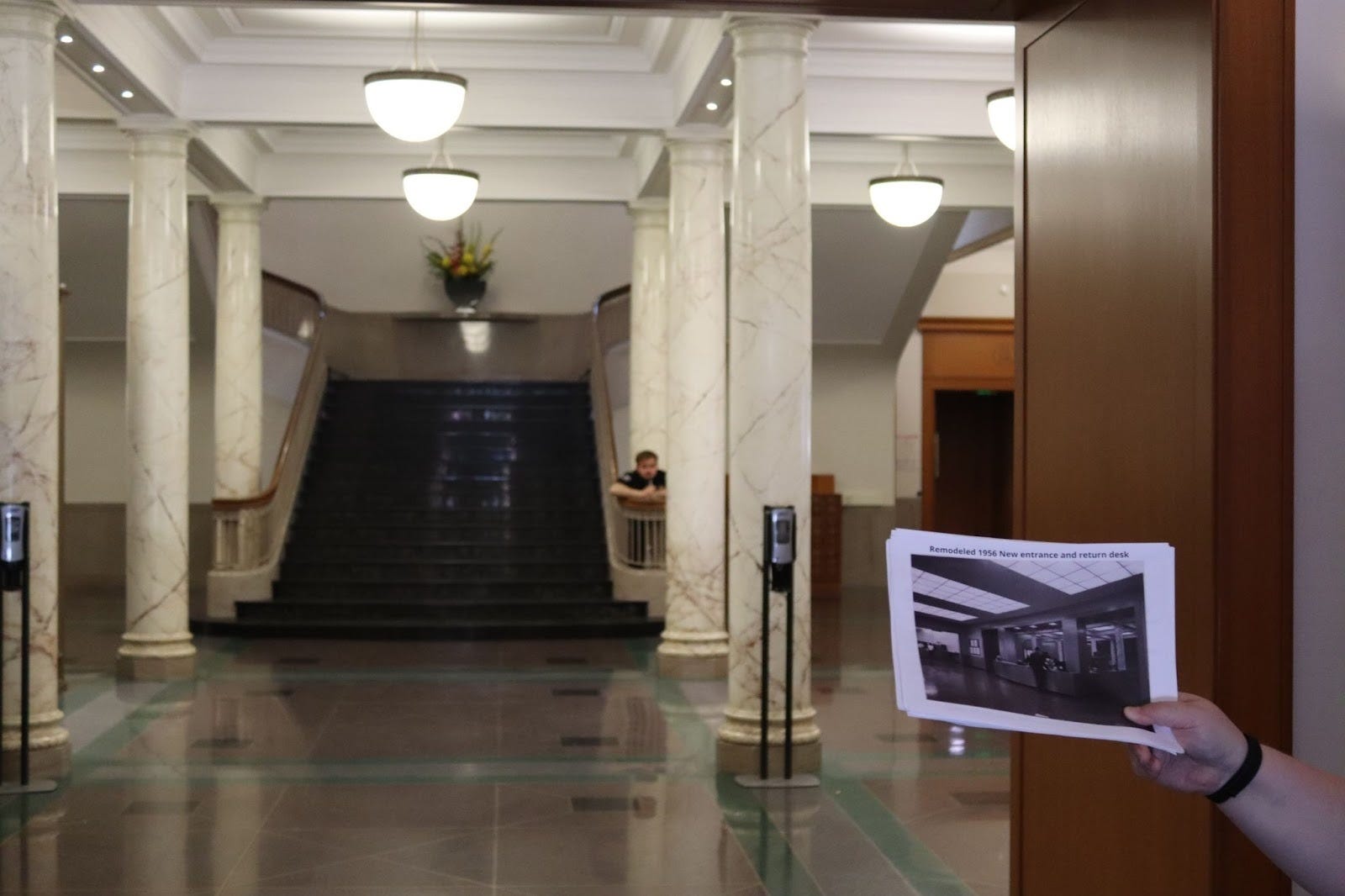
“If you look closely,” Megan advised, “you’ll find frogs, owls, ravens, and lots of other small critters hiding behind the plants. Kids absolutely love the Garden Staircase. It’s part of our greater theme of the library as a Garden of Knowledge.” The air of fairytale wonder struck a dissonant chord with the icy stare of the security guard watching from his corner station as we passed.
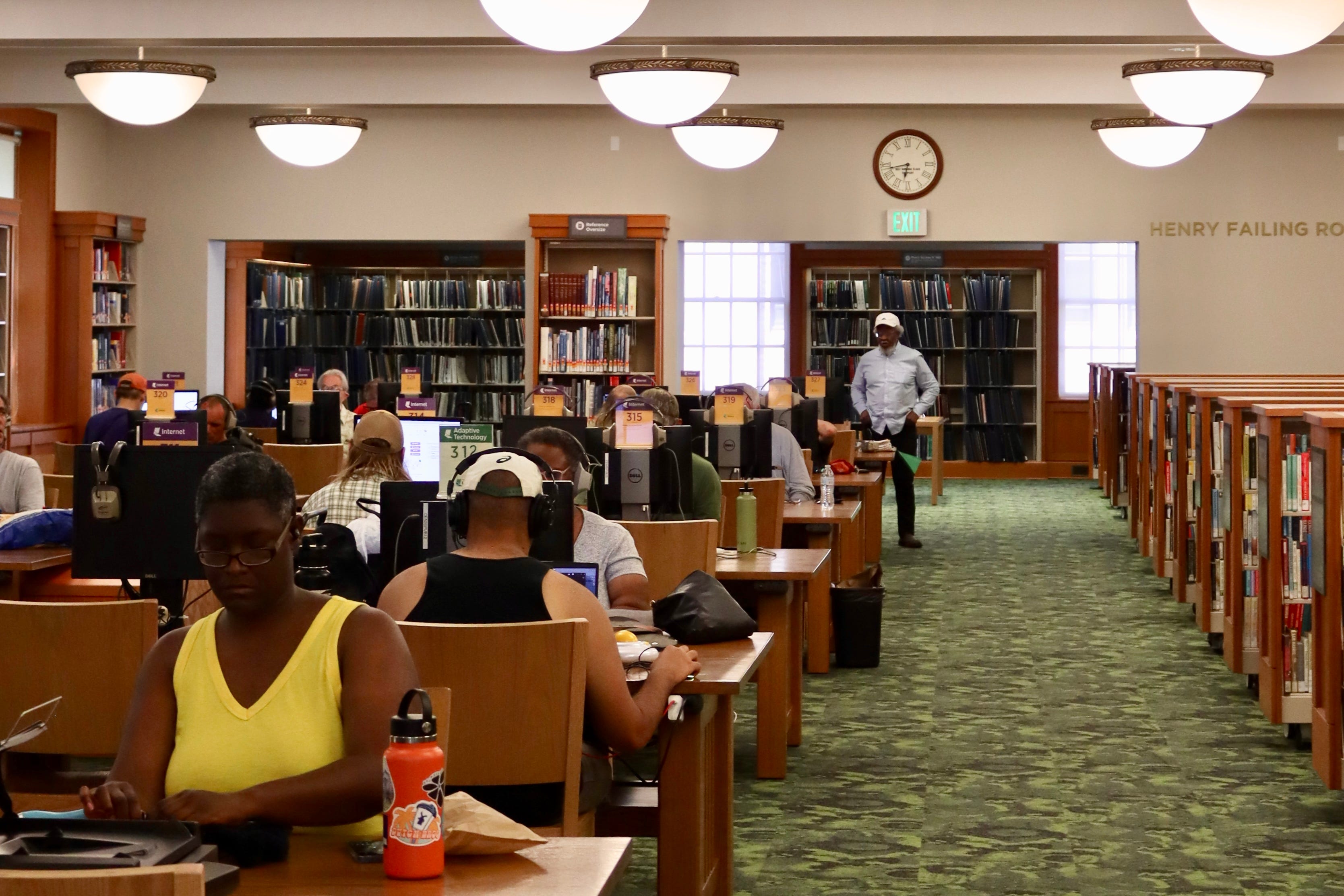
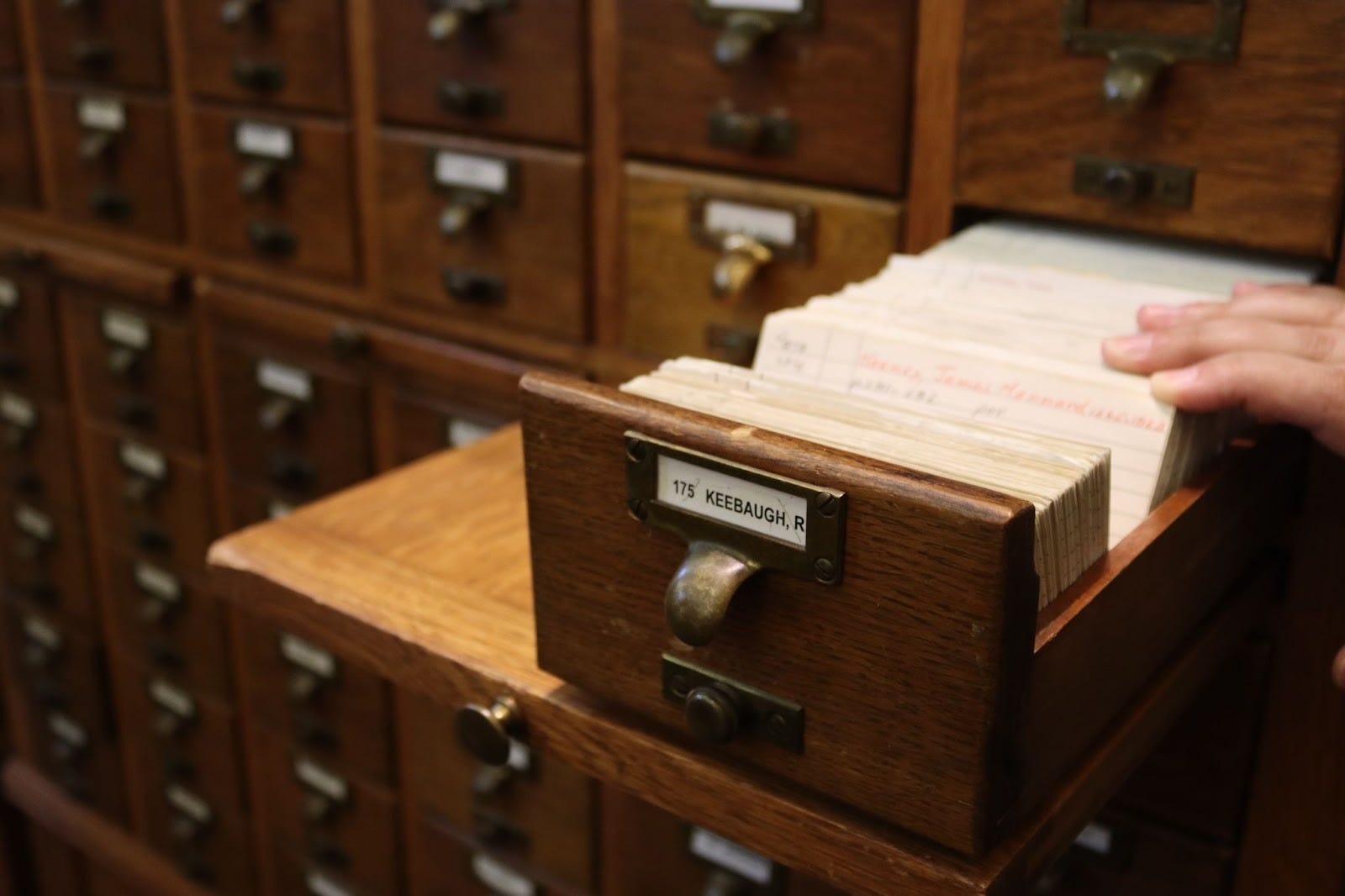
On the tour, Megan stopped to color each room with stories about its more-than-100-year history, its Georgian architectural design, the recent renovation that added, among other things, an eco-roof, and her own decade of experience working in the central branch. The library’s vibrancy was clear. Almost every seat was in use, and there was a room for everyone: the children’s section was abuzz with kids sprinting up and down rows of well-loved books centered around a bronze tree sculpture that hid more fantastical creatures; the multi-lingual room, which lends books in many languages, was filled with murmurs of conversations between patrons and staff in Spanish and Mandarin; the computer room had rows of monitors serving researchers, readers and scrollers; the archival catalogue of more than a century’s worth of local newspaper clippings drew patrons hunting for ancestral roots and piecing together family stories; and comfy chairs in the library’s many open study spaces were filled with people chatting, reading and charging their phones.
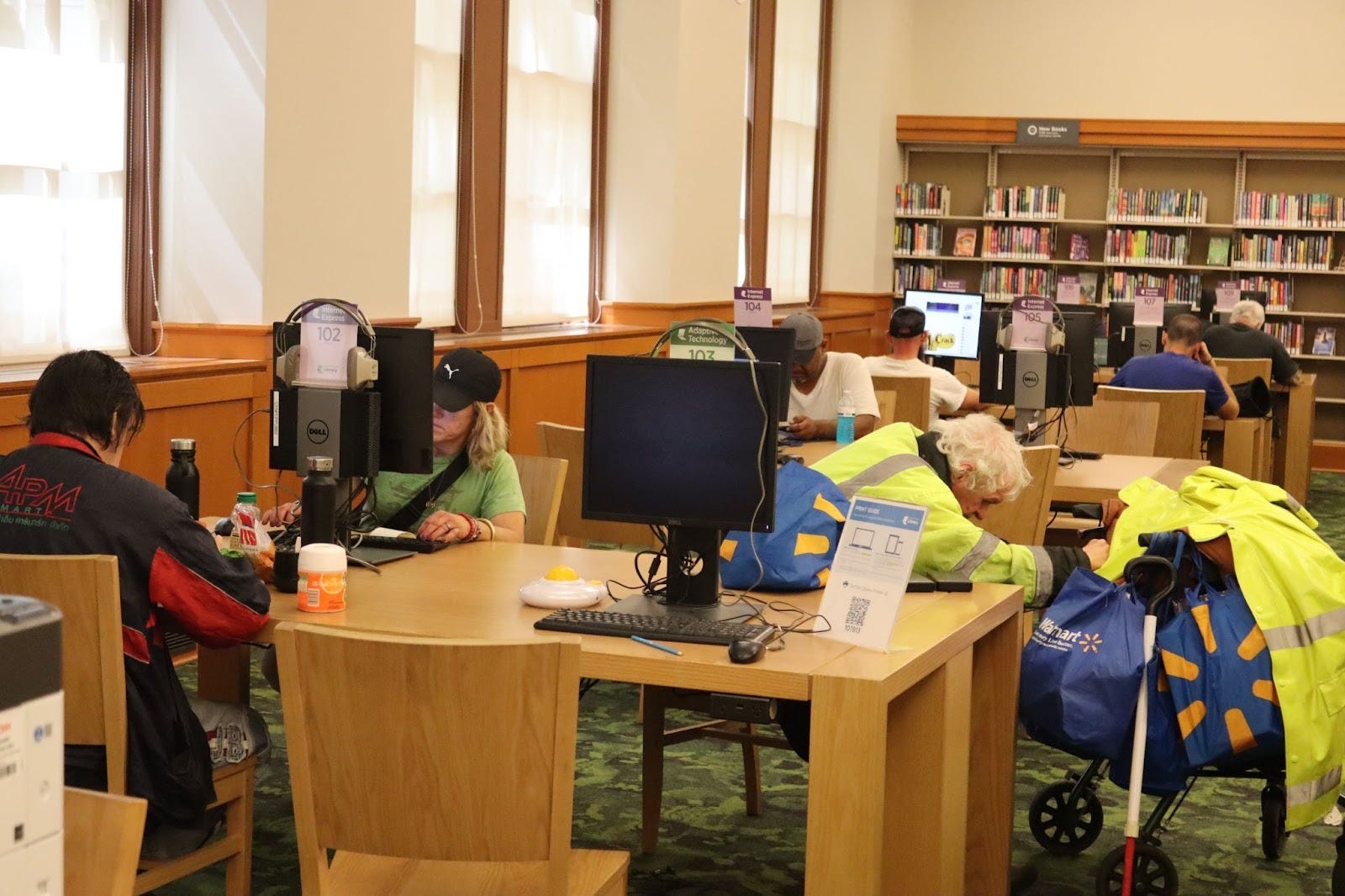
“I’m not seeing other community spaces develop,” Megan told us. “The library is one of the last free spaces. It’s where you can share resources that you can’t afford individually like computer software or news subscriptions. Access to new technology is one of the most important services the library provides,” she said. “In the 30s, we gave patrons the chance to listen to the radio. Now, it’s the internet, printing, audiobooks, and the maker’s space.”
For Megan, being a librarian lets her work in customer service without having to push people to buy anything. “I can truly help people find what they need,” she told us. Last week, for example, an elderly man came to the library’s weekly tech hour to have photos of his 84th birthday printed that his grandchildren had taken on his phone. Megan printed his photos, but the man was disappointed to find out that the library couldn’t print them in color. Megan soon figured out that he wanted the photos printed to send to his family. Megan asked if he had considered sending them via text. His confused response revealed that he had never sent a text before. For the rest of the afternoon, Megan sat down with the man and taught him how to use the “paper clip” and the “paper airplane” buttons to select and send his prized photos to his family. They went through his whole photo album. The man was ecstatic. He had never been able to connect with his grandchildren so easily.
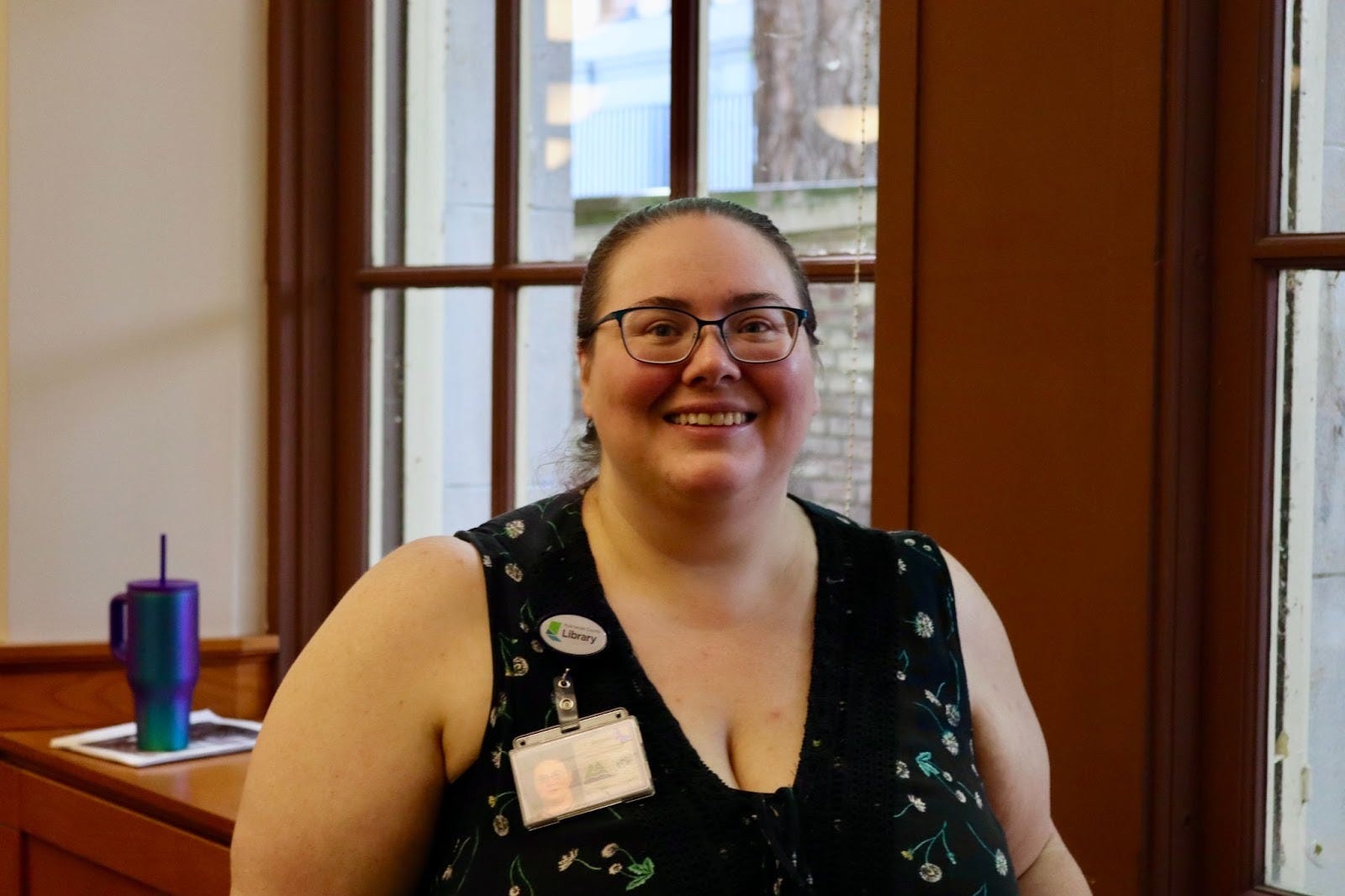
The library provides people with basic knowledge, Megan explained. “We are a lifeline for people who don’t have anywhere else to go to learn how to do things that they used to do in person, like sign rental agreements, order prescriptions from their doctor, and sign up for insurance.”
It was difficult to reconcile the stories of dangerous activities with such soul-warming scenes and my growing sense of how important the library is to the Portland community. The library a place where anyone can come for help and access knowledge. It is where people can be indoors together at no cost, which is integral to the cohesion of a community. Libraries are equally for the historian wading into the archives, the child learning to read, the person seeking warm shelter, outlets and a bathroom, the person looking for an entertaining book to read after work, the student who needs somewhere to go after school, and the person who doesn’t have access to computers at home.
Unfortunately for Multnomah County Library, being open to everyone has meant that the struggles facing Portland at large (primarily, house-lessness and drug use) have made their way into the library.4 When other resources fail, librarians are put in the difficult position of having to help people in ways that they are not trained to do. And when violent, illicit activity unfolds in the library, it compromises what should be a safe space for everyone.
While neither Ollie nor I felt that we were in danger in the library, our trips to the restroom revealed a more unsafe underbelly. I tried restrooms on three different floors before finding one in which someone wasn’t moaning or yelling. And Ollie whispered to me on the tour that he had heard someone vomiting in the men’s.
In a conversation with another library staff member, I asked how she felt about the recent violence. “My husband doesn’t understand why I still come to work,” she told me. “Especially after the shooting, he was scared for me. I don’t always feel safe, but I’m glad they added some more security.”
Multnomah County is now in the process of deciding whether they will install metal detectors to try to stop people from carrying weapons into the library. The library’s open arms might become cold, metal bars that could make the library feel more like a surveilled prison than a communal space. More security, however, could go some way to ensuring that, at the very least, patrons can have the peace of mind of knowing that the person they’re sitting next to in the library isn’t wielding a knife or a gun. But until the city’s greater ills are addressed, tactics like metal detectors are merely band-aid solutions.
When the tour ended, we said our thanks to Megan and headed back down the Garden Staircase and out the wooden doors. As we passed back by the idling ambulance and the patrolling police officers, the tension between the library’s public spirit and its ability to create a safe space was all the more heartbreaking.
Carmen Vintro
To read more stories from America’s public libraries, subscribe to our Substack below, visit our website and follow us on social media.
“Shooting near downtown Portland library prompts security overhaul, possible metal detectors,” OregonLive, https://www.oregonlive.com/politics/2025/08/shooting-near-downtown-portland-library-prompts-security-overhaul-possible-metal-detectors.html.
“Multnomah County Called in Feds to Examine Fentanyl Exposures in Library System”, Willamette Week, https://www.wweek.com/news/2025/05/23/multnomah-county-called-in-feds-to-examine-fentanyl-exposures-in-library-system/.
“Man stabbed, hit with skateboards outside Portland’s central library”, Oregon Public Broadcasting, https://www.opb.org/article/2025/08/27/portland-central-library-attack-man-stabbed-hit-with-skateboards/.
For more on the larger issues facing Portland, see: “Fighting for Anthony: The Struggle to Save Portland, Oregon”, New York Times, https://www.nytimes.com/2023/07/29/us/portland-oregon-fentanyl-homeless.html.