
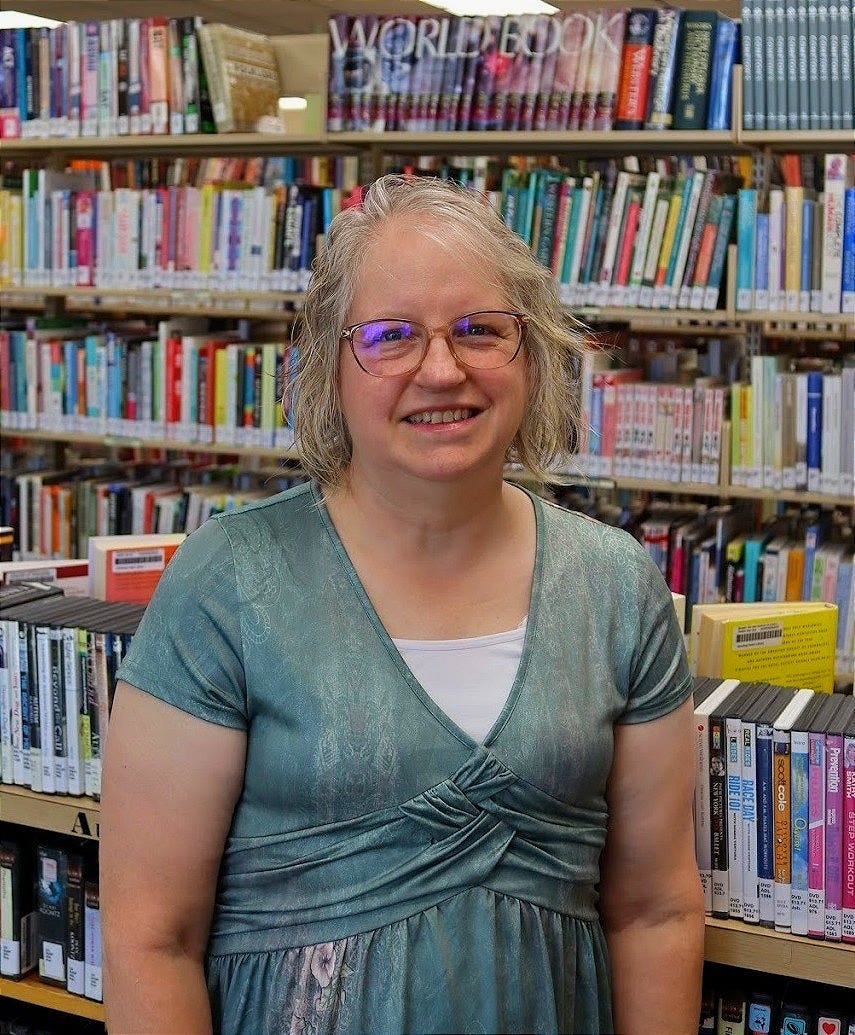
“When we’re uneducated, we’re easily deceived,” Cindy Bigler, the Director of Gooding Public Library, says as she looks down a row of bookshelves, adding, “books are the greatest way to expand your horizon.” For kids in Gooding, Idaho, school is only four days a week, and there are no daycares or Boys & Girls Clubs in town to fill that educational gap. So, where do kids go? The library, of course.
Today, we meet Cindy at Gooding Public Library in a highly unusual state: it’s empty. On any other day of the week, the library would be packed with kids: Gooding Public Library has the sixth highest attendance of youth programming out of all Idaho’s 104 public libraries.1 But today is Sunday, and Cindy and her husband have come straight from church to open the library outside of normal hours to accommodate our tight road trip schedule.
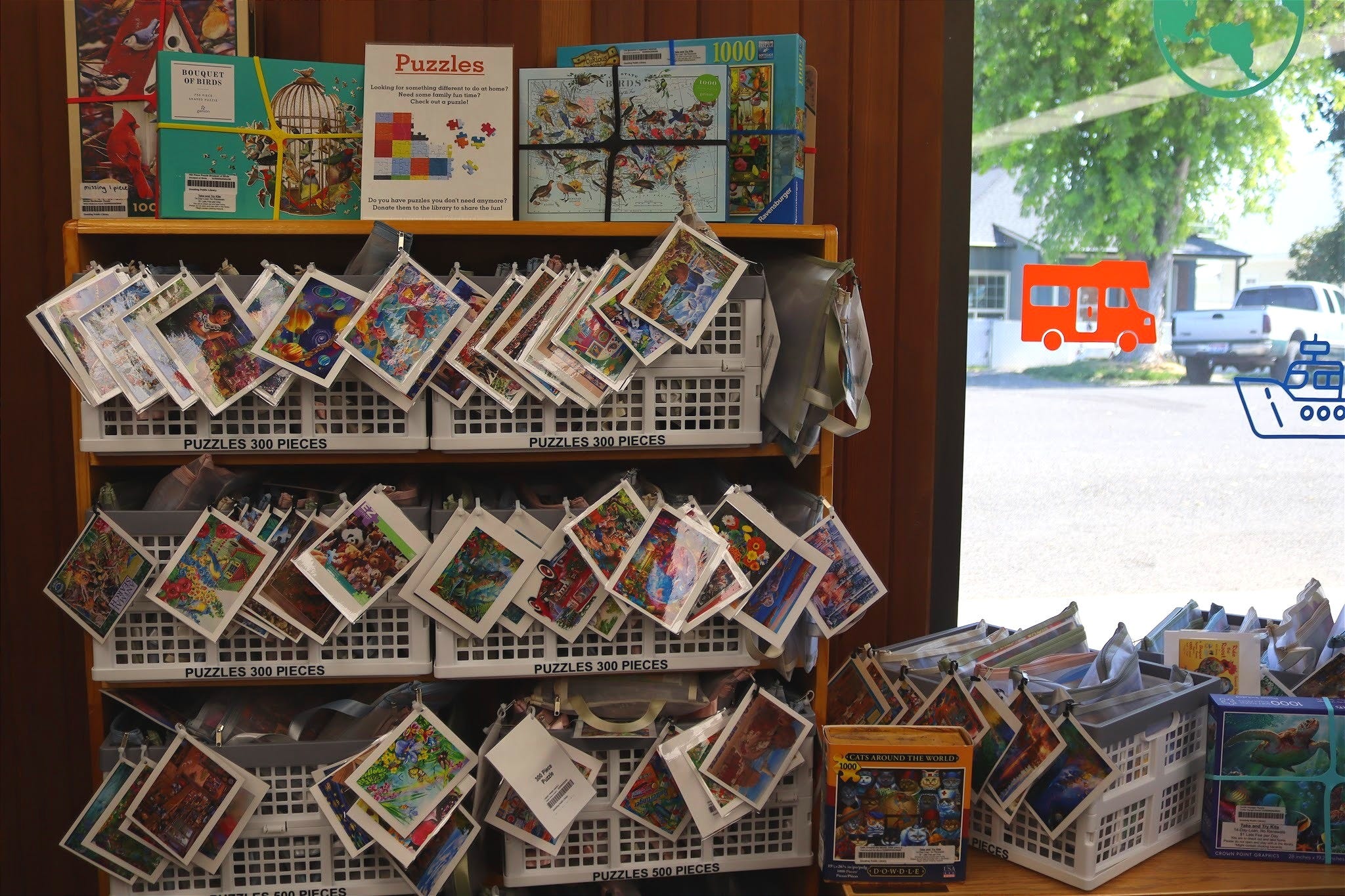
“We’re an active learning center,” Cindy tells us as we peruse the library’s enormous puzzles and board games sections. “When you take away the library,” she says, “you take away an opportunity to learn. We’re not just a repository of books.” While Gooding’s library isn’t in danger of shutting down, Cindy tells us that vital state funding for its afterschool programming is on the chopping block.
The number of safe places where children can learn and spend time is already slim in Gooding: public schools are closed on Fridays due to underfunding. The four-day school week not only strains children’s education, but it often leaves working parents who can’t afford extra childcare stranded. Enter: the library, which hosts a full day of educational programming on Fridays during the academic year, with activities like reading clubs, robotics classes, and arts and crafts. When school’s out for summer, the library extends that programming to three days a week.
The way Cindy sees it, the library in Gooding plays a critical role in educating the local population. “If you’re just hearing things from social media, you’re not getting the whole story,” she explains. Contrary to how we increasingly consume information, she says, the library offers nuance and in-person engagement.
But the information that libraries across Idaho can share is in jeopardy. The same “children’s protection” law (HB 710) that forced Donnelly Public Library to become adult-only applies here in Gooding, but thanks to roomier digs, Cindy hasn’t had to take the same drastic measures. However, HB 710 still has detrimental consequences for Gooding. Instead of spending money on her community, Cindy has had to funnel money to lawyers to protect herself and her staff against potential accusations of distributing “harmful” material to minors enabled by the law.
“I’ve locked nothing up,” Cindy tells us defiantly. At a neighboring library, Cindy says she heard that Dr. Seuss’ The Cat and the Hat was recently challenged because the gender of the cat was not specified. “Who the heck cares?!” she exclaims.
In Gooding, only one book has been reported for being inappropriate for minors so far: the Bible. “We assume it was satire. The book was already in the adult section and there is a version that is less graphic available to children,” Cindy says.
Cindy’s main complaint about the law is that it gives people who don’t live in Gooding power over what her community can and cannot read. “We are supported predominantly by local property taxes, so it’s important that the people who pay for the service make the decisions. Let my community decide what’s best for us,” she argues, and asks, “Why can someone who doesn’t live here challenge a book when everyone in the community is fine with it?” Gooding Public Library already has a process for reviewing material that works, so there’s no need for outside intervention, she says.
When we ask Cindy what she makes of the recent threats to state and federal library funding and the attacks on the freedom to read, Cindy points to a fundamental ignorance of those in power. “Lawmakers have never gone without,” Cindy says, “they’ve never not been able to buy a book.” In Gooding, on the other hand, the poverty rate is nearly triple the national average, meaning that many people can’t afford to buy their own books.2
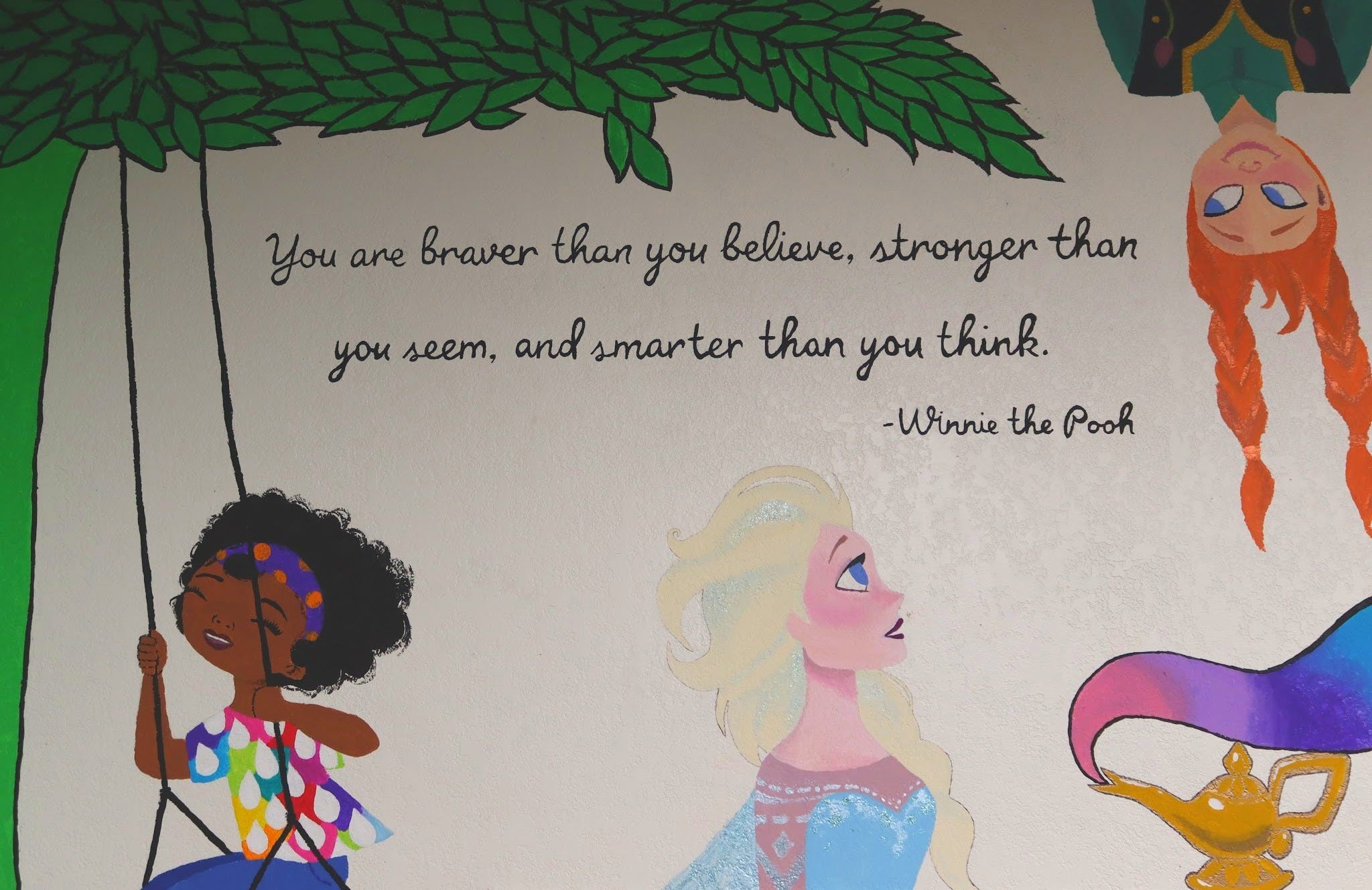
Beyond providing access to free books, the library is an important community space for children and adults experiencing poverty. “Lots of kids don’t have phones,” Cindy says, “so they come here to get books, games and hang out in a safe space where they can meet up with their friends.”
For a moment, a somberness overcomes Cindy as she tells us about a teenage boy with a mother who works two minimum wage jobs who came to hang out in the library after school. Out of the blue, he had started to cry. Why? she wondered, and soon found out that someone had stepped on his backpack, which contained the free school breakfast and lunch he had saved for his family’s dinner. The food was crushed onto an out-of-date textbook in his backpack, destroying it as well. Cindy texted a friend and they showed up with food for the whole weekend for the boy and his family.
The library is also a place where adults can find support with a range of tasks, including filing for unemployment, claiming benefits, applying for jobs, and even attending a telehealth appointment. For locals who don’t have Wi-Fi or computers at home, the Gooding Public Library is a critical access point for social mobility and resources.
“Our library has a real impact on young families,” Cindy says. Parents can find support to raise their children at the library’s “Parent Cafe”, during which families are first fed a meal, and then the children are taken to library daycare while parents gather in a room to discuss questions like, “What do you do when your kid is bullied at school?” Aside from the church, there aren’t any other places where this kind of conversation takes place, Cindy says, adding, “we need more places to help connections happen.”
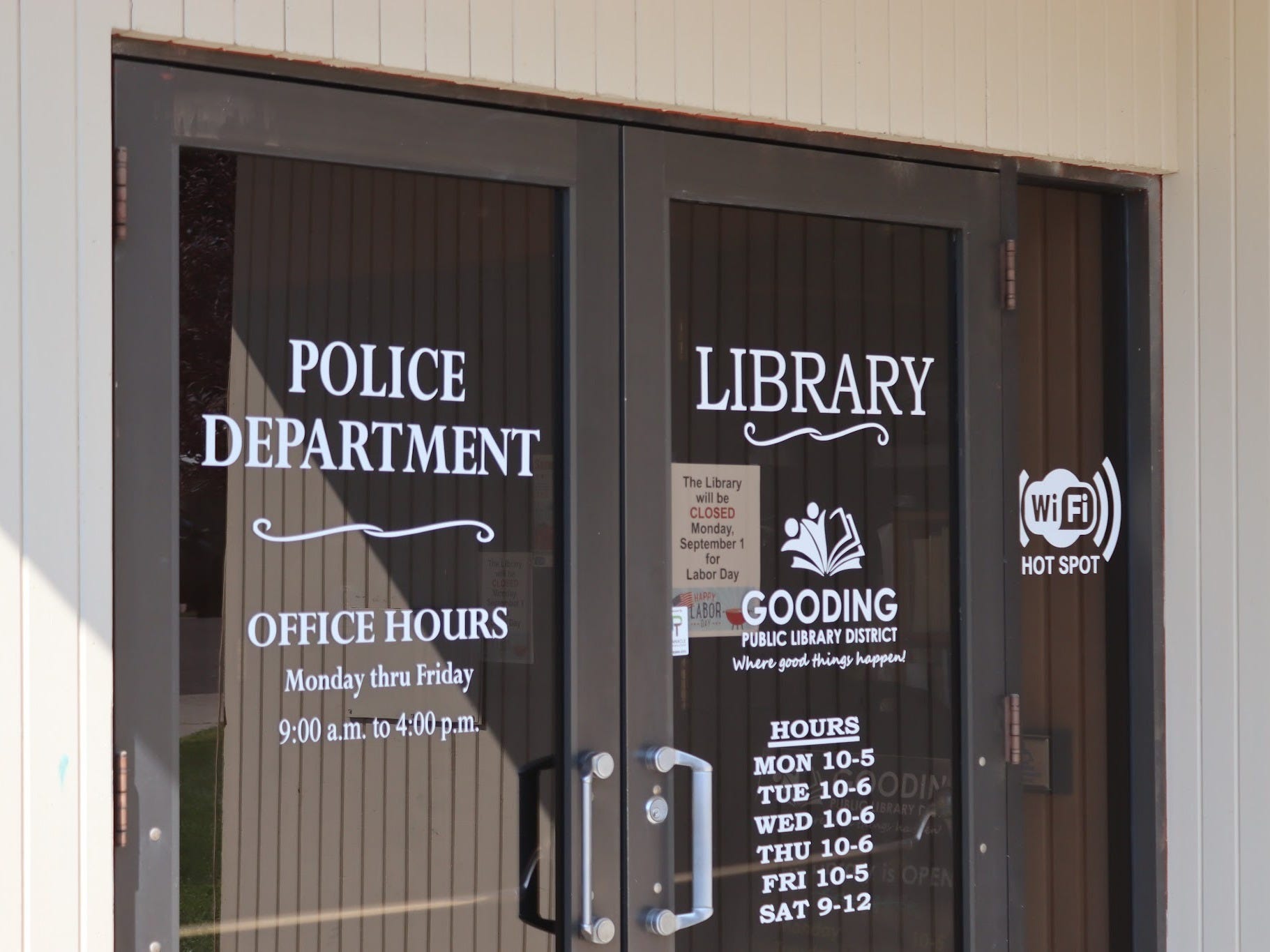
Unfortunately, the fact that the library is in the same building as the police department means that some locals who need the library’s support feel unable to safely visit. Cindy says that having the police as neighbors has its upsides: the officers helped Cindy when a man in the library verbally harassed her because he didn’t think that women should work; they have read for StoryTime and showed kids the inside of their cars; and they have escorted some more vulnerable patrons to their cars at night. But Cindy recognizes that some patrons, particularly immigrants, might be afraid to walk past the police station to enter the library and potentially expose themselves to ICE—a fear that we imagine has become increasingly real in the months since we spoke to Cindy.
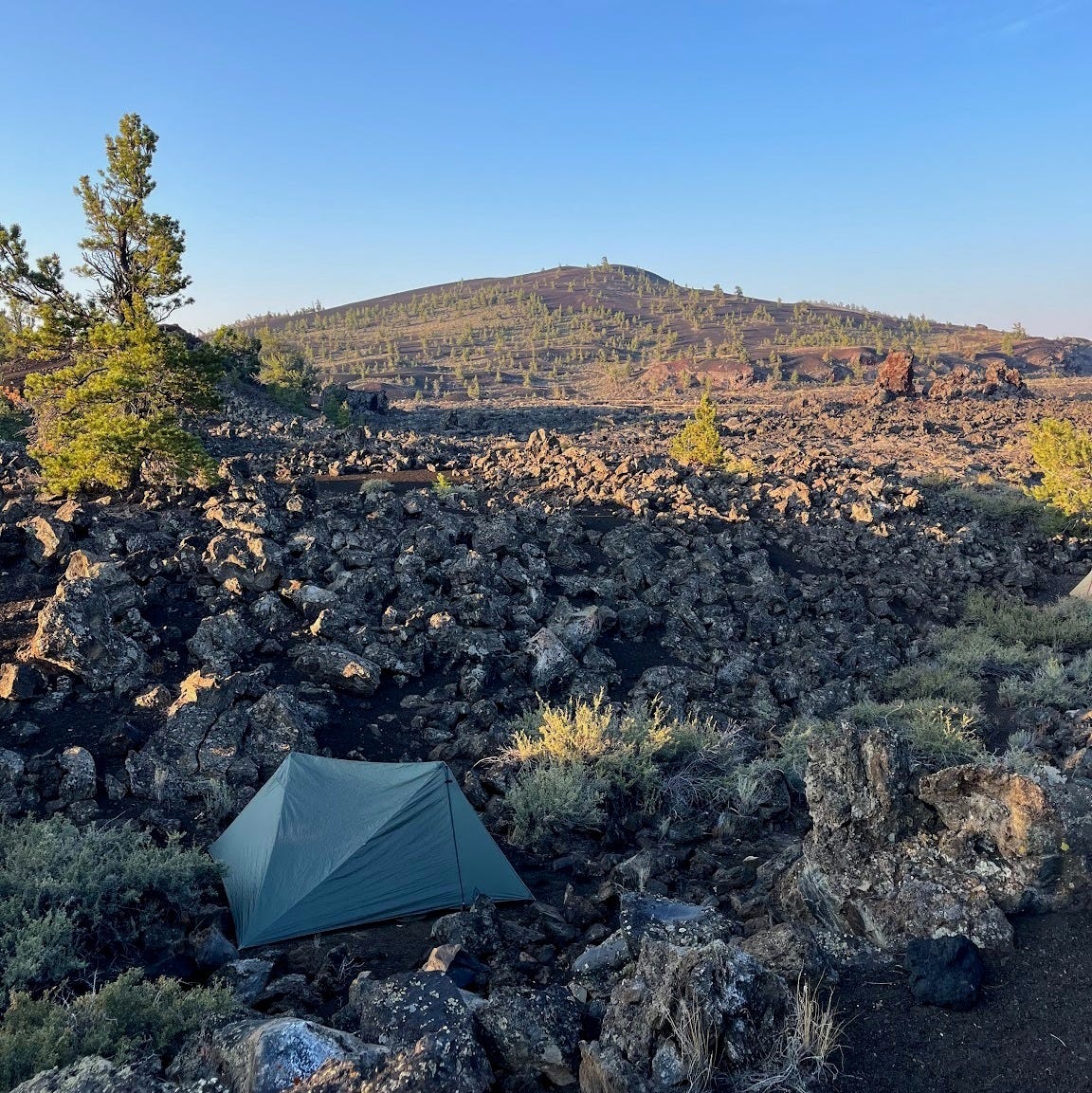
As we bid our thanks to Cindy for her time and generosity, she turns to us and says, “It’s nice for once to be heard and not have to fight to be heard.” Before we leave, Cindy imparts us with one last bit of local knowledge: head to the Craters of the Moon, she advises. When we drove into the relatively unknown national park, and pitched our tent amid an otherworldly frozen sea of blackened lava, we too experienced the glorious gift of library knowledge.
Carmen Vintro
To read more stories from America’s public libraries, subscribe to our Substack below, visit our website, and follow us on social media.
This calculation is based on the number of attendees for programs for ages 0-18 per number of registered library users. See: “Library Statistics”, Idaho Commission for Libraries, https://libraries.idaho.gov/knowledge-base/welcome-5/#public-library-statistics.
In 2023, the poverty rate in Gooding was 34% and in the US it was 12%. See: “Gooding, ID” and “United States”, Data USA, https://datausa.io/about/background, [accessed 3 February 2026].