
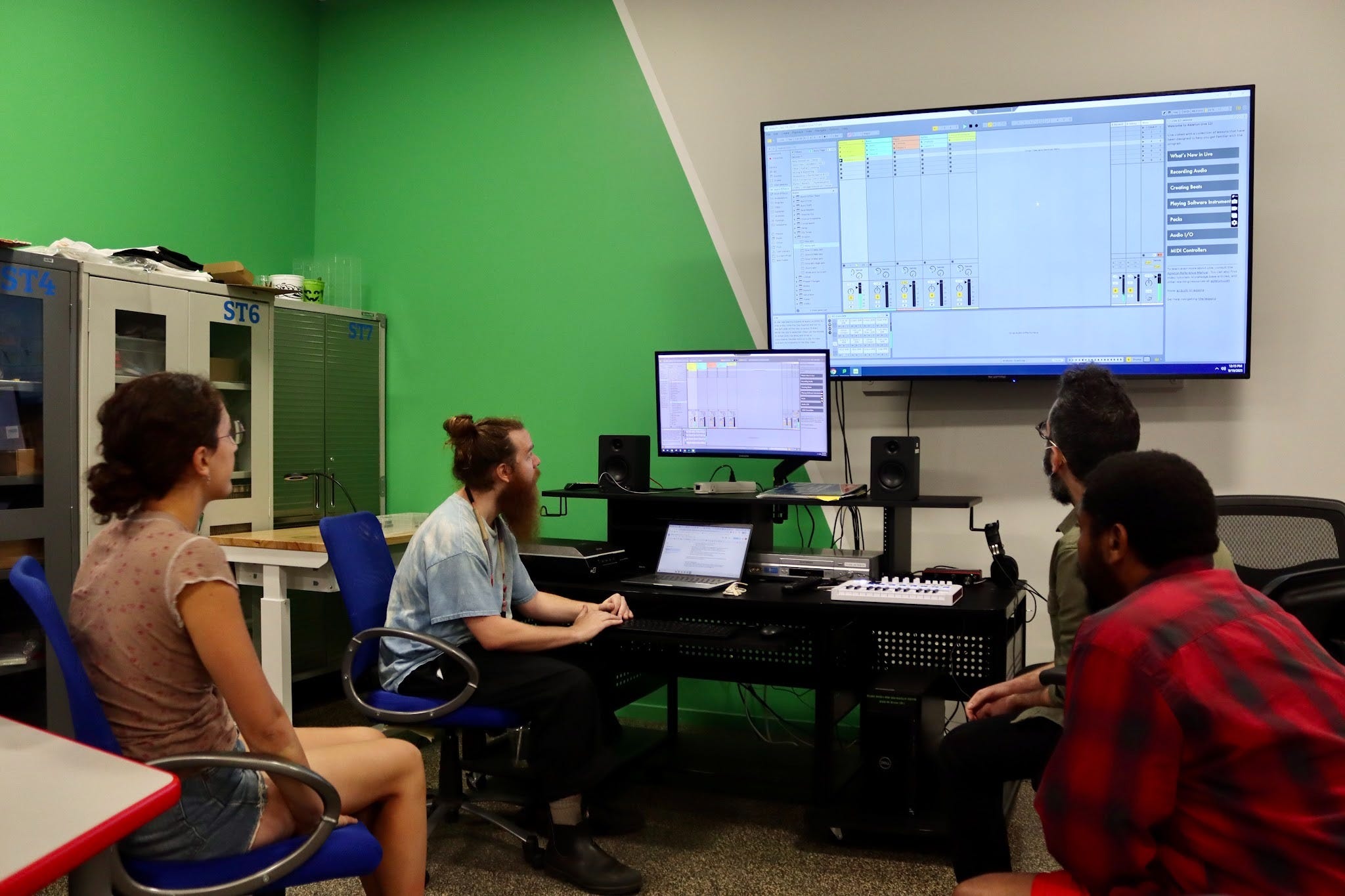
Frederick walks up to the keyboard at the front of the room. Apart from the operatic arias he sings in the shower, he wouldn’t normally think of himself as a musical person. But when he saw the Collaborative Beatmaking session advertised at Chicago’s Oak Park Public Library, he took a leap to try something new.
Standing in front of the keyboard, he hesitates before tapping the C key twice in quick succession. The class observes as two spikes register Frederick’s drumbeat in the Ableton software program projected onto the wall.
“Great - and this is how you save your beat, and loop it,” says Nick, one of the librarian instructors, gesturing with the mouse. Ollie is next. He skillfully adds a swanky bassline, but then I follow with a short piano melody that everyone is too kind to adequately ridicule. Nick encourages us: “It’s a playground. You play the wrong notes, and see what happens.” Our finished product is far from music to the ears, but by the end of the session, we have learned how to create our own beat on Ableton, however rudimentary. When we’re finished with the session, Nick tells us that we can access Ableton—usually a $100-$700 software—for free in the room next door, where the library has a full blown music studio that local artists and amateurs can use to record tracks for free.
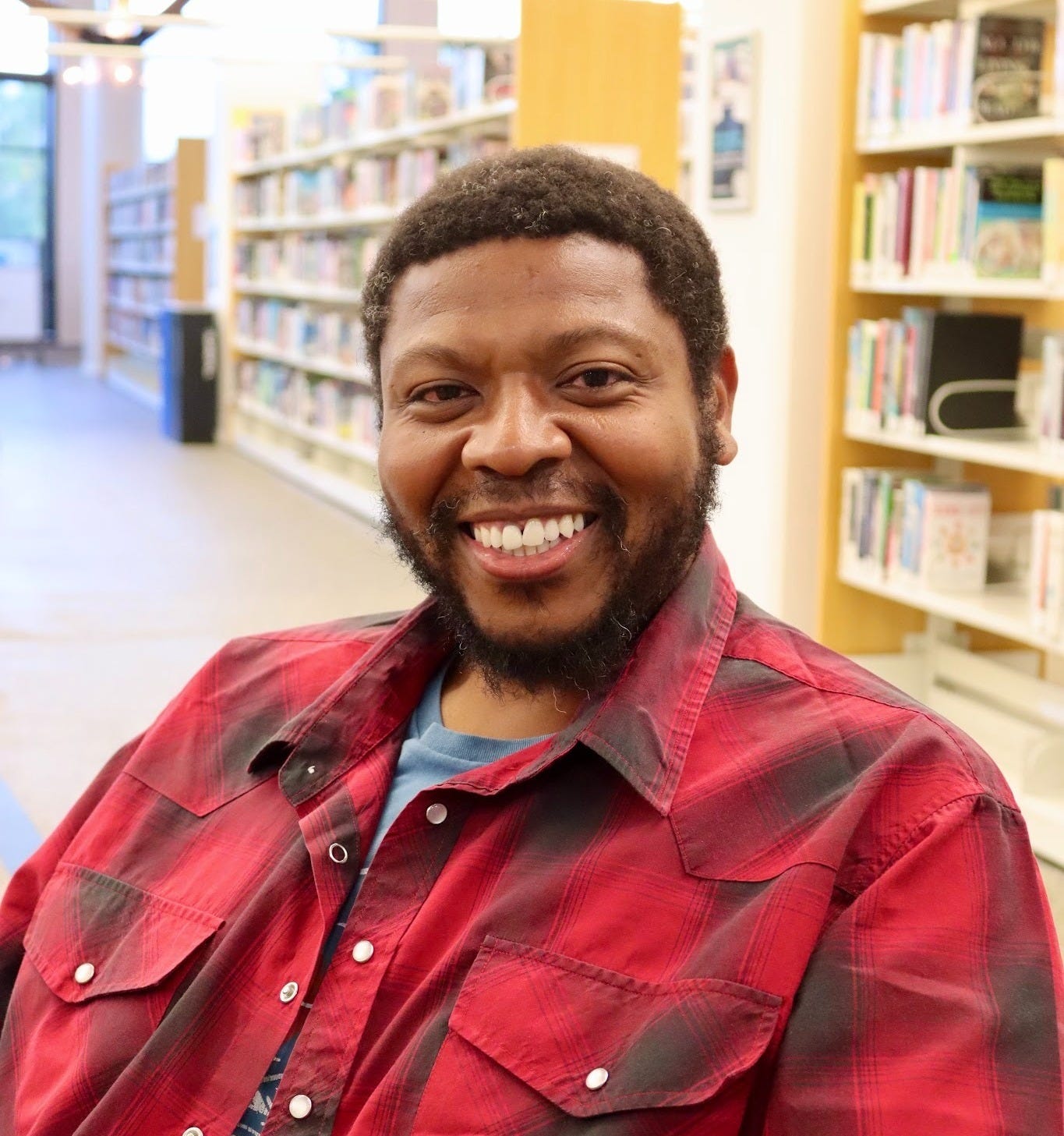
Beatmaking is just one of a long list of skills that Frederick has picked up at the Oak Park Public Library. Since he stumbled across the library a year ago while walking around the neighborhood, Frederick has been making the hour-long commute to Oak Park to enjoy the library’s extensive adult programming multiple times a week. At Oak Park Public Library, he has learned how to salsa, make zines, perform improv, use a laser cutter, laminate paper, compost, play Scrabble, garden, and research his family history. Frederick laughed when he relayed his experience trying improv for the first time: “I was assigned a scene with another Fred, and we had to play brothers. Fred was an older white man, and I’m a black man in my 40s. We were so far apart in life experience, but we had to act like convincing brothers. It was great. I had to test myself and my boundaries.”
These programs have enriched Frederick’s creative life, but they might also help him secure his next job. At the library, he has access to exam prep textbooks and classes that can help him obtain a range of IT certifications like CompTIA A+ so that he can make a career transition into IT with confidence.
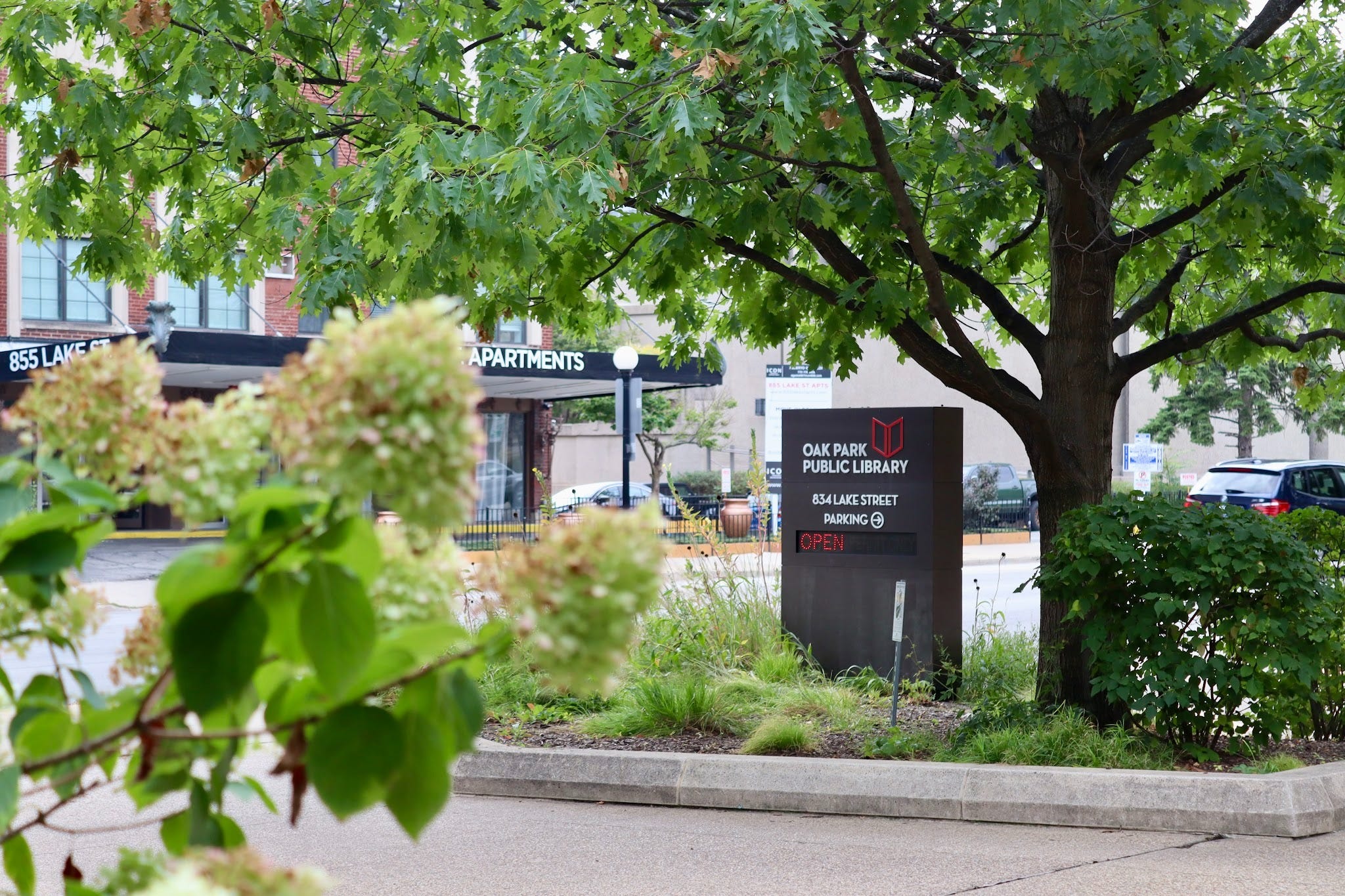
In addition to becoming creative and employable, the library has helped Frederick become politically engaged. “The library has been a catalyst for my environmental activism,” Frederick tells us after the beatmaking class. After learning more about the climate crisis at the One Earth Film Festival, an event organized by the library and other local environmental groups, Frederick said he became motivated to start gardening and composting.
After speaking with Frederick, we met Christine Poreba, who works behind the scenes to facilitate the library’s environmental programming. As the library’s Environmental and Sustainability Specialist, Poreba said her job is to connect patrons with trustworthy resources that provide reliable information about the environment. This includes databases like GreenFile, which compiles scholarly articles about the environment, environmental journals like Renew Magazine, and local environmental groups like Chicago’s One Earth Collective.
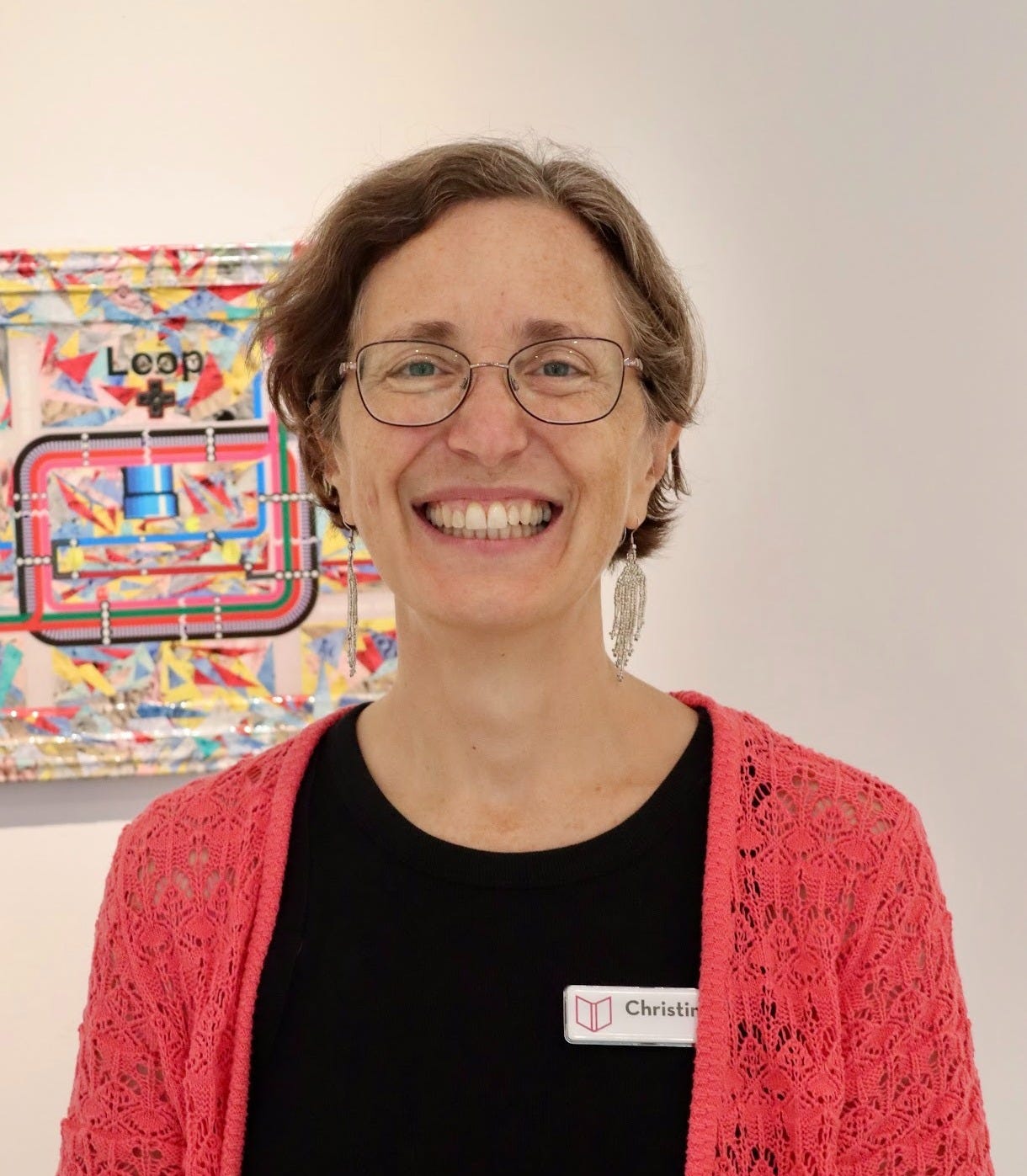
One of Poreba’s favorite moments on the job transpired during the One Earth Film Festival, when a woman came up to her after a screening of Farming While Black to say that as a black land owner, she had been deeply moved by the movie. Beyond the screenings, Poreba has organized Halloween costume swaps, environmental reading groups, and green cleaning workshops at the library. In one particularly popular event, over fifty people gathered at the library to craft bird sculptures out of upcycled fabric to participate in a community art project designed to raise awareness about bird deaths due to window collisions.
The Oak Park Public Library pushes beyond neighborhood boundaries to help Chicagoans like Frederick gain skills and knowledge that helps them find new passions, become more skilled workers, and get involved in their communities.
~
Carmen Vintro
To read more stories from America’s public libraries, subscribe to our Substack below, visit our website, and follow us on social media.
Sounds like libraries are also expanding the definition of literacy! I love this - a wide range of activities can encourage people to visit, and then they are exposed to so much more (including books and literature)
Thank you for an interesting and thought-provoking read. Through my photography, I visit many libraries and have seen innovative programs, as well as stories similar to Frederick’s. Recording studios for music, podcasts, and oral histories are still rare in Australian libraries, but their value is well understood, and many more are being planned. My main takeaway from your article is that libraries should be borderless: a community library can offer services and programs that benefit people in other towns and cities. This may not always be possible in small rural regions, but in cities it should become standard practice. Across a library network, each location could specialise in something different, supporting resource sharing and engaging a wider patronage. Best wishes with everything.