
Public libraries should be open to all. The first few weeks on the road taught us that librarians live by this principle. But in rural Donnelly, Idaho, something was different. One hundred miles north of Boise, a single-room library has been prevented from fulfilling this ethics of inclusion by a new state law aiming to protect minors from “harmful” library material.
When we met Sherry Scheline, the director of Donnelly Public Library, she was sporting pink from head to toe: pink hair ribbons, a pink dress, and pink Crocs. We walked into the log cabin library to find her perched behind the front desk. She quickly looked us up and down, judged we were older than 18, and warmly welcomed us in. We made our way to a small seating area, shimmying between large boxes full of books and towering, tight rows of shelves jam-packed with books. “We have one of the highest density uses of space of any library in the state,” Sherry proudly stated as she saw me gawking at the tsunami of books enveloping us.
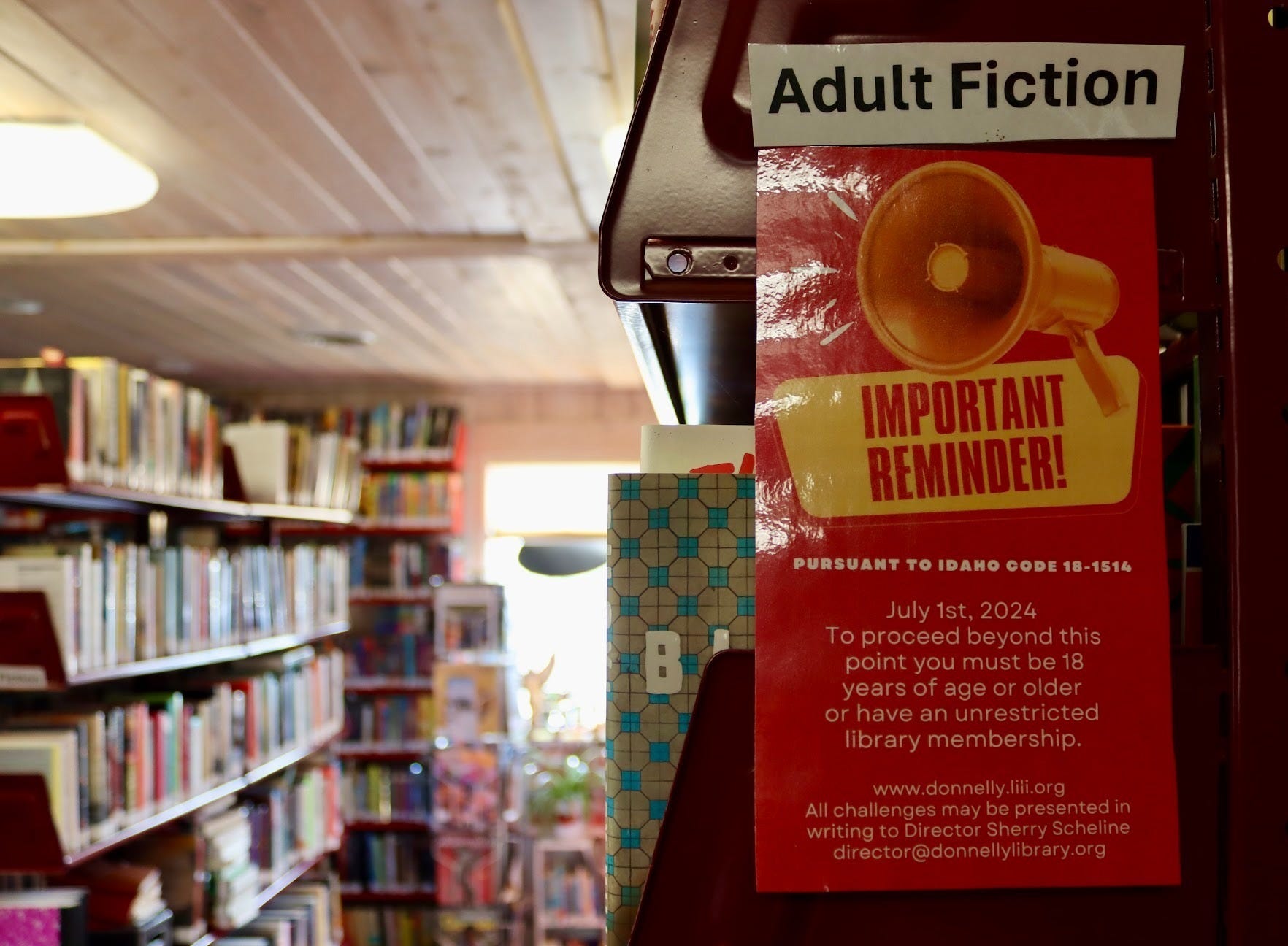
Sherry fought for and won a new tax district to establish the Donnelly library in 2018. But in 2024, a new Idaho law took effect that forced the library to change its operations.1 Dubbed “The Children’s School and Public Library Protection Act”, or HB 710, the law requires Idaho’s public libraries to move material deemed “harmful to minors” to an area with adult access only. If a library fails to restrict minors’ access to a book that a parent or student has flagged as harmful within 60 days, they can be sued for $250, plus an uncapped, undefined civil penalty.
But exactly what does “harmful” mean? Part of the reason that Sherry and the library’s board are challenging the law is because of such vague, overly broad language. According to HB 710, all “sexual conduct,” which broadly includes homosexuality, is harmful to children. “The idea that librarians are handing out pornography is so gross,” Sherry said. “It’s so off-target, it’s hard to digest.” In practice, this means that minors can’t access books that represent LGBTQ+ stories, characters, and issues, regardless of whether they contain sexual content.
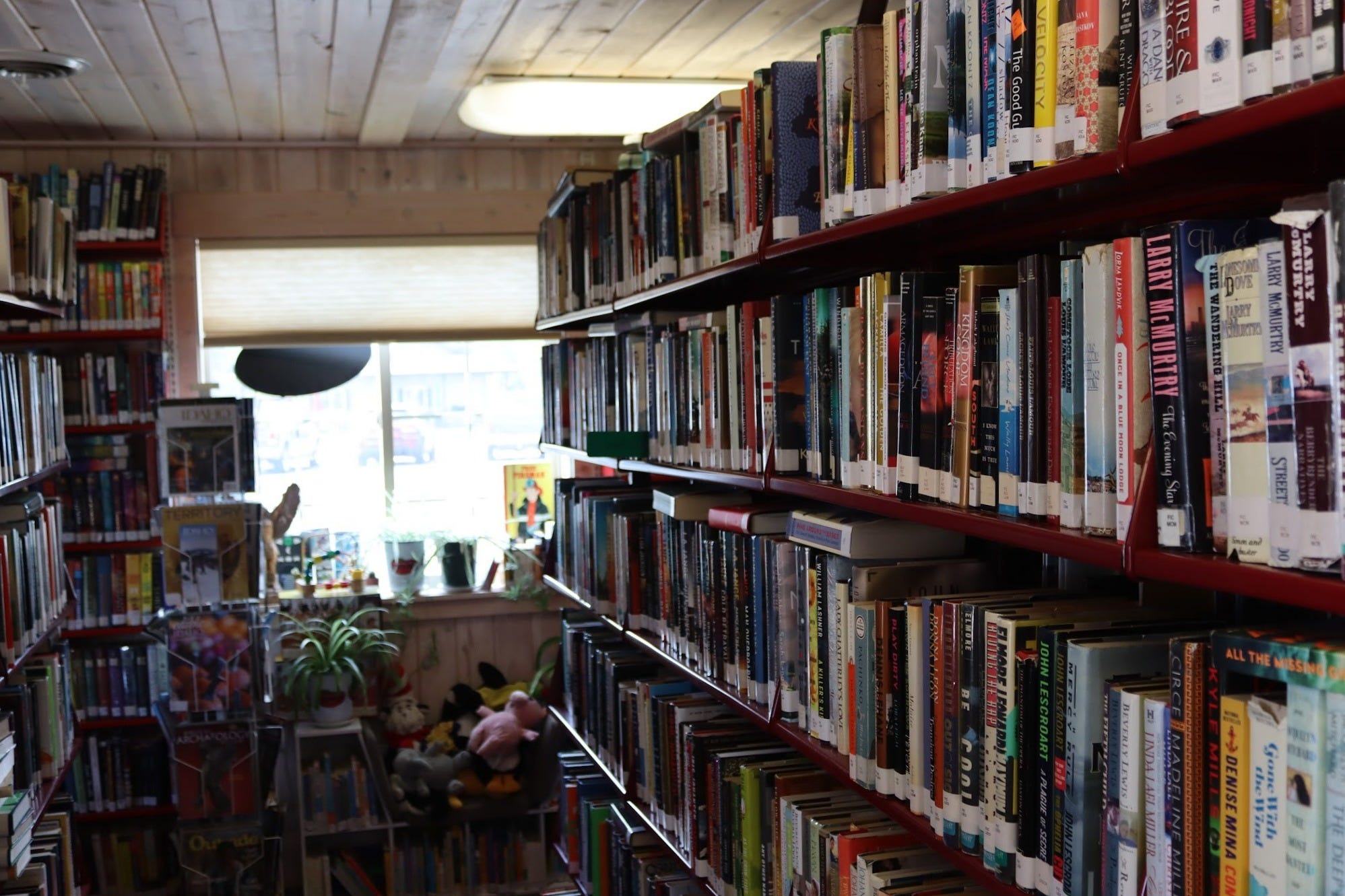
To comply with the law, the board decided that they had no choice but to deem all the library’s material “harmful to minors” and require children’s parents to waive their child’s rights to the law to enter. First, there was the space problem. In a 1,024 square foot, single room, it was impossible to create a restricted area. “If you stand anywhere in the library, you can pretty much extend your hand and reach anywhere else in the library,” Sherry explained. Second, the library can’t afford to employ nearly enough staff to comb through all 14,000 pieces of library material and make a legal judgement about whether it might be considered “harmful” by a judge. Concerned that a book challenge could decimate the library’s already shaky finances, the board made the dramatic move to become adult-only.
“The fact that we are adult-only scares people,” Sherry said. “It immediately makes the library political. Libraries should never be political. We should always be neutral. Libraries are designed to give information and not take sides. Unfortunately in this censorship battle, here and across the United States, librarians and libraries are forced to take a stand. And that stand is that we have to protect the books.”
“This attack on libraries is an attack on democracy,” Sherry told us. “Libraries are places of information,” she said. “That information needs to stay neutral and it needs to have all sides and all viewpoints. Having the freedom to share those viewpoints is what makes us Americans in the long run.”
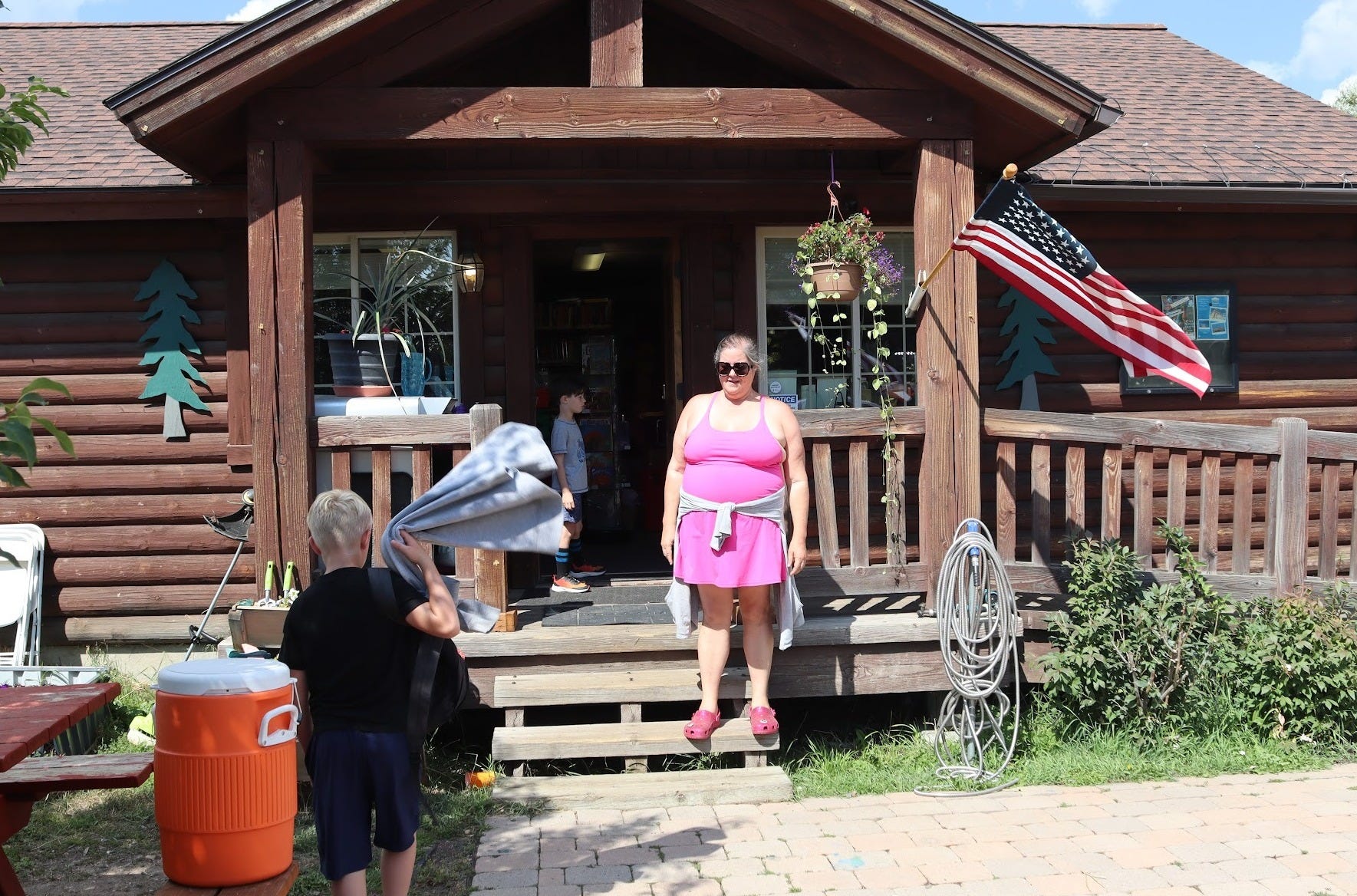
As we chatted, the front door creaked open and a young mother with three children shuffled in. Sherry bounced up from the couch and hurried over to the newcomers. “Hello, we’re an adult-only library. You’ll have to sign this document here if you want to let your kids roam around and check out books,” she said, greeting the family with several legal waivers at the door.
So that children can still access the library’s resources and activities, like its vital after school program, the board issued a form that parents can sign to waive their child’s right to various provisions of HB 710. Parents can choose from three levels of library access for their child: the freedom to be in the library only with a parent present; the freedom to be in the library alone but not check out books; or the freedom to be in the library alone and be able to check out books.
The mother, Taylor, sat down next to me on the couch to consider her options. I struck up a conversation: “How do you feel about having to sign this form to let your kids use the library?” I asked her.
“I don’t mind having to sign because I take responsibility for parenting,” she said as she ticked the box to give her children full, independent access to the library and its books. “I trust my kids to show me what they check out. It comes down to how much you’re willing to parent your child.”
But not all parents feel the same way, Sherry told me when Taylor and her kids left. Since the library became adult-only, circulation has dropped by almost 50%. One man who came in a few weeks ago with his daughter was furious when Sherry handed him the waiver at the door. “There’s something deeply wrong about this,” he remarked on his way out. “I agree!” Sherry exclaimed, “Go tell your state representative how you feel!”
Sherry is leading by example. To challenge the law’s legality, Donnelly Public Library is suing the state of Idaho.2 Joining the suit are major publishers—Penguin Random House, Hachette, HarperCollins, Macmillan, Simon & Schuster, Sourcebooks—several authors, parents, and students. As books like The Bluest Eye, I Know Why the Caged Bird Sings, and Slaughterhouse-Five are put out of children’s reach across Idaho, they argue that HB 710 is overly vague, broad, and discriminatory in violation of the First and Fourteenth Amendments. The law’s wide-sweeping restrictions are redundant and unnecessary, they argue. There are already laws that prohibit libraries from circulating obscene material, and libraries already have policies and procedures in place to field and consider requests by community members who wish to remove offensive or inappropriate library material. In practice, as in Donnelly’s case, what the law does is make librarians overly cautious for fear of a legal rebuke. The upshot is that Idahoans lose their constitutional right to freely access information.
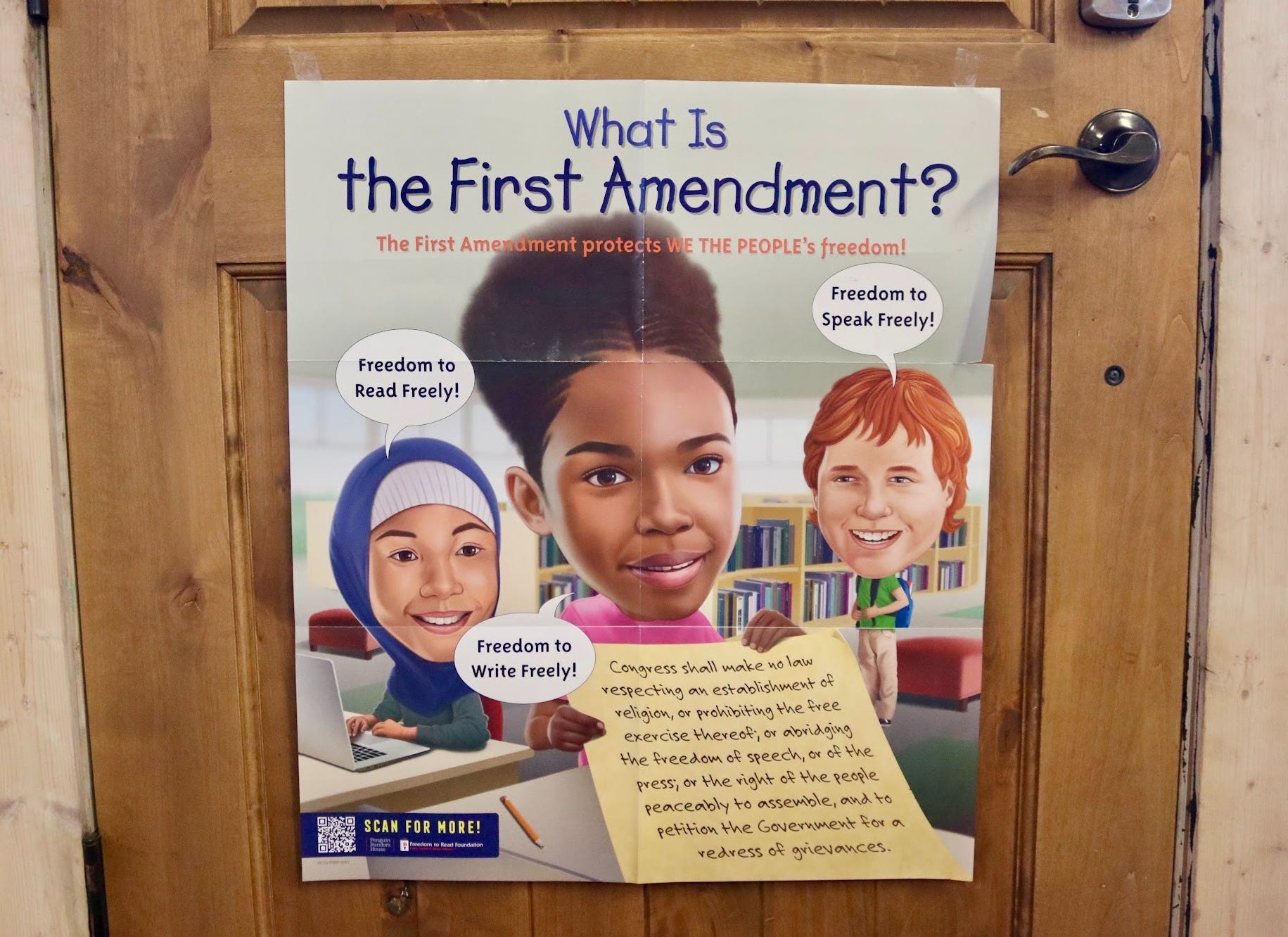
Standing up for her library has focused the ire of Idaho’s far-right on Sherry. Casey Whalen, a known white supremacist, holocaust denier, and self-proclaimed investigative journalist from Northern Idaho, has been harassing and stalking Sherry since he learned about her outspoken opposition to HB 710.3 Whalen called Sherry a pedophile for allegedly handing out pornography to children and threatened her, saying he knew where she lived. Grinning with irreverence, Sherry told us that when her lawyers asked if she was concerned by the threats, she exclaimed, “Are you kidding? My name is Sherry Scheline and I live on Scheline Lane! Everyone knows where I live!”
Across the country, a plethora of new censorship laws are being challenged in the courts. In August 2025, a federal judge ruled that a Florida law allowing for the removal of books containing sexual content from public school libraries was “overbroad and unconstitutional.”4 That ruling, however, is now being appealed by the state, along with 21 other state attorneys general who have submitted written support.5
Other censorship cases have been less successful. In December 2025, the Supreme Court allowed a lower court ruling to stand that supported a Texan library’s removal of 17 books based on the finding that library curation is “government speech and therefore not subject to Free Speech challenge.”6 That ruling—Little v. Llano County—has already been used as precedent in another book banning case in Florida, which sanctioned the removal of a children’s book about gay penguins from a school library.7 As the courts decide who can read what books in our public libraries, Americans’ access to nuanced, neutral information hangs in the balance.
As for Donnelly’s case, Sherry said she is confident that the courts will know a bad law when they see one. “I have faith in the judicial system, that that branch of government is going to come through and that we are going to win in the long run,” she said.
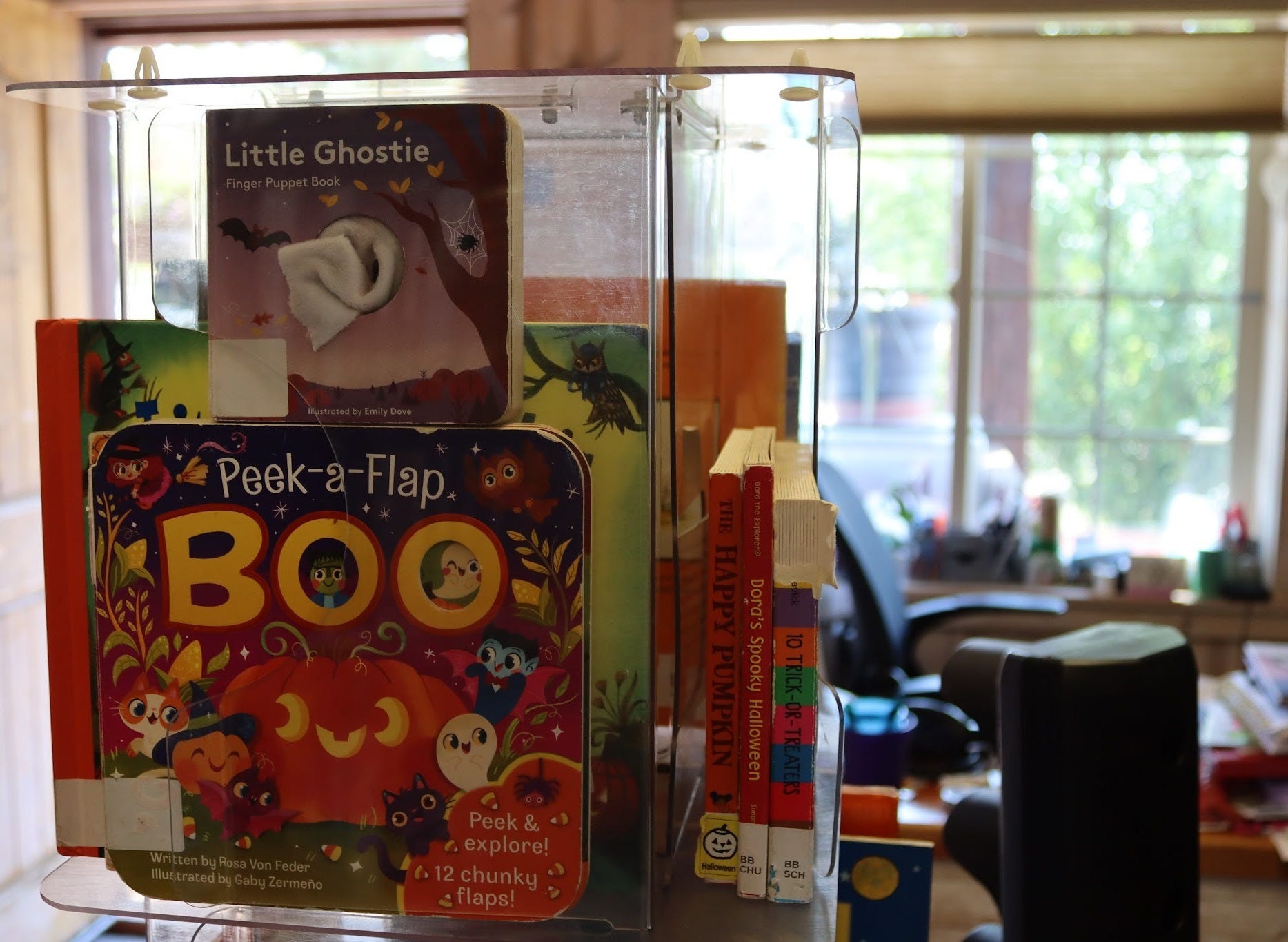
Children’s access to libraries is incredibly important, as we’ve seen again and again throughout our trip. Libraries are: where families introduce young children to reading; where kids whose parents can’t afford to buy books can access longer series like Warriors; and where kids can meet friends and learn about the natural world. The question in Donnelly is whether their children will get to grow up with unrestricted access to this rich nexus of community and knowledge.
Carmen Vintro
To read more stories from America’s public libraries, subscribe to our Substack below, visit our website and follow us on social media.
“Library Censorship: HB 710 Fact Sheet”, ACLU, https://www.acluidaho.org/library-censorship-hb-710-fact-sheet/.
Penguin Random House, et. al. v. Labrador, see: https://cornell1a.law.cornell.edu/blog/wp-content/uploads/001_Compl_Penguin-Random-House-LLC-et-al.-v.-Labrador-et-al.-Docket-No.-1_25-cv-00061-D.-Idaho-Feb-04-2025-Court-Docket.pdf.
“Idaho group hosted ‘journalist’ who flirts with holocaust denial”, Idaho Statesman, https://www.idahostatesman.com/opinion/readers-opinion/article313549824.html.
“Federal judge strikes down key parts of Florida law that led to removal of books from school libraries”, Associated Press, https://apnews.com/article/florida-schoolbook-ban-a3448c8f0bdfb863d1a495580b8ce6e4.
“Other states back Florida’s law on book removals”, WUSF NPR, https://www.wusf.org/courts-law/2025-12-22/other-states-back-floridas-law-on-school-book-removals.
“Appeals Court Reverses Ruling in Texas Book Banning Case”, Publishers Weekly, https://www.publishersweekly.com/pw/by-topic/industry-news/libraries/article/97858-appeals-court-reverses-ruling-in-texas-book-banning-case.html.
“Florida Court Rejects Free Speech Argument in Book Removal Case”, New York Times, https://www.publishersweekly.com/pw/by-topic/industry-news/libraries/article/97858-appeals-court-reverses-ruling-in-texas-book-banning-case.html.