
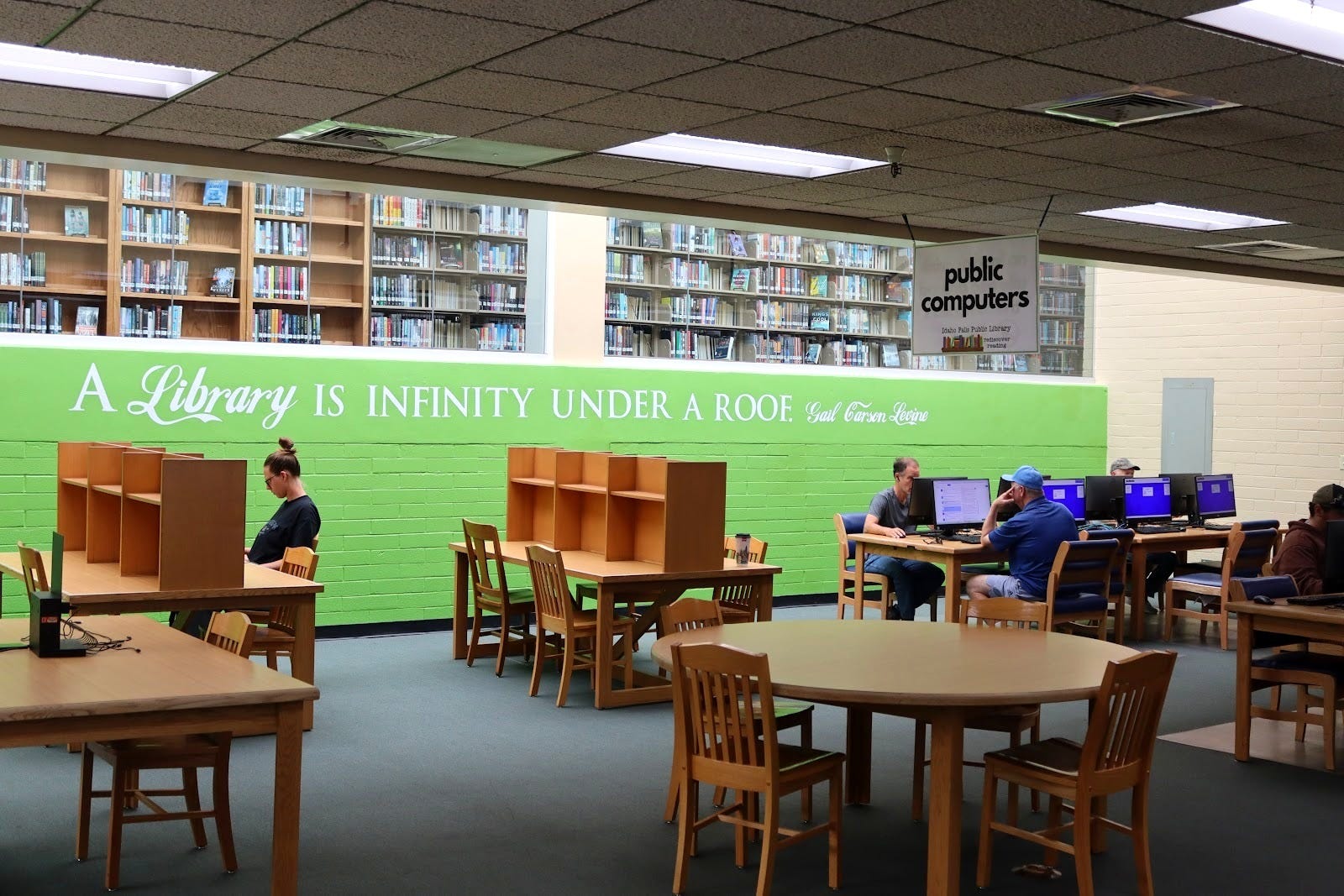
“Whatever you’re doing, you need to stop,” says a flat voice over my left shoulder. I turn to see a librarian marching towards me with purpose. Trudy, the patron we had been talking to, looks as surprised as we are.
We’re standing on the adult-only floor of the Idaho Falls Public Library with Trudy. She’s in the middle of an impassioned explanation of how the library sustains her impressive 135-books-a-year reading regimen when she’s interrupted.
“Hello, I’m sorry. May I ask what the problem is?” I say, turning toward the librarian.
“If you want to continue what you’re doing, you have to do so outside the library building,” she responds with a blank stare.
“Do you even know what their project is?” Trudy interjects. “They love the library! They’re trying to raise awareness about why libraries are important.”
“Well, unfortunately, it’s illegal to solicit people in the library, so I’m going to have to ask you both to leave,” she says.
“There must be a misunderstanding,” Ollie insists. “Could you tell us what you mean by soliciting? We were just talking to Trudy about why she loves the library.”
“Well, you guys have a camera,” she says, gesturing to the Canon DSLR slung across Ollie’s chest, “and you’re taking notes. You’re clearly journalists soliciting people for their opinions.”
“I’m sorry, but I don’t understand what the problem is. Trudy said she was OK with us taking notes for our blog. This is a public space. Don’t we have a right to be here and speak with other people? Can you tell us what law you’re referring to?”
At this point Trudy motions to us that she needs to leave, so we bid her goodbye, and she bids us good luck.
We follow the librarian to her desk where she shows us the law on her computer. Together, we read the text of the “Unfair Solicitation Practices” law, which states: “It is unlawful for any person to solicit a sale [...] without clearly [...] revealing at the time the person initially contacts the prospective buyer [...] that the purpose of the contact is to effect a sale.”
“But we weren’t selling anything,” I say, confused.
“Well, that’s not what I heard,” says the librarian. She continues to explain to us that someone called to complain that we had verbally harassed them - something involving the patron’s ill husband, a doctor’s office, and us calling her a bad wife - and that we’d been soliciting people about tax questions.
I listen, but the story feels distorted, like facts twisted through misunderstandings and misguided assumptions. I turn to Ollie who seems just as confused. We stand in shock, mentally retracing every step, every conversation of the afternoon in the library.
Then we look at each other and remember the older woman who declined to speak with us. Earlier, we greeted her and asked if she had a moment to chat about the library, but she said no as she rushed by and added that she needed to check on her ill husband at the doctor. We remember the interaction as only cordial, responding, “OK. Thank you and have a nice day!” And did the accusation of soliciting people for their political position on taxation come about because the woman had overheard Trudy telling us an anecdote involving a new tax that she had brought up entirely on her own?
We attempt to explain what had happened from our perspective, hoping to clear up any misunderstandings and show how our actions don’t match any of the accusations. But our words fall on deaf ears; we are cut off and asked to leave.
Feeling the need for a second opinion, I ask to speak with the Director. Showing clear signs of frustration, the librarian agrees to call her higher-ups and tells us to wait downstairs in front of the office of Robert Wright, the Library Director, until he returns from lunch.
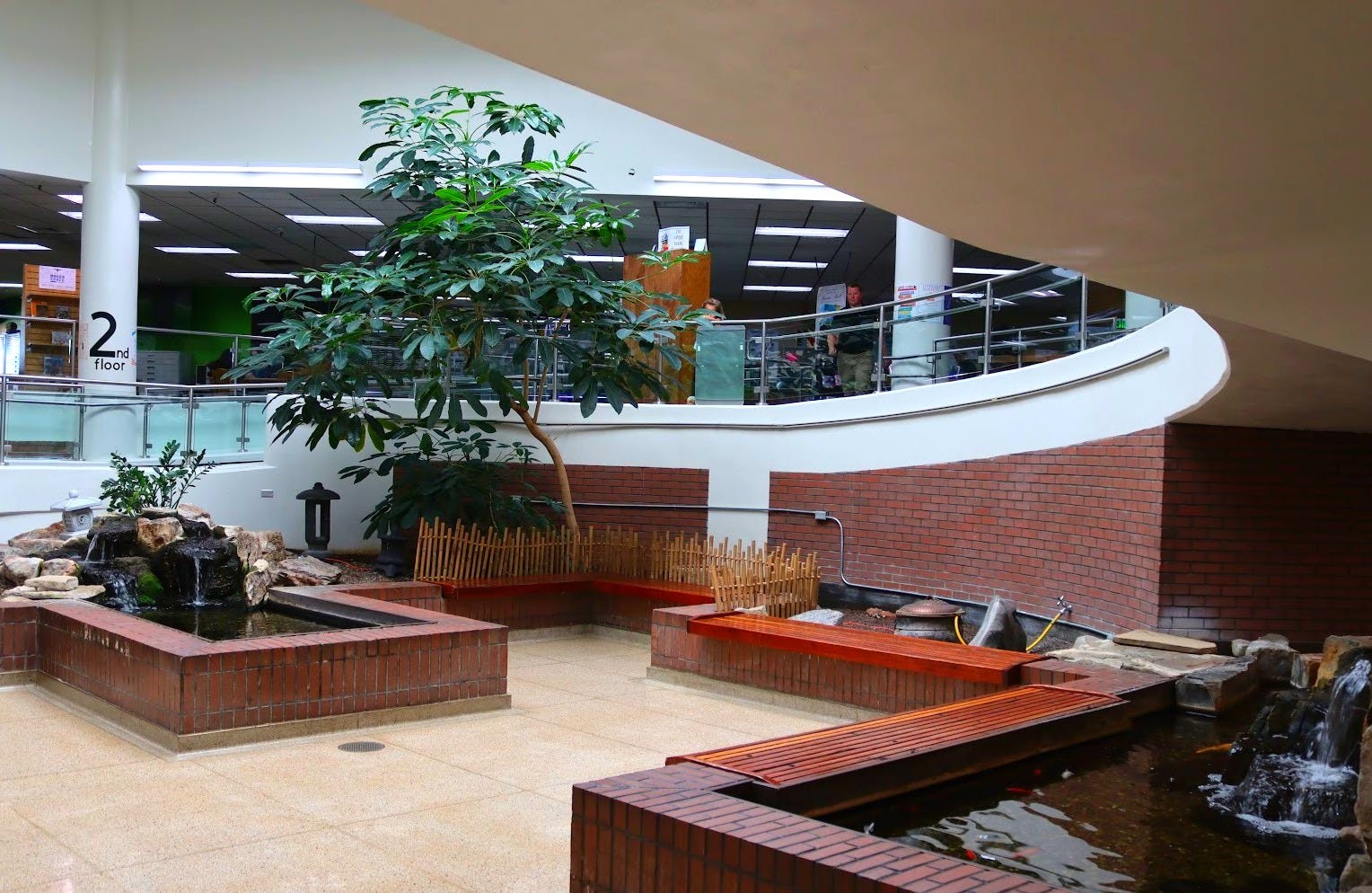
As we wait for Mr. Wright, Ollie and I try to make sense of the situation and how we, as outsiders, may have triggered some discomfort within this community. One of our top priorities during this trip was to be respectful of library spaces, and not to disrupt community members using the library. It was painful to hear an accusation that we had failed on that account. Based on research into the rights of journalists and our conversations with other researchers, we had believed that approaching people who seemed to be unoccupied to ask if they had a moment to talk about the library was reasonable. This approach worked well at the other libraries we visited, so why should our M.O. be received differently here in Idaho Falls? We agree to enter the chat with the Director with an open mind and genuine curiosity about what had triggered this response.
The Director is not on-site today, so we speak with him on speakerphone. I ask him if he can explain why we have been prohibited from speaking with other people in the library.
“The problem is,” he says through the crackling phone line, “that you don’t know these people, so starting a conversation with them is solicitation.”
Surprised, I ask him if he is suggesting that it is illegal for strangers to speak at the library.
“We’ve already had our lawyers go through this,” he says, and we catch the threat, “with many other groups like the Jehovah’s Witnesses and political agitators who try to come in here and get a rise out of people. They try to turn this place into a political forum when it’s not. The Jehovah’s Witnesses were told they have to carry out their activities outside the library; so do you.”
I try to explain that we are not religious or political agitators. We are not here to incite anger or “dox” anyone, I plead. We just want to listen to and help share people’s library stories, I say. But the Director isn’t interested in hearing any more and he ends the call.
With flushed faces and deflated hearts, we walk out of the library. Ollie and I sit on the curb for a while, staring at a tree in front of the library as we try to make sense of what just happened.
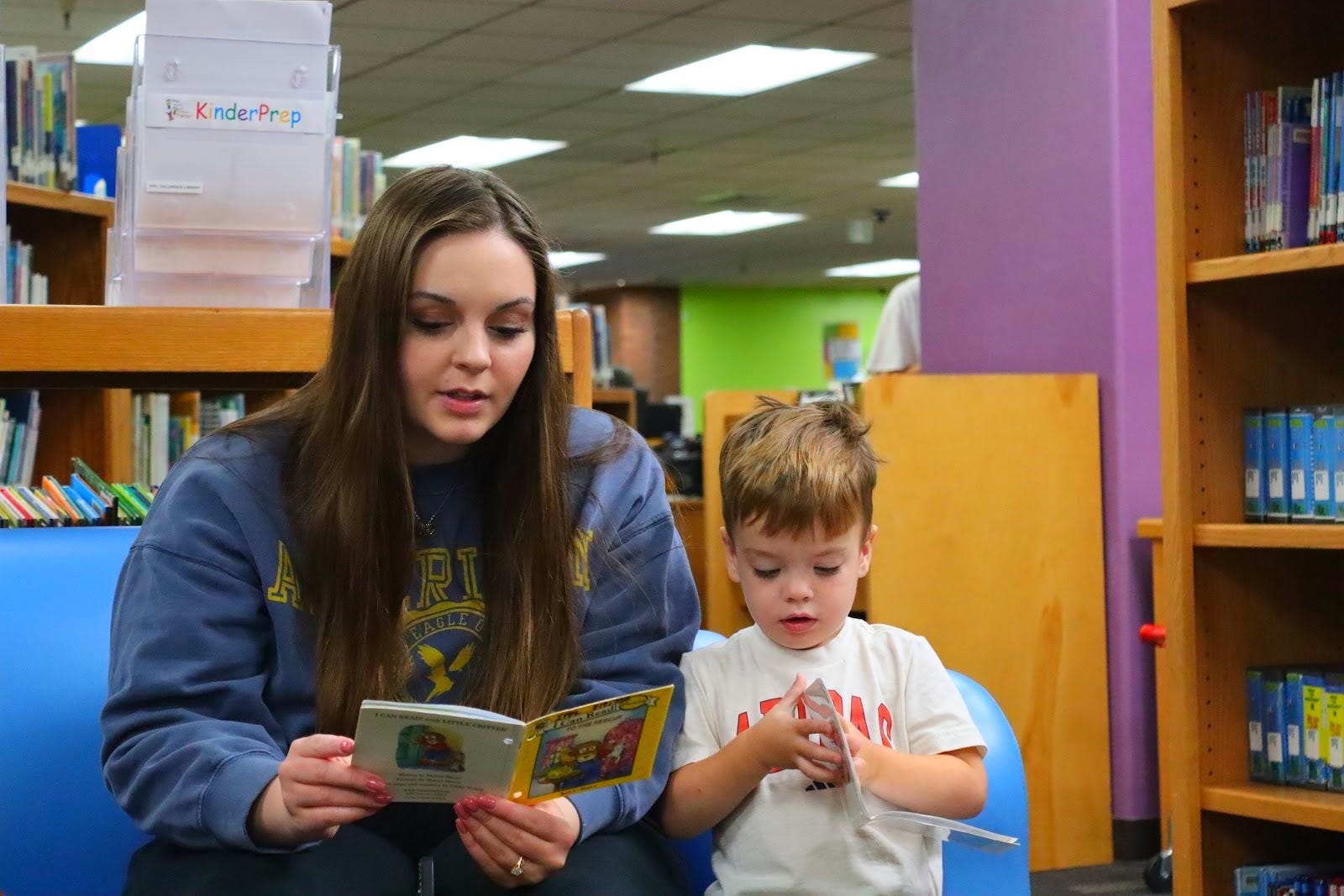
Thinking back on the day, we recall feeling welcomed by several patrons who we spoke with. In the children’s play area, we had struck up a conversation with a young mother named Brooklyn, who told us that she was grateful for a free, safe place to take her baby and two-year-old son. While I spoke with Brooklyn, the little boy had dropped a picture book into Ollie’s lap and they began reading together.
Later on, in the adult-only section, we spoke with a young woman who had delighted in telling us about how she was on a mission to find inspiration for tattoo designs within the library stacks. We had thanked her and left her to her muses.
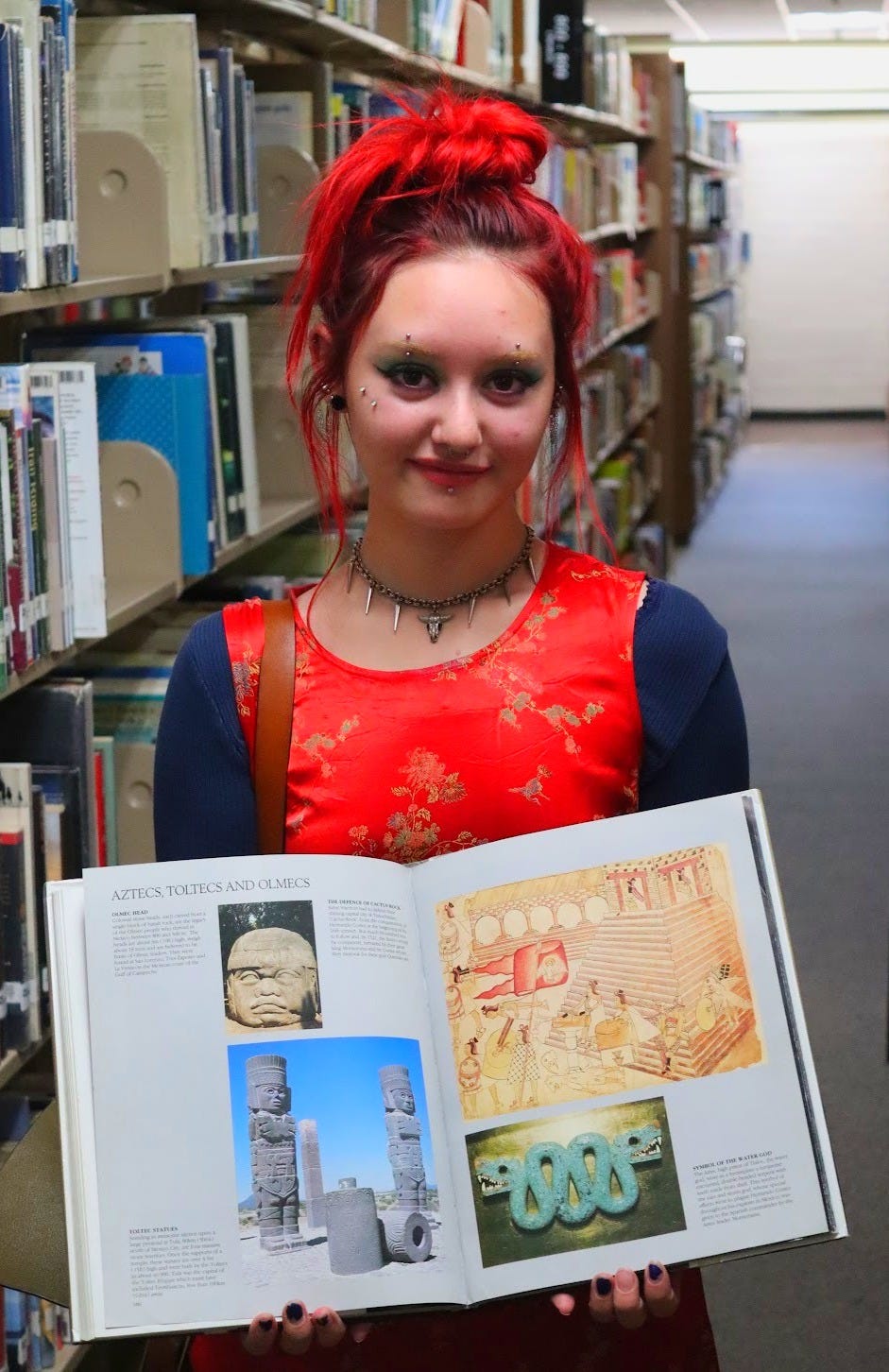
Contrary to being unduly disturbed, we sensed that they had been eager to tell us about their experiences with the library. What had caused this all to go wrong? We couldn’t have foreseen an accusation of harassment, but we recognized how important it is to approach people with the utmost sensitivity. As we continue our project, we vowed to think more carefully about how to be considerate journalists in the context of the library.
Sitting on the curb in the brisk September sun, we reflect on the climate of paranoia and fear that sets in when libraries become battlegrounds of the culture war. The Idaho Falls Public Library had been rattled and exhausted by group after group coming into their space to campaign, advance their agendas, criticize the collection, solicit for signatures, and more. It was a clear example of how a library under attack can become fortified and defensive, even if it means compromising on inclusion and kicking people out. We wondered: if librarians are afraid to allow their patrons to strike up a conversation with someone they don’t know, how can these public spaces ever foster genuine human connections and build strong communities?
Being thrown out of the library renewed our sense of the importance and urgency of this project—that the existence of public libraries as spaces that promote knowledge and connection is under threat in more ways than one.
~
Carmen Vintro
To read more stories from America’s public libraries, subscribe to our Substack below, visit our website, and follow us on social media.
We want to applaud Carmen and Ollie for their brilliant critique of this deplorable situation in the Idaho library system. At least the earlier article on Donnelly ( where Sharron was born and raised) showed some redeeming qualities. But now Idaho Falls Library looks thoroughly corrupt. Please distribute this article widely because it definitely highlights an important point about outrageous censorship in a public space. Kudos to Carmen and Ollie, an amazing team! Dennis and Sharron Dalton
Such an interesting experience and story. I sense systems are overwhelmed so they simplify rules, when indeed nuance is key here to carry out intended purpose of library. Looking forward to the next story!